
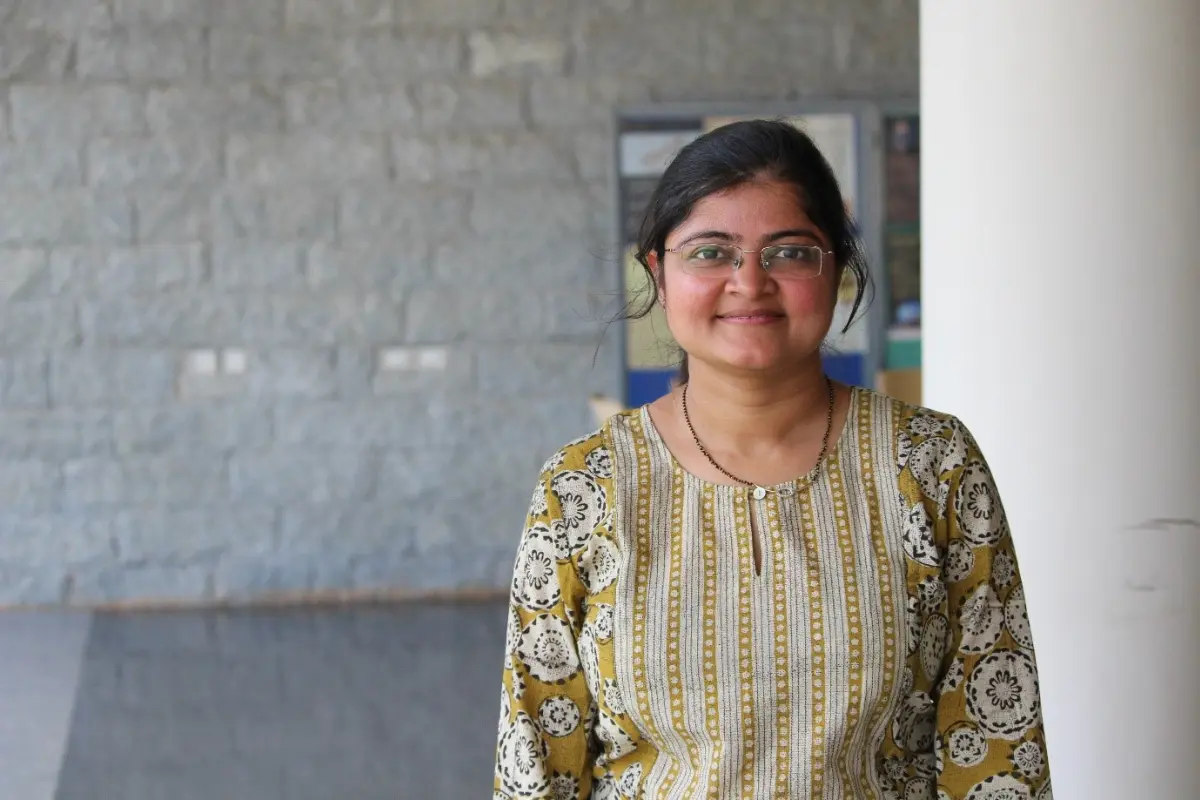
The story of Mansi Manoj Kasliwal begins in Indore, where she grew up in an environment far removed from astronomical observatories. Life on a dairy farm instilled discipline, patience, and resilience — qualities that would later define her scientific journey. Her early fascination with the night sky grew quietly but steadily, fueled by a desire to understand the mysteries beyond Earth.
At just 15 years old, she made a life-altering decision: emigrating to the United States to pursue education and scientific opportunity. Leaving her parents behind required immense courage, emotional strength, and determination. Those formative years shaped her identity as both a scientist and a global citizen, teaching her to adapt, persevere, and dream on a scale far larger than her surroundings.
Mansi Manoj Kasliwal: Education – Building a Foundation for Cosmic Exploration
The academic path of Mansi Manoj Kasliwal reflects an unwavering commitment to excellence. After completing high school at Pomfret School in Connecticut, she pursued higher education with intensity and purpose. She earned her bachelor’s degree from Cornell University in 2005, marking the first major milestone in her journey toward astrophysical research.
Her passion for understanding explosive cosmic events led her to Caltech, one of the world’s leading centers for astronomy and astrophysics. There, she completed her master’s degree in 2005 and later earned her Ph.D. in 2011. Her dissertation, Bridging the Gap: Elusive Explosions in the Local Universe, supervised by Shrinivas Kulkarni, explored transient cosmic phenomena that appear suddenly and fade quickly — events that would become central to her career.
Early Career and Breakthrough Research
Following her doctoral studies, Mansi Manoj Kasliwal embarked on postdoctoral research as a NASA Hubble Fellow at the Carnegie Observatories. This period sharpened her expertise in time-domain astronomy, a field that studies rapidly changing cosmic events such as supernovae and stellar collisions.
In 2014, she returned to Caltech, first in a visiting role and then as an assistant professor in 2015. Her rise through academia was swift and well-earned. By 2021, she had been promoted directly to full professor — a rare achievement that reflected both the depth of her research and her leadership within the scientific community.
Mansi Manoj Kasliwal: Pioneering Multi-Messenger Astronomy
One of the defining contributions of Mansi Manoj Kasliwal is her groundbreaking work in multi-messenger astronomy. This innovative field combines multiple forms of cosmic data — electromagnetic radiation, gravitational waves, and high-energy particles — to capture a more complete picture of astrophysical events.
Her research focuses on understanding how elements heavier than iron are created. While traditional stellar processes produce lighter elements, the formation of heavier ones requires extreme cosmic environments such as neutron star mergers and powerful supernova explosions.
Kasliwal’s work involves tracking “cosmic fireworks” — short-lived yet extraordinarily luminous events that can vanish within days or even hours. To capture these fleeting phenomena, she helped develop automated sky surveys such as the Palomar Transient Factory and the Zwicky Transient Facility. These projects revolutionized the way astronomers monitor the changing sky, enabling rapid detection and analysis of transient cosmic explosions.
GROWTH: A Global Network for Cosmic Discovery
Between 2015 and 2020, Mansi Manoj Kasliwal led the Global Relay of Observatories Watching Transients Happen (GROWTH), an international collaboration involving approximately 100 astronomers and 18 telescopes across six continents. This ambitious initiative enabled around-the-clock observation of transient events, ensuring that scientists could capture rare cosmic moments as they unfolded.
Through GROWTH, Kasliwal helped reveal the electromagnetic signatures of gravitational wave events, offering unprecedented insight into neutron star collisions. These discoveries expanded humanity’s understanding of the universe and confirmed theories about how heavy elements are formed.
Director of Palomar Observatory: A Historic Appointment
In 2025, Mansi Manoj Kasliwal made history by becoming the first woman and the first director of Indian origin to lead the iconic Palomar Observatory. Nearly 90 years after its founding, the observatory entered a new era under her leadership — one marked by innovation, inclusivity, and scientific excellence.
Her appointment carries profound symbolic and historical significance. Palomar has long been a site of groundbreaking discoveries, and her leadership continues the legacy of pioneering women astronomers who overcame barriers to access its telescopes. Today, she stands as a powerful example of how perseverance and vision can transform both science and society.
Awards and Recognition
The achievements of Mansi Manoj Kasliwal have earned her international acclaim. In 2022, she received the prestigious New Horizons in Physics Prize for her leadership in electromagnetic observations of gravitational wave sources and her role in analyzing the first observed collision of two neutron stars. This recognition highlighted her ability to bridge theory and observation, transforming abstract cosmic signals into meaningful scientific understanding.
She is also a recipient of the Packard Fellowship, awarded for innovative research and contributions to understanding heavy element nucleosynthesis. These honors underscore her influence as both a scientist and a leader shaping the future of astrophysics.