
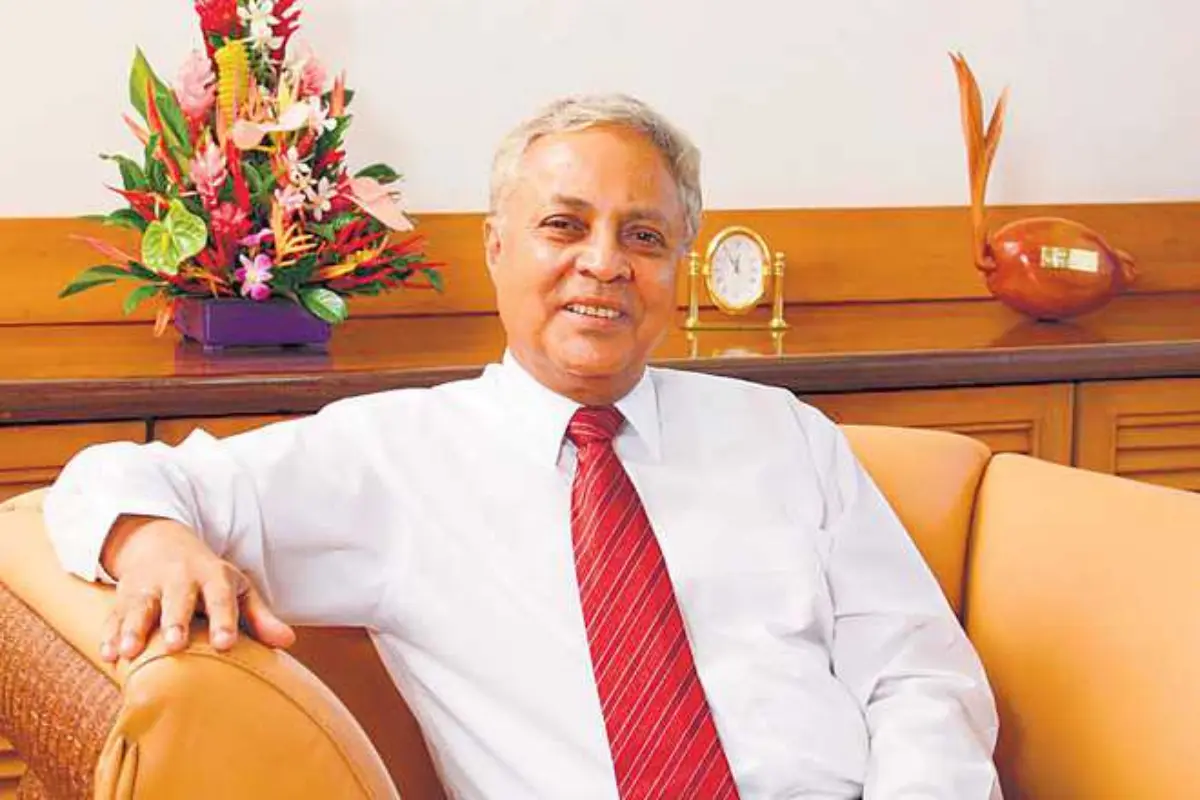
In the annals of Fijian history, one name stands tall as a beacon of hope, resilience, and visionary leadership—Mahendra Chaudhry. Born on 9 February 1942 in the sugarcane town of Ba, Fiji, into a family that rose from the toil of indentured labour, Chaudhry’s rise to prominence is nothing short of legendary. As the first Indo-Fijian to become Prime Minister of Fiji, his life story reads like a modern epic of courage, sacrifice, and unwavering belief in democracy.
Mahendra Chaudhry: From Roots of Resilience to a Revolutionary Leader
Mahendra Chaudhry’s roots trace back to Bahu Jamalpur in Haryana, India. His grandfather, Ram Nath Chaudhry, arrived in Fiji as an indentured labourer in 1902. Defying the conditions of his labour contract, he forged his path as a store manager and businessman. This spirit of defiance and determination was etched into the family legacy and passed down through generations, manifesting powerfully in Mahendra Chaudhry.
Raised in a household of fifteen siblings, Chaudhry understood struggle early. He began his career as a government auditor and transitioned into trade unionism, eventually serving as secretary of the Fiji Public Service Association during a critical 1973 strike. His rise as a leader was built not on privilege, but on standing shoulder-to-shoulder with the working class.
Labour, Leadership, and Legacy
Chaudhry’s political awakening came in the 1980s when he co-founded the Fiji Labour Party (FLP). A man of the people, he contested the 1985 by-election and lost by a mere 204 votes—an early indication of how deeply he was resonating with the masses. His perseverance paid off in 1987 when he was elected to Parliament and appointed Minister of Finance and Economic Planning. However, this democratic triumph was short-lived—Lieutenant Colonel Sitiveni Rabuka staged Fiji’s first military coup, toppling the government Chaudhry served in.
Refusing to be silenced, Mahendra Chaudhry became the voice of the voiceless. He led strikes, endured unlawful detentions, and resisted a military regime that attempted to quash the democratic spirit. His courage during this time won him international respect and local reverence.
The People’s Prime Minister
In 1999, after years of tireless work and forging alliances, Mahendra Chaudhry led the People’s Coalition to a stunning electoral victory. On 19 May 1999, history was made—Mahendra Chaudhry was sworn in as Fiji’s first Indo-Fijian Prime Minister, a moment that echoed across the Pacific and beyond. His appointment was more than symbolic; it was a powerful affirmation that Fiji belonged to all its people, regardless of ethnicity.
However, dark clouds loomed. Exactly one year into his premiership, Mahendra Chaudhry and his Cabinet were taken hostage by George Speight in the 2000 Fijian coup d’état. For 56 days, he remained a prisoner of political chaos, refusing to resign, refusing to abandon democracy. His strength during captivity became a symbol of resistance, and upon release, he embarked on a global mission to restore international confidence in Fijian democracy.
Champion of Constitutional Justice
Even after his ousting, Mahendra Chaudhry never retreated into silence. Mahendra Chaudhry became a staunch opponent of any measure that undermined justice, most notably the Qarase government’s Reconciliation and Unity Commission, which he rightly criticised as a backdoor amnesty for coup plotters.
Chaudhry’s belief in constitutional governance was unshakable. In 2003, he fought a constitutional battle and won, with the Supreme Court ruling that his party was entitled to Cabinet representation. Yet, he refused to compromise on principle, choosing to stay in opposition rather than support a system that failed to protect all Fijians equally.
Finance Minister and a Reluctant Ally
Following another coup in 2006, Mahendra Chaudhry made the controversial decision to serve as Finance Minister in Frank Bainimarama’s interim government. Despite criticism, he justified his participation as a patriotic duty to stabilise the economy and protect the livelihoods of ordinary Fijians. His tenure was marked by tough fiscal measures aimed at preserving the national currency and avoiding economic collapse.
However, Chaudhry’s commitment to democratic norms prevailed again. In 2008, he resigned from the government, citing an irreconcilable drift toward autocracy. His departure marked a renewed phase of activism and opposition, where he fearlessly criticised the very regime he once tried to support for the greater good.
Mahendra Chaudhry: A Global Voice and Diaspora Icon
Chaudhry’s leadership reverberated far beyond Fiji’s shores. In 2004, he was honoured with the Pravasi Bharatiya Samman, the highest recognition for overseas Indians who have made significant contributions to their adopted homelands. As the first Fijian citizen to receive this honour, Mahendra Chaudhry became a global ambassador for justice, workers’ rights, and democratic values.
Also Read : Anya Satyanand: A Visionary Leader Empowering Youth and Women for a Brighter Tomorrow