
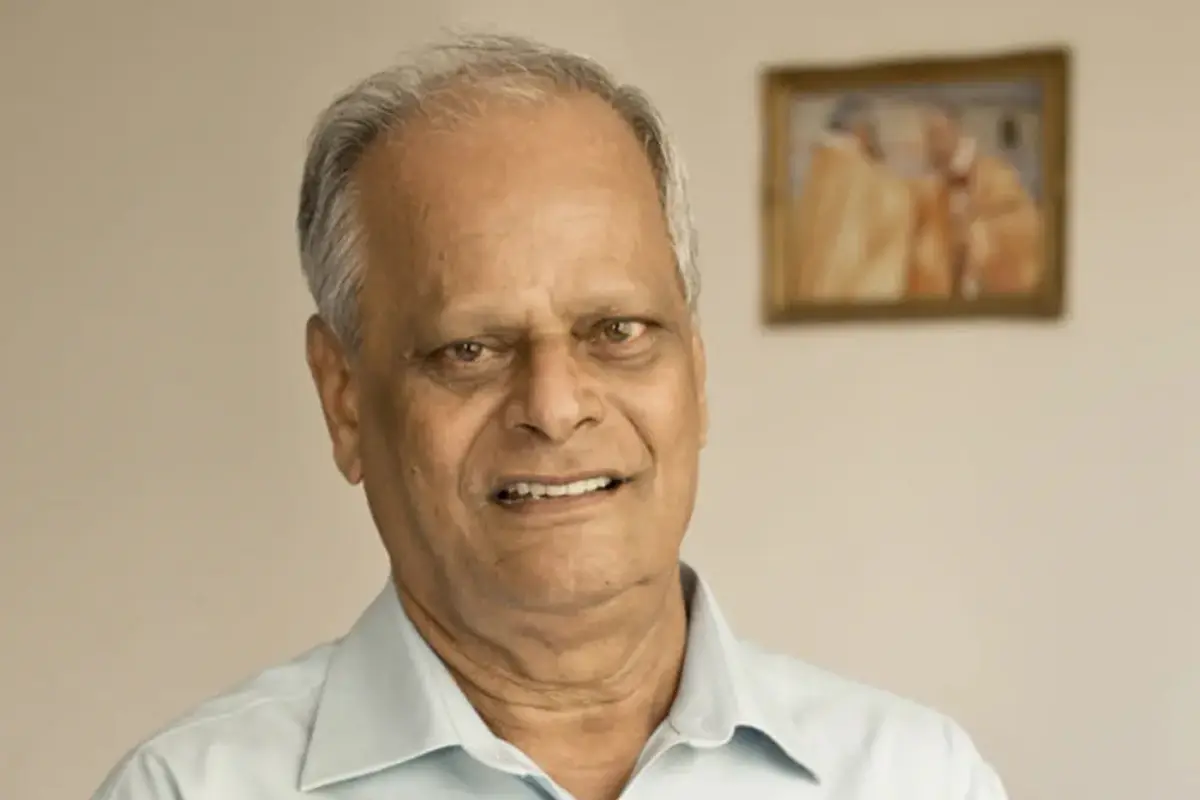
Few writers have captured the socio-cultural tapestry of Singapore’s Tamil community as profoundly as M. Balakrishnan (Ma Ilangkannan). A literary genius, his works have shaped Tamil literature in Southeast Asia, bringing to life the struggles, resilience, and aspirations of the Tamil-speaking diaspora.
As the first Tamil writer to receive the prestigious South East Asian Writers Award in 1982, Balakrishnan has cemented his place as an icon in Singapore’s literary history. His evocative storytelling, deeply rooted in realism, makes his work timeless and transformative.
Balakrishnan: Early Life and Passion for Tamil Literature
Born on September 18, 1938, in Singapore, Mayandiambalam Balakrishnan moved to Tamil Nadu, India, at the age of two. It was here that his love for the Tamil language was nurtured under the guidance of his grandmother and a dedicated teacher, Arumuga Velar. After World War II, he returned to Singapore and enrolled at Kalaimagal Tamil School. However, frequent relocations due to financial instability disrupted his formal education.
Despite these challenges, his thirst for knowledge never wavered. With an insatiable appetite for reading, he devoured Tamil newspapers like Tamil Murasu and magazines like Kalki, Ananta Vikatan, and Tenral. These publications became his literary mentors, shaping his writing style and honing his storytelling skills.
Struggles and Career Path
Financial constraints forced M. Balakrishnan (Ma Ilangkannan) to take up various jobs. In 1957, he began working as a storeman with the British military in Singapore. Later, he joined the Ministry of Culture as a typist in its translation department, where he remained until 1997. Though his day job was administrative, his heart belonged to literature. His experiences in these roles gave him a unique perspective on society, which he masterfully wove into his writings.
Literary Breakthrough and Publications
His literary journey took flight when he became the editor of Thondan, a Tamil literary magazine, in 1964. His debut short story, “Thi Vali” (Pain of Fire), was published in 1966, marking the beginning of a prolific writing career. Over the years, his works featured in Tamil Murasu, Tamil Malar, Ananda Vikatan (India), Tamil Nesan (Malaysia), and literary journals like SINGA.
A master storyteller, Balakrishnan penned over 60 short stories, five short story collections, three novels, and three novellas. Many of his stories were adapted for radio broadcasts and translated into English and Malay, widening his readership beyond Tamil-speaking audiences.
Literary Themes and Impact
M. Balakrishnan (Ma Ilangkannan) had a gift for capturing the lived realities of Singapore’s Tamil community. His writings explore themes such as:
- Cultural identity and migration – The struggles of Tamils adapting to a multicultural Singaporean society.
- Historical narratives – The impact of British colonial rule, the Japanese Occupation, and the Indian National Army.
- Social justice – The lives of migrant workers, cowherds in Bukit Timah, and Singapore’s impoverished class.
- Interracial relationships – The interplay between Tamil, Malay, and Chinese communities in Singapore.
Through rich metaphors and imagery, his stories provide an unfiltered look into the trials and triumphs of the Tamil working class. His novel Paathai Maaria Payanam (Misdirected Journey) delves deep into the mental and emotional turmoil of an Indian contract worker in Singapore, making it one of his most acclaimed works.
Awards and Recognitions
His unparalleled contribution to Tamil literature earned him numerous prestigious awards:
- 1971 – Winner of Ananta Vikatan short story competition
- 1977 – Best Short Story (Singapore Ilakkiya Kalam)
- 1982 – South East Asian Writers Award
- 1983 & 1984 – Winner of short story competitions by the Ministry of Culture
- 1988 & 1989 – Winner of short story competitions by the National Book Development Council and Ministry of Community Development
- 1999 – Tamizhavel Award (Association of Singapore Tamil Writers)
- 2004 – Singapore Literature Prize for Thoondil Meen (Hooked Fish)
- 2005 – Cultural Medallion, Singapore’s highest artistic honor
- 2013 – Karikalan Award (Mustafa Trust)
Also Read : David Bala: A Legacy of Laughter and Passion for Acting