
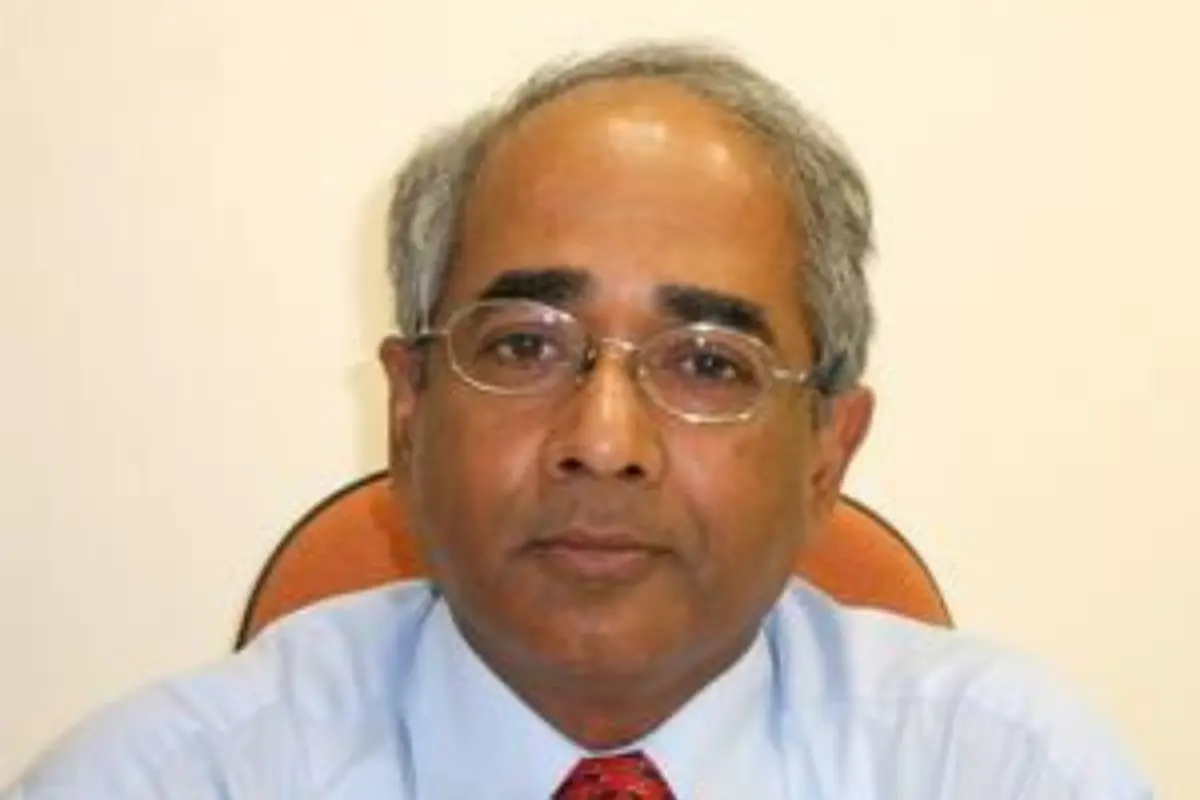
The scientific journey of Lalgudi Ramanathan began in India, where his academic promise quickly became evident. He earned his B.Tech in Metallurgy from the Indian Institute of Technology (IIT) Madras in 1969, an institution renowned for shaping some of the finest engineering minds in the world. His years at IIT Madras instilled in him a strong foundation in materials science, analytical thinking, and problem-solving—qualities that would later define his international career.
Driven by a deep interest in material degradation and long-term performance, he pursued advanced studies in the United Kingdom. He obtained both his M.Sc. and Ph.D. in Corrosion Science and Engineering from John Cass College of Science and Engineering, London, specializing in the complex mechanisms governing corrosion and oxidation in extreme environments.
These formative academic years positioned Lalgudi Ramanathan at the intersection of theory and real-world application, preparing him for challenges that few scientists are equipped to address.
Lalgudi Ramanathan: A Defining Move – Brazil and the Nuclear Frontier
A pivotal moment in the life of Lalgudi Ramanathan came when he accepted an invitation to join Brazil’s emerging nuclear research ecosystem. As a young scientist, he became part of the Energy and Nuclear Research Institute (Instituto de Pesquisas Energéticas e Nucleares – IPEN) in São Paulo at a time when the nation’s nuclear program was still evolving.
What followed was a career that would profoundly influence Brazil’s capabilities in nuclear materials and corrosion engineering. Over the next three decades, Lalgudi Ramanathan rose through the scientific and managerial ranks—not as a native, but purely on merit, expertise, and leadership.
From 2005 to 2013, he served as Head of the Materials Science and Technology Center at IPEN, guiding multidisciplinary teams, shaping national research priorities, and ensuring that scientific excellence translated into practical, safe, and durable nuclear technologies.
Research Excellence and Scientific Contributions
The research legacy of Lalgudi Ramanathan is defined by innovation under extreme conditions. His work consistently addressed one central challenge: how to protect metallic materials operating in environments of intense heat, radiation, oxidation, and corrosion.
Pioneering Research Areas
-
Rare-earth oxide coatings to mitigate high-temperature degradation of metallic materials
-
Protective coatings for spent nuclear fuel, particularly for long-term wet storage in research reactors
-
Nanostructured coatings engineered to resist erosion and oxidation under extreme thermal stress
These contributions were not merely academic exercises. They directly enhanced the safety, longevity, and reliability of nuclear infrastructure—an area where failure is not an option.
Today, Lalgudi Ramanathan is widely regarded as a global authority in corrosion engineering for nuclear materials, with his work influencing standards, best practices, and future research directions worldwide.
Lalgudi Ramanathan: Academic Leadership and Knowledge Dissemination
Parallel to his research career, Lalgudi Ramanathan devoted himself to teaching and mentorship. Since 1979, he has served as a voluntary and accredited postgraduate professor at the University of São Paulo, delivering advanced courses on “Corrosion and Oxidation of Nuclear Materials and Its Prevention.”
Through decades of teaching, he trained generations of engineers and scientists, many of whom went on to occupy leadership roles in academia, industry, and national laboratories. His teaching philosophy emphasized clarity, discipline, and the ethical responsibility of engineers working in high-risk technologies.
Honors, Recognition, and Professional Distinction
Major Honors and Awards
-
Distinguished Alumnus Award, IIT Madras (2014)
-
Distinguished Service Medal, IPEN (1998)
-
Continuous Research Scholarship from CNPq (Brazilian Science Research Council) since 1989
Professional Affiliations
-
Chartered Engineer, Engineering Council, United Kingdom
-
Fellow, Institute of Materials, UK
-
Fellow, Institute of Corrosion, UK