
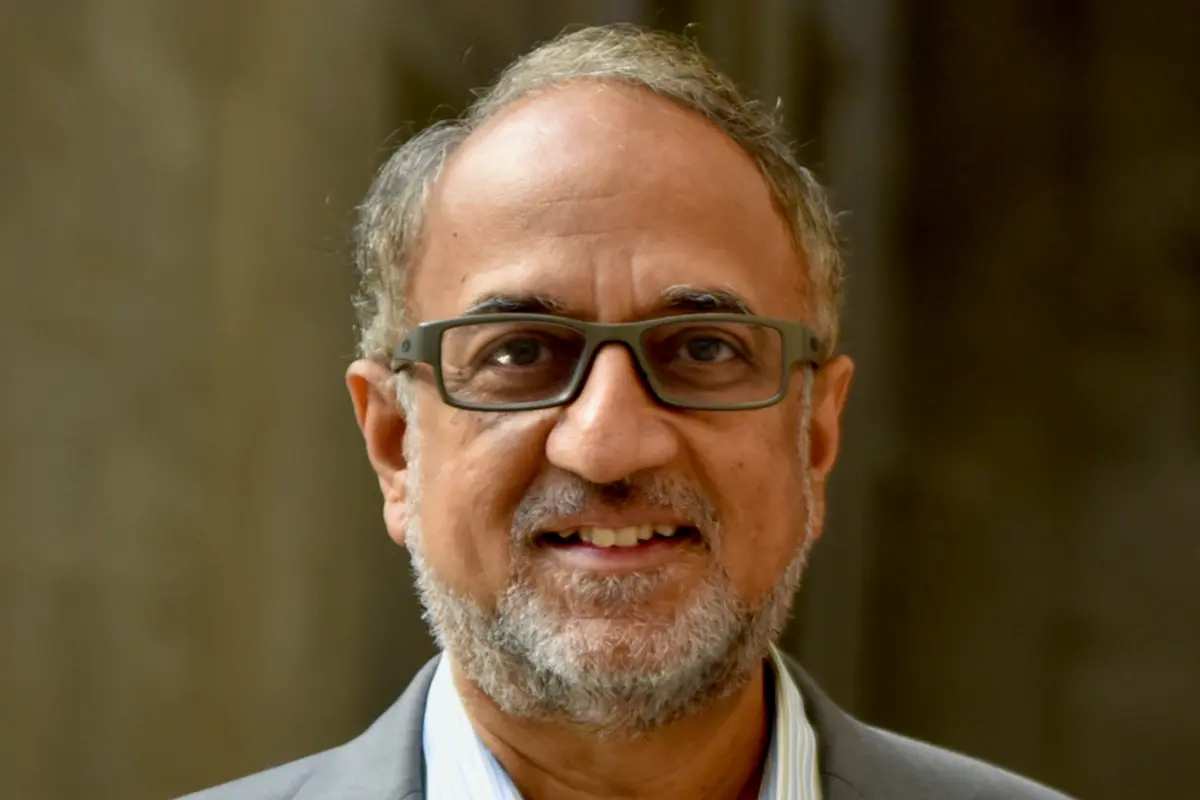
Krishnan Raghavachari: Born and raised in Chennai, Krishnan Raghavachari’s early education unfolded in an environment that valued discipline, scholarship, and intellectual curiosity. His fascination with science emerged early, driven by a desire to understand the fundamental laws governing matter.
He earned his Bachelor of Science degree in 1973 from Madras University, where his aptitude for chemistry became unmistakable. Seeking deeper theoretical grounding, he pursued a Master’s degree at the Indian Institute of Technology (IIT) in 1975, one of India’s most prestigious academic institutions. At IIT, Raghavachari developed the analytical precision and mathematical sophistication that would later define his scientific legacy.
Krishnan Raghavachari: Doctoral Training Under a Nobel Laureate
The next decisive chapter in the journey of Krishnan Raghavachari began when he moved to the United States to pursue doctoral studies at Carnegie Mellon University. There, he worked under Professor John Pople, a towering figure in theoretical chemistry who would later receive the 1998 Nobel Prize in Chemistry.
Completing his Ph.D. in 1981, Raghavachari’s doctoral work laid the groundwork for a lifelong pursuit: developing quantum chemical methods that are not only mathematically rigorous but also broadly usable by scientists worldwide. The mentorship under Pople instilled in him an enduring commitment to methodological excellence, accuracy, and practical relevance.
Bell Laboratories: A Golden Era of Innovation
Immediately after earning his doctorate, Krishnan Raghavachari joined Bell Laboratories in 1981, one of the most intellectually fertile research environments in modern scientific history. Bell Labs provided him the freedom and collaborative atmosphere necessary to pursue ambitious theoretical innovations.
From 1981 to 1986, he served as a member of the technical staff, and in 1987, he was named a Distinguished Member of Technical Staff, a recognition reserved for scientists of exceptional impact.
It was during this period that Raghavachari made his most enduring contribution to science.
Krishnan Raghavachari: The CCSD(T) Breakthrough – The Gold Standard of Quantum Chemistry
In 1989, Krishnan Raghavachari co-developed the CCSD(T) method—Coupled Cluster with Single, Double, and perturbative Triple excitations. This breakthrough resolved one of the most challenging problems in quantum chemistry: how to accurately and efficiently account for electron correlation effects, particularly triple excitations.
Decades later, CCSD(T) remains the benchmark against which all high-accuracy quantum chemical methods are measured. Its unmatched balance of accuracy, robustness, and applicability has made it indispensable for:
-
Accurate bond energy calculations
-
Molecular property predictions
-
Benchmarking experimental results
-
Validation of emerging computational methods
The method’s longevity and universal adoption have firmly cemented Krishnan Raghavachari as a scientist whose work transcends generations.
Gaussian-n Methods and Democratizing Computational Chemistry
Beyond CCSD(T), Krishnan Raghavachari collaborated with John Pople and Larry Curtiss to develop the Gaussian-2, Gaussian-3, and Gaussian-4 (G2, G3, G4) methods. These hybrid quantum chemical models were revolutionary in their goal: delivering chemical accuracy—approximately 1 kcal/mol—for reaction energies using computationally accessible approaches.
The Gaussian-n methods transformed computational chemistry from an elite theoretical discipline into a practical tool usable by non-specialists across academia and industry. This democratization of quantum chemistry remains one of Raghavachari’s most profound contributions.
Indiana University and Academic Leadership
In 2002, Krishnan Raghavachari joined the Department of Chemistry at Indiana University Bloomington as Professor. His arrival strengthened the institution’s global standing in theoretical and computational chemistry.
Recognizing his sustained excellence, Indiana University appointed him Distinguished Professor in 2014, one of the highest academic honors bestowed by the university.
At Indiana University, his research expanded into:
-
Advanced electron correlation theory
-
Fragmentation-based quantum chemistry methods for large molecules
-
Computational catalysis
-
Structure-based drug design
-
Machine learning applications in quantum chemistry
-
Computer-aided design of fluorescent materials and molecular receptors
Scholarly Impact and Global Influence
The scholarly output of Krishnan Raghavachari is extraordinary:
-
430+ peer-reviewed publications across chemistry, physics, biochemistry, and materials science
-
75,000+ citations
-
h-index of 97, reflecting sustained high-impact contributions
He has delivered over 150 invited lectures in more than a dozen countries, serving as a global ambassador for theoretical chemistry and inspiring scientists at every career stage.
Professional Service and Editorial Leadership
Raghavachari’s influence extends beyond research. He has played a vital role in shaping the scientific community through leadership and service, including:
-
Chair, Theoretical Chemistry Subdivision, American Chemical Society
-
Advisory Board Member, Physical Chemistry Division, ACS
-
Editorial and advisory roles for leading journals such as:
-
Journal of Physical Chemistry
-
Journal of Computational Chemistry
-
Theoretical Chemistry Accounts
-
Journal of Materials Research
-
Krishnan Raghavachari: Honors, Awards, and Global Recognition
The scientific excellence of Krishnan Raghavachari has been recognized worldwide through numerous prestigious honors, including:
-
Davisson-Germer Prize in Surface Physics, American Physical Society (2009)
-
Fellow, American Physical Society
-
Fellow, Royal Society of Chemistry
-
Fellow, American Association for the Advancement of Science
-
Elected Member, International Academy of Quantum Molecular Science
-
Distinguished Alumnus Award, IIT Madras (2014)
-
Chemical Research Society of India Medal (2017)
-
Indiana University Bicentennial Medal (2020)