
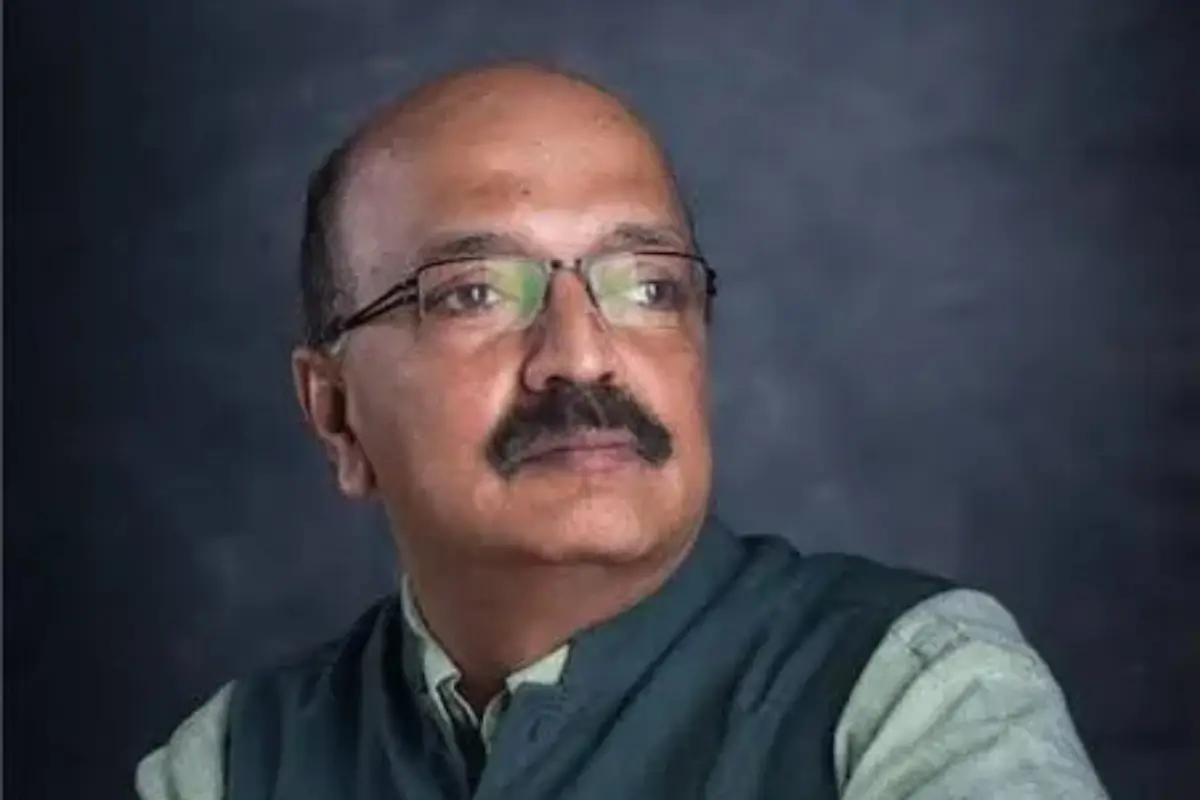
Krishnamurtha Kannikeswaran, fondly known across continents as Kanniks, stands as one of the most distinctive cultural visionaries of the Indian diaspora.
In 1984, Kannikeswaran graduated from the prestigious Indian Institute of Technology Madras with a bachelor’s degree in Metallurgical Engineering. His early academic choices reflected analytical rigor, precision, and a deep respect for structured thinking.
His move to the United States expanded this foundation. At the University of Cincinnati, he earned a master’s degree in Materials Engineering in 1986, followed by an MBA in 1988, and these years shaped his ability to combine creativity with organization. This uncommon but powerful blend later enabled him to manage large-scale artistic productions and community ensembles.
Yet, the call of music never faded. Returning to formal study decades later, Kanniks earned a Doctorate in Indian Music from the University of Madras in 2014, completing a full-circle journey that united intellect, devotion, and artistic purpose.
Krishnamurtha Kannikeswaran: Founding a Movement: Indian Choral Music in America
A defining chapter in Krishnamurtha Kannikeswaran’s unfolded in 1993, when he founded the Greater Cincinnati Indian Community Choir. At the time, Indian classical music in the United States was largely confined to solo performances and small ensembles. Kanniks envisioned something radically different: Indian ragas performed through the collective power of choirs.
In 1994, he unveiled his first major production, “Basant – A Musical Celebration of Spring.” It marked the birth of a new sonic identity—Indian melodic frameworks expressed through Western choral harmony. This innovation would later be recognized as a pioneering contribution to Indian American cultural life.
Over the years, Kanniks assembled and led Indian American choirs in more than ten U.S. cities, personally impacting the lives of over 3,500 performers. His work inspired the formation of community choirs across at least 12 cities, creating a self-sustaining cultural movement that continues to flourish.
Collaborations Across Continents and Traditions
Kannikeswaran’s artistic collaborations read like a global map of musical dialogue. He has worked with esteemed institutions such as the Cincinnati Chamber Orchestra, the Cincinnati Symphony Orchestra, and the Cincinnati Pops, seamlessly integrating Indian raga-based compositions with Western orchestral frameworks.
His international collaborations include the Residentie Orkest of the Netherlands, the National University of Singapore Symphony Orchestra, and the United Nations Association International Choir. Alongside these institutions, he has partnered with legendary artists such as Lakshmi Shankar, Mallika Sarabhai, and the revered Gundecha Brothers.
Krishnamurtha Kannikeswaran: Scholarship and the Rediscovery of Dikshitar
A pivotal scholarly contribution highlighted in every serious Krishnamurtha Kannikeswaran is his research on the Indo-Colonial music of Muthuswami Dikshitar. Kanniks explored the composer’s Nottusvara Sahityas—melodies influenced by Western tunes yet deeply grounded in Carnatic aesthetics.
In 2007, his lecture-demonstration at the Music Academy in Madras brought widespread attention to this overlooked genre. The following year, he released “Vismaya – An Indo-Celtic Musical Journey,” the first-ever recording of the Nottusvara Sahityas with Western orchestration, performed by his daughter Vidita Kanniks.
This work reframed colonial interaction not as cultural loss, but as creative dialogue—an idea that resonated with scholars, musicians, and audiences worldwide.
Dikshitar and Dhrupad: A Meditative Convergence
Kannikeswaran’s research further uncovered deep structural and philosophical parallels between Dikshitar’s compositions and the Dhrupad tradition of Hindustani music. His collaboration with the Gundecha Brothers culminated in “Guruguha-Dhruvapada” and “Meditative Moments,” concert experiences that emphasized contemplative depth over performative spectacle.
Educator, Mentor, and Pedagogue
Since 1994, Kanniks has served as an Adjunct Faculty member of Musicology at the College-Conservatory of Music, University of Cincinnati, teaching graduate-level courses in Indian music theory and history. He continues to teach through the Hindu University of America, where his pedagogy emphasizes Raga Vidya—the shared philosophical core of Carnatic and Hindustani traditions.
His teaching style blends intellectual clarity with spiritual insight, encouraging students to approach music not merely as sound, but as lived wisdom.
Documentary Filmmaking and Digital Storytelling
Beyond performance and scholarship, Kanniks has embraced film and digital media as modern tools of cultural transmission. His award-winning documentary “Colonial Interlude” on Dikshitar received accolades at U.S. film festivals, while “Yog Darshan” earned praise from eminent scholars, including Padma Bhushan Dr. Nagaswamy.
His acclaimed music video “Rivers of India,” created for the International Center for Clean Water at IIT Madras, united voices such as Bombay Jayashri and Kaushiki Chakravorty, blending environmental consciousness with artistic excellence.
Krishnamurtha Kannikeswaran: Recognition and Global Impact
Kannikeswaran’s influence has been acknowledged at the highest levels. His composition “Mahavakya” opened the historic Madison Square Garden reception for Prime Minister Narendra Modi in 2014. He has been featured on NPR, presented at INK Talks India, and honored with awards including the Ohio Heritage Fellowship, Humanities Award from the Hindu American Foundation, Just Community Award, and the Distinguished Alumnus Award from IIT Madras.