
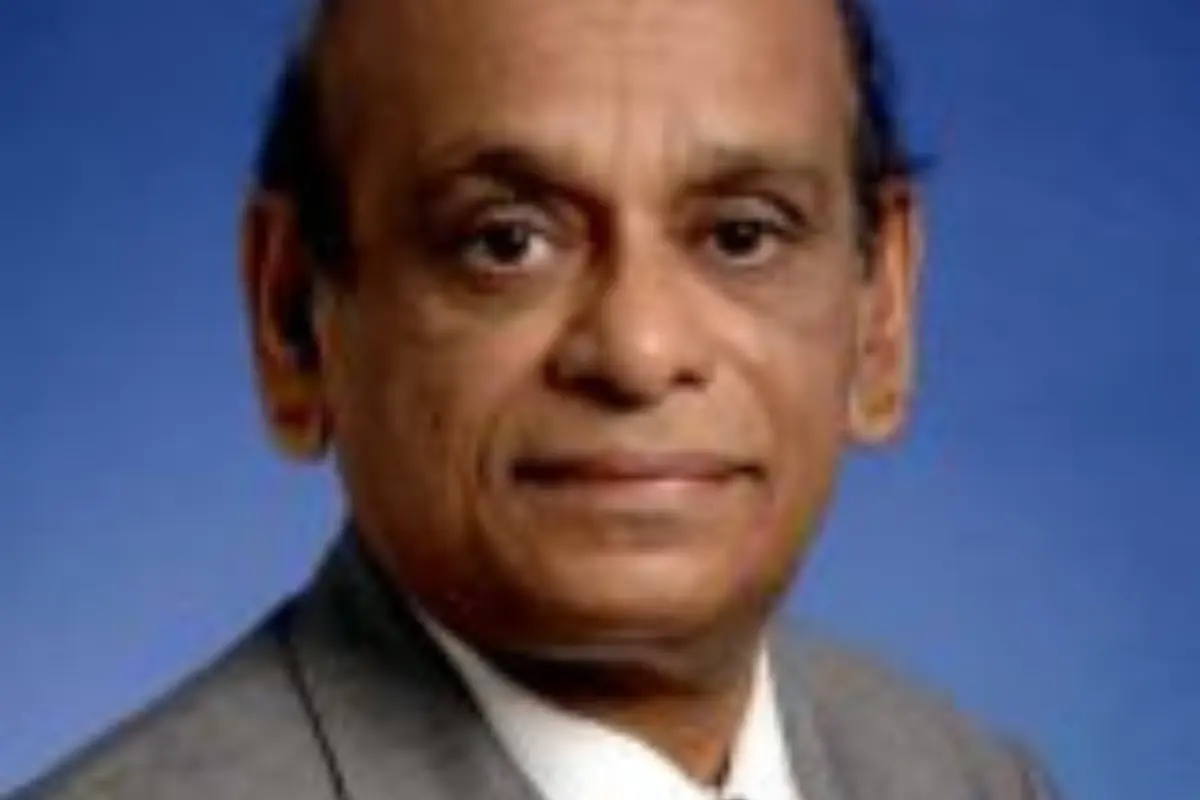
Krishnaiyan Thulasiraman was born to Krishnaiyan and Nannammal, who instilled in him the values of education, integrity, and perseverance. Even as a young student at Pachayappa’s College in Kanchipuram, his brilliance was unmistakable. Graduating with a gold medal, he demonstrated not only academic excellence but also a disciplined approach to learning that would define his entire life.
He pursued his bachelor’s and master’s degrees in electrical engineering from the University of Madras in 1963 and 1965, respectively. At a time when India was still developing its technological ecosystem, his decision to dive deep into engineering signaled a forward-looking mindset.
His intellectual journey reached a defining milestone when he earned his Ph.D. from the Indian Institute of Technology Madras in 1968—an achievement that marked the beginning of a career destined for global recognition.
Krishnaiyan Thulasiraman: Academic Foundations at IIT Madras
Between 1965 and 1981, Krishnaiyan Thulasiraman served on the faculty of IIT Madras, one of India’s premier institutions. These years were not merely about teaching; they were about building intellectual frameworks.
He quickly gained recognition for his ability to explain complex mathematical structures with clarity and purpose. Students found in him not just a professor but a mentor who encouraged independent thinking.
During this period, he began exploring the vast potential of graph theory—a branch of mathematics concerned with networks and connections. While the subject was often seen as theoretical, Thulasiraman envisioned its practical relevance in circuits, communication systems, and computing.
That vision would soon redefine his career.
Crossing Continents: Expanding Intellectual Horizons
As his reputation grew, Krishnaiyan Thulasiraman was invited to North America multiple times as a visiting scholar. These academic exchanges broadened his perspective and connected him with global research communities.
In 1981, he moved to Canada, first serving briefly at the Technical University of Nova Scotia and then joining Concordia University in Montreal. From 1982 to 1994, he flourished there as a professor and later as Chair of the Electrical and Computer Engineering Department.
At Concordia, his leadership style blended rigor with empathy. He fostered collaboration across disciplines and championed research that addressed real-world challenges. His work during this era helped bridge the gap between theoretical graph models and practical engineering systems.
Krishnaiyan Thulasiraman: The University of Oklahoma Era – A Chair That Carried Influence
In 1994, Krishnaiyan Thulasiraman accepted the prestigious Hitachi Chair in Computer Science at the University of Oklahoma. It was a role that reflected not only his scholarly stature but also the trust placed in his vision for the future of computing.
He served in this capacity until his retirement in 2017 and continued as Emeritus Professor thereafter—remaining intellectually active until the very end of his life.
At Oklahoma, his classroom became a launching pad for future innovators. Students recall his lectures as intellectually demanding yet deeply inspiring. He didn’t just teach algorithms; he taught students how to think.
Master of Graph Theory and Algorithms
Krishnaiyan Thulasiraman’s research interests spanned graph theory, combinatorial optimization, algorithms, network science, and applications in electrical and computer engineering. His work addressed critical challenges such as fault diagnosis, system tolerance, and network testing—areas essential to reliable technological infrastructure.
What set him apart was his unusual ability to adapt research to rapidly evolving technological trends. As computing moved from isolated systems to interconnected networks, his work became increasingly relevant.
He published more than 100 archival journal papers and held a U.S. patent on distributed Quality of Service (QoS) routing—evidence of his commitment to innovation.
To many in the academic world, he was not just a contributor but a thought leader whose ideas shaped entire research directions.
Books That Educated Generations
Some scholars write papers; others write books that define disciplines. Krishnaiyan Thulasiraman did both.
His co-authored works remain foundational texts:
-
“Graphs, Networks, and Algorithms” (1981) – A pioneering work that brought clarity to complex structures and became essential reading for advanced students.
-
“Graphs: Theory and Algorithms” (1992) – Expanded the intellectual boundaries of graph theory and strengthened its relevance in computing.
-
“Handbook of Graph Theory, Combinatorial Optimization and Algorithms” (2015) – A monumental reference that gathered global expertise into one comprehensive resource.
These publications did more than educate—they inspired researchers to explore new possibilities.
Leadership Beyond the Classroom
Krishnaiyan Thulasiraman believed that advancing science required strong professional communities. His contributions to the IEEE Circuits and Systems Society exemplify this belief.
He served as:
-
Vice President (Administration)
-
Technical Program Chair of ISCAS
-
Deputy Editor-in-Chief of IEEE Transactions on Circuits and Systems I
-
Associate Editor and Guest Editor
-
Founding Regional Editor of the Journal of Circuits, Systems, and Computers
-
Founding editorial board member of the AKCE International Journal of Graphs and Combinatorics
Through these roles, he shaped scholarly dialogue and ensured that emerging research received the attention it deserved.
Krishnaiyan Thulasiraman: Honors That Reflected Excellence
Recognition followed naturally.
Krishnaiyan Thulasiraman was elected Fellow of the IEEE and Fellow of the American Association for the Advancement of Science—distinctions reserved for individuals whose work significantly advances their fields.
Among his many accolades were:
-
IEEE Circuits and Systems Society Technical Achievement Award
-
Lifetime Achievement Award (2006)
-
IEEE CAS Society Golden Jubilee Medal
-
“Pioneers of Circuits and Systems” recognition (2017)
-
Senior Fellow, Japan Society for the Promotion of Science
-
European Academy of Sciences Fellow
-
Gopalakrishnan Endowed Chair Professor, IIT Madras
-
Distinguished Alumnus honors from IIT Madras and the College of Engineering, Guindy