
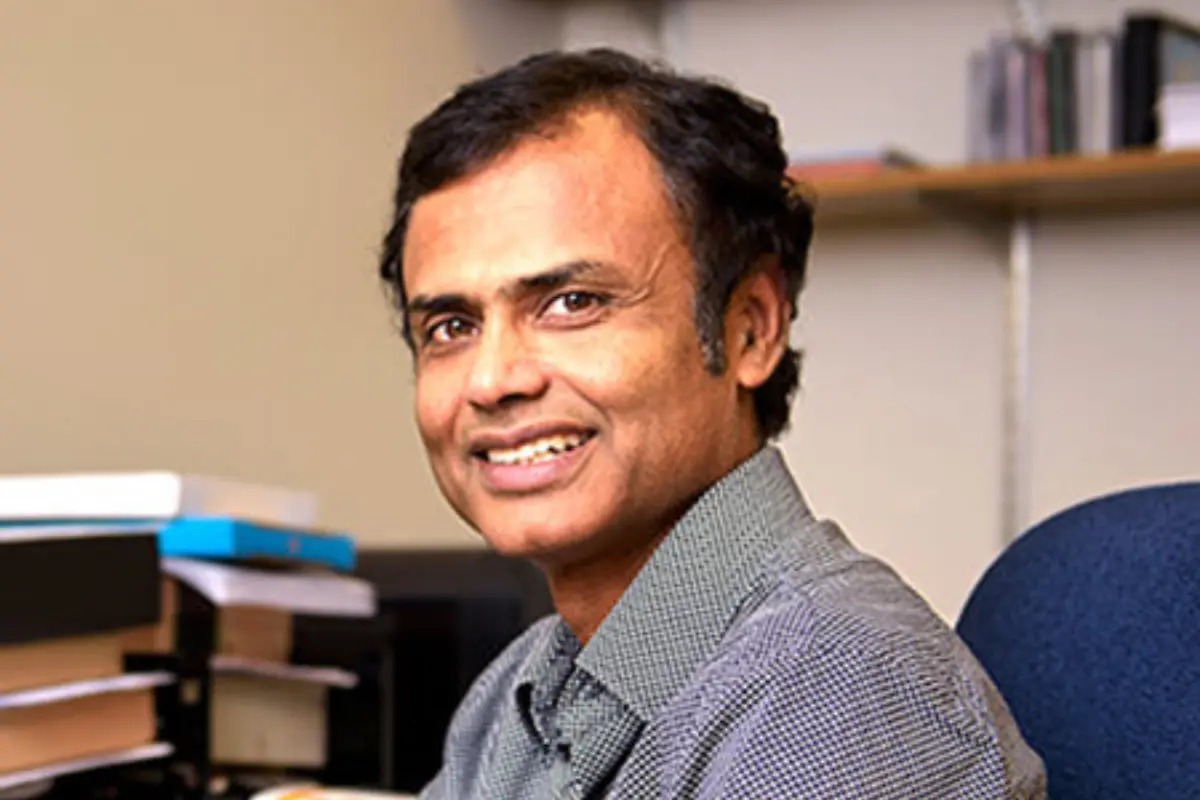
Kaushik Roy stands among the most influential minds in modern electrical and computer engineering. A researcher, educator, innovator, and institutional leader.
Early Life and Academic Foundations of Kaushik Roy
The intellectual journey of Kaushik Roy began in India, where his early fascination with electronics and problem-solving laid the groundwork for a lifetime of innovation. He earned his Bachelor of Technology degree in Electronics and Electrical Engineering from the Indian Institute of Technology (IIT) Kharagpur in 1983, one of Asia’s most prestigious engineering institutions.
Driven by a desire to push the boundaries of computing science, Kaushik Roy pursued advanced studies in the United States. He completed his Ph.D. in Electrical and Computer Engineering at the University of Illinois at Urbana-Champaign in 1990, under the mentorship of renowned scholar Jacob Abraham. This formative period shaped his research philosophy—bridging device-level physics with system-level intelligence.
Industry Experience: Bridging Theory and Practice
Before entering academia, Kaushik Roy spent crucial years in industry, serving as a member of the technical staff at Texas Instruments between 1990 and 1993. Working at the Semiconductor Process and Design Center in Texas, he gained hands-on experience in real-world chip design and manufacturing challenges.
This exposure gave him a unique perspective—one that blended theoretical insight with practical engineering constraints. It would later become a defining strength of his academic research, enabling him to create solutions that were not only innovative but also scalable and industry-relevant.
Kaushik Roy: Academic Career at Purdue University
In 1993, Kaushik Roy joined Purdue University’s College of Engineering as an Assistant Professor of Electrical Engineering. His rise through the academic ranks was swift and well-earned:
-
Associate Professor (1997)
-
Full Professor (2001)
-
Roscoe H. George Professor of Electrical Engineering
-
Edward G. Tiedemann, Jr., Distinguished Professor (2012)
At Purdue, Kaushik Roy established himself as a cornerstone of the university’s global reputation in microelectronics and computing research. His ability to build interdisciplinary teams and translate abstract ideas into impactful technologies set him apart as both a scholar and a leader.
Leadership in Research and Innovation
One of Kaushik Roy’s most defining contributions is his leadership in large-scale, future-oriented research initiatives.
Center for Brain-Inspired Computing (C-BRIC)
As Director of the Center for Brain-Inspired Computing (C-BRIC), funded by SRC and DARPA, Kaushik Roy spearheaded efforts to develop computing architectures modeled after biological neural systems. The center became a hub for groundbreaking work in neuromorphic computing, neuro-mimetic devices, and algorithm-hardware co-design.
Institute of CHIPS and AI
Currently, Kaushik Roy serves as the Director of the Institute of CHIPS and AI at Purdue University, a forward-looking initiative focused on the convergence of semiconductor technology and artificial intelligence. Under his leadership, the institute addresses national and global priorities in secure, efficient, and intelligent chip design.
CHEETA Project
As the lead researcher of the Microelectronics Commons project “CHEETA: CMOS+MRAM Hardware for Energy Efficient AI”, Kaushik Roy is shaping next-generation AI systems that dramatically reduce energy consumption while enhancing performance.
Research Philosophy and Core Contributions
At the heart of Kaushik Roy’s work lies a powerful idea: computing must evolve beyond brute-force performance and toward intelligent efficiency.
His research spans several transformative domains:
-
Neuromorphic Computing: Designing hardware that mimics neurons and synapses to enable brain-like learning and perception.
-
Low-Power CMOS VLSI Design: Developing foundational techniques that minimize energy usage in digital systems.
-
Emerging Technologies: Exploring spintronics, MRAM, RRAM, and non-silicon devices for future computing platforms.
-
Device-Circuit-Algorithm Co-Design: Integrating multiple abstraction layers to achieve optimal performance and efficiency.
Through this holistic approach, Kaushik Roy has influenced how engineers worldwide think about sustainable and scalable computing.
Scholarship, Patents, and Global Impact
The scholarly output of Kaushik Roy is extraordinary by any standard. As of 2025:
-
Over 1,000 publications across journals, books, and conferences
-
More than 73,000 citations, reflecting deep and sustained global impact
-
24 patents, bridging academic research and practical application
-
Co-author of two seminal books on Low Power CMOS VLSI Design, published by John Wiley and McGraw-Hill
Equally important is his role as a mentor. Kaushik Roy has supervised more than 100 Ph.D. dissertations, shaping a global network of researchers, professors, and industry leaders who continue to advance his vision.
Kaushik Roy: Honors, Awards, and Recognition
Major Awards and Honors
-
Purdue University Arden L. Bement Jr. Award for outstanding achievements in science and engineering
-
NSF CAREER Award
-
SRC Technical Excellence, Inventors, Innovation, and Aristotle Awards
-
IEEE Circuits and Systems Society Technical Achievement Award
-
IEEE TCVLSI Distinguished Research Award
-
IIT Kharagpur Distinguished Alumnus Award
Professional Fellowships
-
Fellow of the Institute of Electrical and Electronics Engineers (IEEE)
-
Fellow of AAAI
-
Fellow of AAAS