
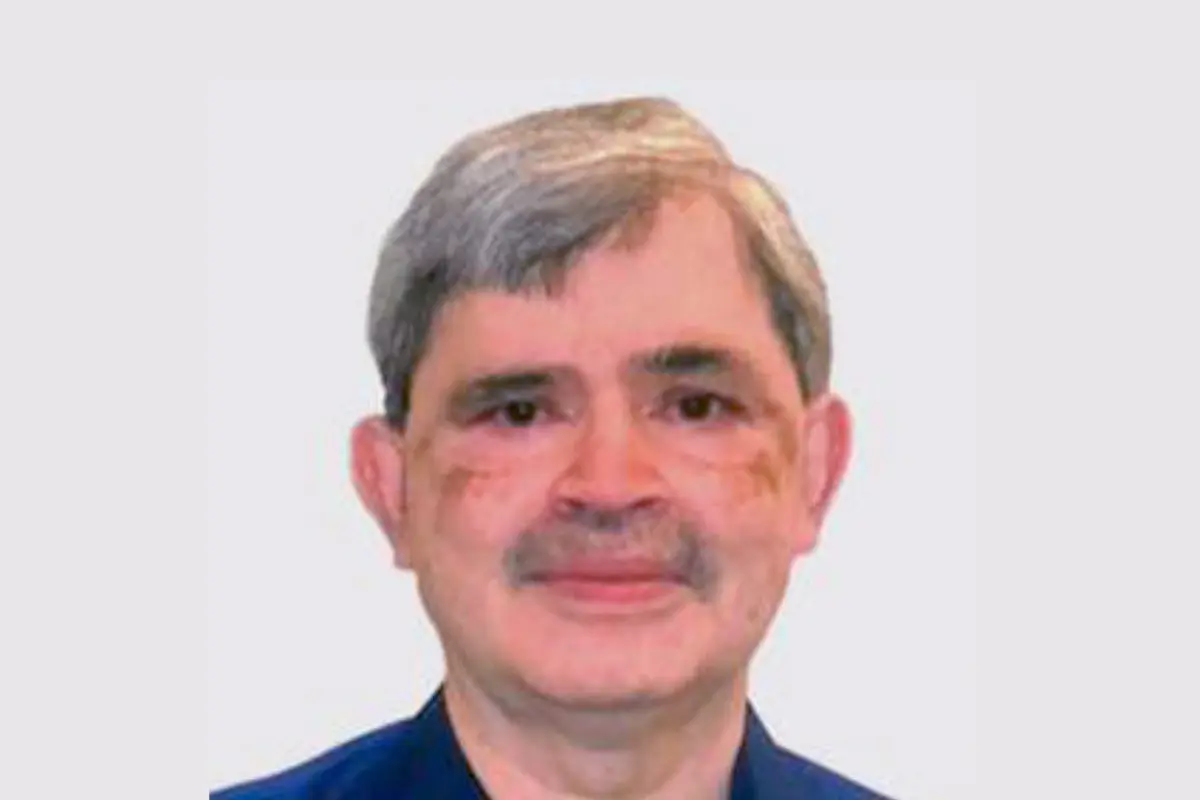
Growing up in Karnataka, science for Jayaraman Chandrasekhar was not merely a subject – it was a language of wonder. He completed his undergraduate degree in Chemistry from Bangalore University in 1970. His early brilliance and hunger for research took him to the Indian Institute of Technology (IIT) Madras, where he completed his Master’s in 1972.
It was here that destiny shaped his future as he moved deeper into computational chemistry and theoretical organic chemistry, completing his PhD in 1977 under the mentorship of Professor S. Subramanian. This mentorship became a turning point – a mentorship that would mould a student into a global pioneer.
Jayaraman Chandrasekhar: Academic Foundations That Influenced the World
Following his doctoral work, Jayaraman Chandrasekhar stepped into the global scientific arena. His post-doctoral studies took him to the University of Erlangen-Nuremberg in the renowned laboratory of Paul von Ragué Schleyer. There, he optimised the basis set of diffuse functions – a contribution still widely used today in quantum chemical simulations.
His scientific journey continued at Purdue and later Yale University, where he collaborated with William L. Jorgensen. Here, he developed the TIP4P potential function for water, one of the most influential models in molecular simulations – a contribution that later revolutionized how water-based chemical systems are understood across scientific fields.
These achievements are not mere research papers – they are tools that modern chemistry students and researchers unknowingly use daily.
A Return to India – And a New Era at IISc
When Jayaraman Chandrasekhar returned to India, he joined the Department of Organic Chemistry at the Indian Institute of Science (IISc), Bengaluru. Here, he built an outstanding research program in theoretical organic chemistry, mentoring doctoral students, publishing extensively, and forging collaborations with experimental chemists around the country. His work helped India earn a place of recognition within the global computational chemistry community at a time when the field was still evolving.
Jayaraman Chandrasekhar: Transforming Computational Chemistry – Defining Breakthroughs
The scientific legacy of Jayaraman Chandrasekhar is rich and foundational. His work expanded the understanding of:
-
Negative hyperconjugation in organic, inorganic, and organometallic systems
-
Structure-reactivity relationships
-
Captodative stabilization
-
Distonic radical ions
-
Quantification of electronic effects and three-dimensional molecular interactions
His research – comprising over 151 peer-reviewed papers, book chapters, global editorial roles, and international representation – positioned him among the top-cited researchers in India.
Transition to Drug Discovery – Science Serving Humanity
Many scientists remain confined to academia, but Jayaraman Chandrasekhar refused to limit his impact. After serving as a professor at IISc, he made a bold transition. He moved into industry research in the United States, joining Neurogen Corporation in Branford to work on drugs targeting the central nervous system. Later, at Psychogenics, Tarrytown, his work contributed to potential therapeutic compounds for mental health-related disorders.
In 2010, he joined Gilead Sciences, one of the world’s leading pharmaceutical innovators. At its Seattle site, he became deeply involved in research targeting oncology and inflammation – areas that hold immense hope for patients battling chronic and life-threatening diseases. Today, he continues working on drug candidates that may one day alter human lives and move from clinical trials to lifesaving therapeutics.
Awards, Recognition, and Global Scientific Influence
The world recognized Jayaraman Chandrasekhar not merely for academic brilliance but for shifting paradigms in chemistry.
Among his honors:
-
Shanti Swarup Bhatnagar Prize (1995) – one of India’s highest scientific awards
-
Dr Hussain Zaheer Young Scientist Award
-
Fellow, Indian Academy of Sciences (1992)
-
Fellow, Indian National Science Academy (2000)
-
Citation Laureate Award (2004) – placing him among a distinguished group often associated with Nobel-level recognition
-
Senior Fellow, Jawaharlal Nehru Centre for Advanced Scientific Research
-
National Lectureship, Department of Science and Technology
-
Board member, World Association of Theoretically Oriented Chemists (1996-2005)