
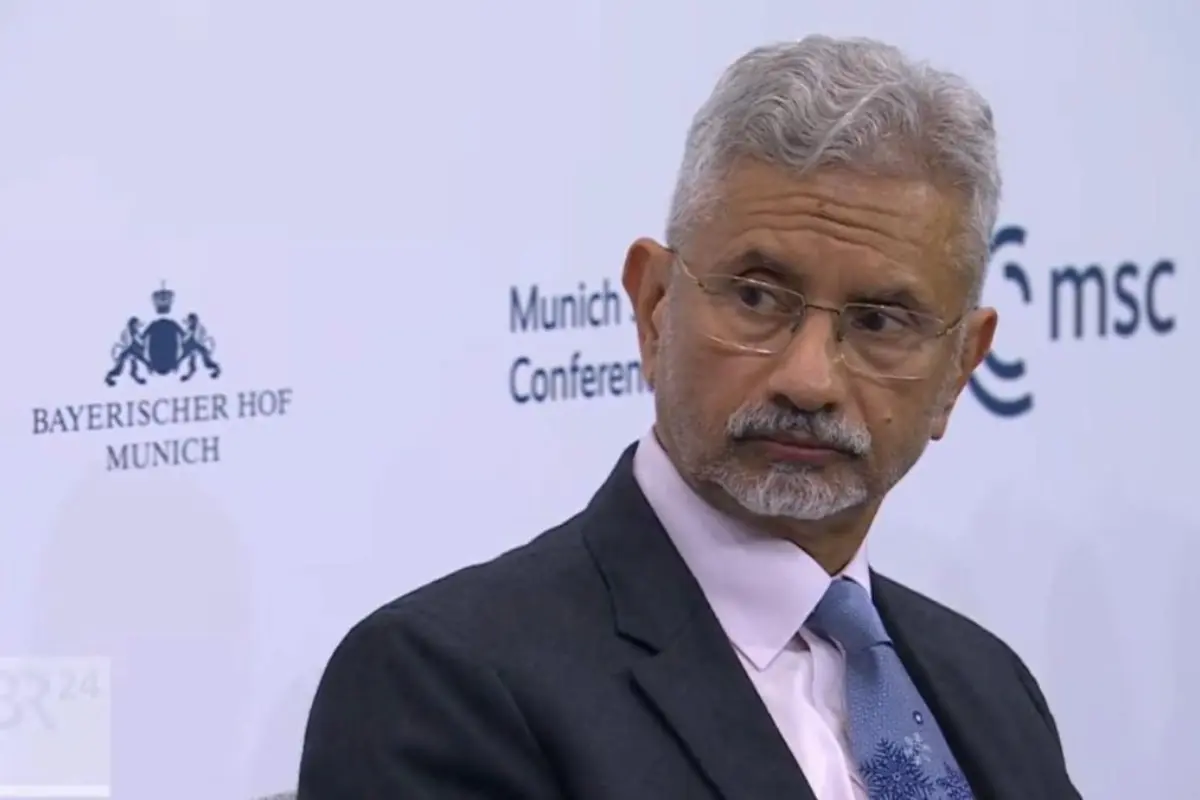
Jaishankar Calls Strategic Autonomy a Cross-Party Consensus
Jaishankar Defends India’s Strategic Autonomy Amid U.S. Trade Deal Debate
At the high-profile Munich Security Conference in Munich, External Affairs Minister S. Jaishankar delivered a firm and measured defence of India’s foreign policy independence, pushing back against claims that recent trade understandings with the United States had weakened New Delhi’s strategic autonomy.
Sharing the stage with Johann Wadephul, the Indian minister argued that India’s diplomatic philosophy has long rested on the freedom to make decisions rooted in national interest rather than external pressure. His remarks came during a discussion moderated by Roula Khalaf of the Financial Times, reflecting the global attention on India’s evolving geopolitical positioning.
Jaishankar: Russian oil debate and U.S. trade pressures
The S. Jaishankar Strategic Autonomy Remarks were triggered by speculation that a recent trade framework with the administration of Donald Trump had compelled India to scale down purchases of crude from Russia — imports that surged following Moscow’s invasion of Ukraine in 2022.
Jaishankar rejected the notion that New Delhi had compromised its independence, emphasising that energy procurement decisions are driven primarily by market forces and commercial calculations rather than political bargaining. According to him, both public and private sector energy firms operate with economic logic, weighing costs, logistics and long-term strategic interests.
Domestic political scrutiny and India’s response
Back home, the government led by Narendra Modi has faced criticism from opposition parties alleging that New Delhi bowed to Washington’s demands. The minister’s response in Munich sought to reassure domestic audiences as much as global observers, highlighting that strategic autonomy is a consensus principle across India’s political spectrum.
He also hinted that differences between India and the European Union over energy ties with Moscow were part of normal diplomatic debate rather than evidence of policy reversal. Jaishankar stressed that India’s foreign relations remain multifaceted, citing the recent India-EU free trade progress and the successful visit of German Chancellor Friedrich Merz to India as examples of balanced engagement.
Jaishankar: Agenda-based partnerships and India’s diplomatic style
Commenting on a speech by Mark Carney at the World Economic Forum in Davos, Jaishankar noted that coalition-building among middle powers may be a novel approach for Canada, but not for India. He described “agenda-based groupings” as a longstanding feature of Indian diplomacy.
He cited participation in groupings such as the Quad and BRICS as evidence of India’s flexible, issue-driven engagement with partners worldwide. According to him, this multi-alignment strategy enables New Delhi to work simultaneously with Western democracies and developing economies while preserving policy independence.
IMEC’s progress amid regional turbulence
Turning to connectivity initiatives, Jaishankar addressed the progress of the India-Middle East-Europe Economic Corridor (IMEC), acknowledging that conflict in West Asia has slowed implementation. He emphasised that the corridor is designed primarily to enhance trade routes, logistics efficiency and economic connectivity rather than resolve political disputes.
Responding to a question about Palestinian interests and regional stability, he reaffirmed India’s longstanding support for peace and dialogue while clarifying that infrastructure initiatives should not be viewed as substitutes for diplomatic solutions to longstanding conflicts.
Quad summit speculation and future engagement
The S. Jaishankar Strategic Autonomy Remarks also touched on questions about the future of the Quad. While a summit in India during 2025 did not materialise, he dismissed speculation that the grouping was losing relevance. He pointed to ongoing ministerial-level and working-level cooperation as proof of continued momentum.
Highlighting U.S. Secretary of State Marco Rubio’s early engagement with Quad counterparts, Jaishankar suggested that institutional mechanisms within the grouping remain active and evolving, urging observers not to read too much into scheduling shifts.