
India-US Trade Rebalance: Piyush Goyal Signals Flexibility
India-US Trade Deal Rebalance Gains Momentum as Goyal Responds to Trump Tariff Move
The proposed India-US trade pact may undergo recalibration as global tariff dynamics shift, Commerce and Industry Minister Piyush Goyal indicated, underscoring that India will not compromise on its core economic interests in an unpredictable global trade environment.
The statement comes at a sensitive moment in international trade relations, following a significant legal and policy turn in Washington. The Supreme Court of the United States recently ruled that the reciprocal tariffs imposed by the Donald Trump administration were illegal. However, in a swift move, former US President Donald Trump signed an executive order introducing a 10% blanket global tariff on America’s trading partners, with indications that it could rise to 15%.
Against this backdrop, the India-US Trade Deal Rebalance has taken center stage in diplomatic and economic discussions.
India-US Trade: “Focused on Getting the Best Trade Deal”
Speaking at a public forum, Goyal described the situation as fluid and evolving. He stressed that while negotiations are ongoing, India remains fully prepared to adjust the contours of the agreement should external circumstances demand it.
“It’s an evolving situation. The administration has other tools they can use. Next week, they can increase it to 15%. Various dialogues are going on,” he said, reinforcing the idea that flexibility is embedded within the negotiation framework.
Importantly, he clarified that both nations had already built a safeguard clause into their understanding. According to Goyal, the joint statement between India and the US clearly provides that if circumstances change, the deal will be rebalanced. That provision now assumes greater relevance as Washington’s tariff posture appears increasingly dynamic.
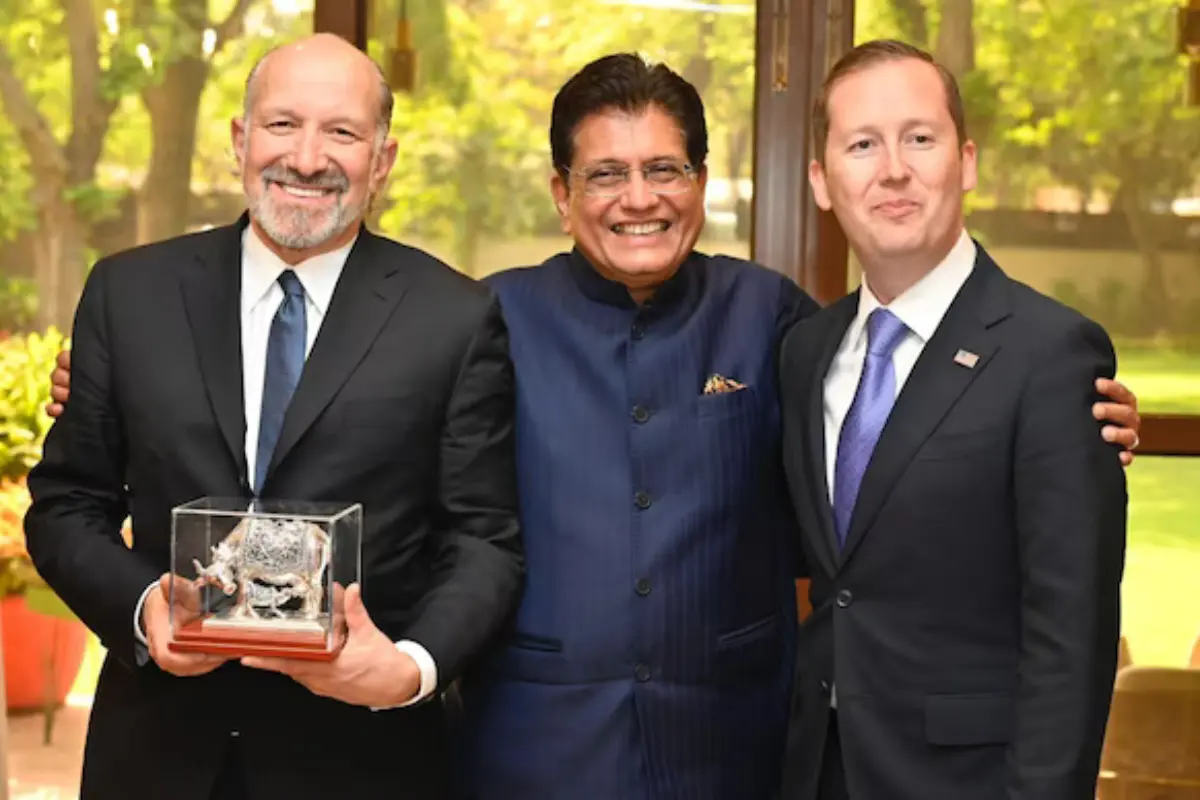
The minister’s remarks also came a day after US Commerce Secretary Howard Lutnick met him in New Delhi, signaling that high-level engagement between the two sides remains active despite policy turbulence.
Watching Tariffs Closely, Protecting National Interests
The global trade environment has grown increasingly uncertain, with tariff threats and countermeasures reshaping supply chains and investor sentiment. In this context, Goyal adopted a cautious but firm stance.
“On US tariffs, we will wait and watch and ensure India’s best interests are protected,” he said.
He acknowledged that the US administration has multiple policy instruments at its disposal beyond the 10% tariff order, suggesting that India is preparing for various scenarios. Trade experts interpret this as a sign that New Delhi is carefully modeling potential impacts on exports ranging from pharmaceuticals to engineering goods.
The India-US Trade Deal Rebalance, therefore, is not merely a negotiating tactic but a strategic buffer against volatility in US trade policy.
India-US Trade: Agriculture and Dairy Safeguards – No Compromise
One of the most politically sensitive dimensions of the proposed agreement relates to agriculture and dairy sectors that support millions of Indian livelihoods.
Addressing concerns from farmer groups and dairy cooperatives, Goyal was unequivocal: critical segments remain protected.
“No GM foods will come into India,” he asserted firmly.
He further clarified that dairy, maize, soybean, and poultry have been kept outside the scope of the arrangement. By explicitly excluding these areas, the government aims to prevent market disruptions and reassure domestic producers that their interests will not be diluted.
The minister emphasized that India has preserved its farmers’ and dairy sector’s interests while negotiating market access discussions in other domains. This balancing act reflects the broader philosophy guiding the India-US Trade Deal Rebalance — openness where beneficial, protection where essential.