
India-US Trade Deal Marks Major Reset in Relations
India-US Trade Deal Finalised as Trump and Modi Agree to Cut Tariffs and Expand Economic Ties
India-US Trade Deal: The United States and India have unveiled a landmark breakthrough in bilateral trade relations, announcing a sweeping agreement that rolls back punitive tariffs, expands market access, and deepens economic and strategic cooperation. The understanding, reached after months of tense negotiations, marks a decisive reset in ties that had been strained by high duties, trade disputes, and geopolitical friction linked to Russia’s war in Ukraine.
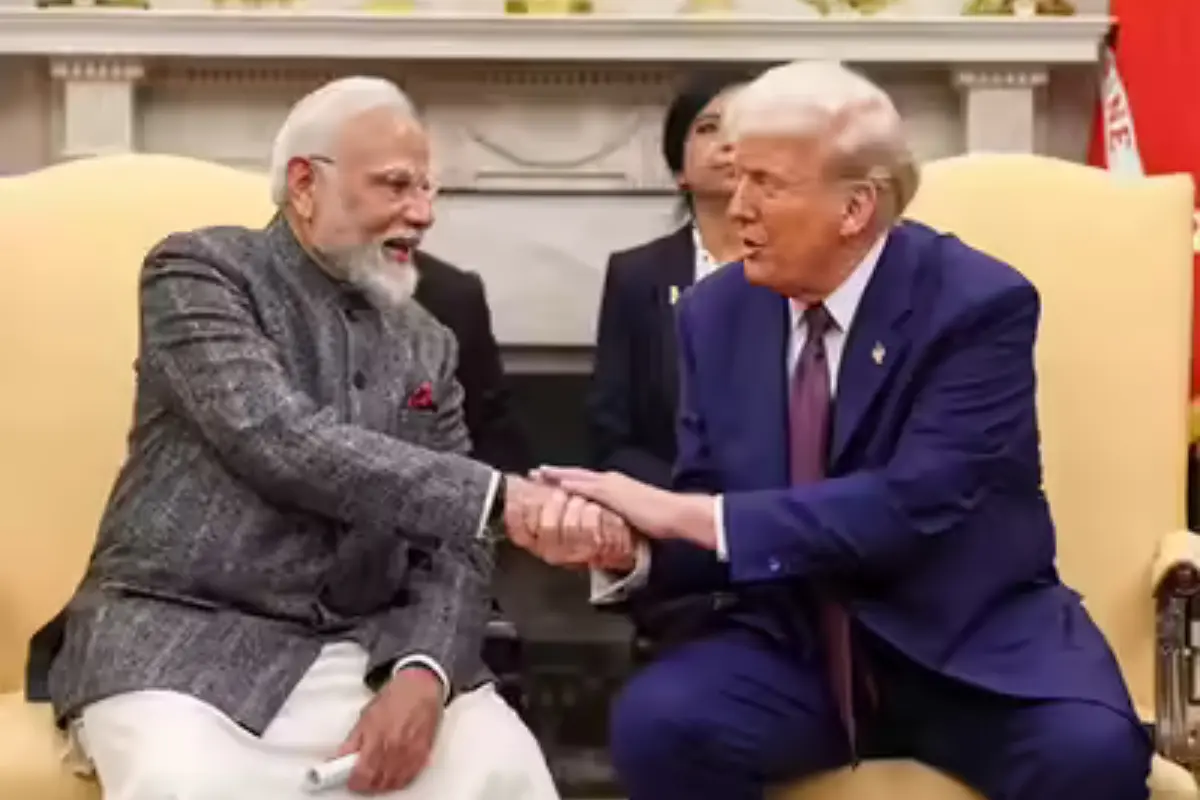
The US India trade deal, confirmed through statements by President Donald Trump and Prime Minister Narendra Modi, is being described by officials on both sides as one of the most consequential economic agreements between the two democracies in recent years. At its core lies a sharp reduction in US tariffs on Indian goods, matched by Indian commitments to ease barriers for American exports and significantly increase purchases from the United States.
India-US Trade Deal: Tariffs Rolled Back After Months of Strain
A central pillar of the agreement is Washington’s decision to cut tariffs on Indian imports to 18 percent, down from 25 percent, after earlier penalties had pushed effective rates as high as 50 percent on certain products. Trump described the move as a “reduced Reciprocal Tariff,” calling it a gesture of “friendship and respect” towards Modi.
The rollback offers immediate relief to Indian exporters in sectors such as pharmaceuticals, chemicals, auto components and electronics, which had struggled to remain competitive under steep duties. Trade analysts say the change restores India’s appeal as a manufacturing and supply-chain alternative to China, particularly for companies serving the US market.
While the new tariff level remains well above historical norms, the reduction represents a significant reversal from the confrontational trade stance that had defined the relationship in recent years.
India Commits to Expanding US Imports
In return, India has agreed to reduce tariffs and non-tariff barriers on a wide range of American goods. Trump claimed New Delhi would cut such barriers “to ZERO,” opening the door for US exports that have long faced high duties and regulatory obstacles in the Indian market.
He further stated that Modi committed to “BUY AMERICAN” at a much higher level, citing potential purchases exceeding $500 billion across US energy, technology, agricultural products, coal and other sectors. If realised, such volumes would dramatically expand US exports to India, although no detailed timeline or sectoral breakdown has yet been released.
Historically, India’s total imports from the US have been far lower, prompting questions among economists about how quickly such ambitious figures could be achieved.
India-US Trade Deal: Piyush Goyal – ‘Deal Successfully Concluded’
Union Commerce and Industry Minister Piyush Goyal confirmed the breakthrough during a press briefing, calling it a long-awaited and nationally significant achievement.
“The much-awaited trade deal with the United States of America has been successfully concluded. This is a significant trade agreement, finalised last night under the leadership of Prime Minister Narendra Modi, keeping the interests of the nation and its people in mind,” Goyal said.
He emphasised that sensitive sectors of the Indian economy, particularly agriculture and dairy, have been fully protected. According to Goyal, the agreement balances expanded trade opportunities with domestic economic safeguards.
“We stand for national interest. This is a deal that will make every Indian proud and provide huge opportunities while protecting sensitive sectors,” he added, noting that a joint statement with full technical details would be released shortly once formal processes are completed.
Energy and Russian Oil at the Centre of Talks
Energy trade emerged as one of the most sensitive and strategic elements of the US India trade deal. Trump directly linked the tariff rollback to India’s oil purchases, claiming Modi agreed to stop buying Russian crude and instead increase imports from the US and potentially Venezuela.
A White House official confirmed that a separate 25 percent tariff imposed over India’s Russian oil purchases would be dropped under the agreement. Energy flows have been a major flashpoint since India ramped up imports of discounted Russian oil following the 2022 invasion of Ukraine.
However, Moscow pushed back on the claim, stating that it had received no official communication from India indicating plans to halt Russian oil purchases. This raises questions about how quickly, or to what extent, India’s energy sourcing may change in practice.
Modi Praises Strategic Partnership
Prime Minister Modi welcomed the agreement, saying he was “delighted” by the tariff reduction and praising Trump’s leadership as “vital for global peace, stability and prosperity.”
“When two large economies and the world’s largest democracies work together, it benefits our people and unlocks immense opportunities for mutually beneficial cooperation,” Modi said.
His remarks highlighted the broader strategic importance of the partnership, positioning the deal as part of India’s effort to strengthen ties with Washington while reinforcing its role as a key geopolitical counterweight to China.