
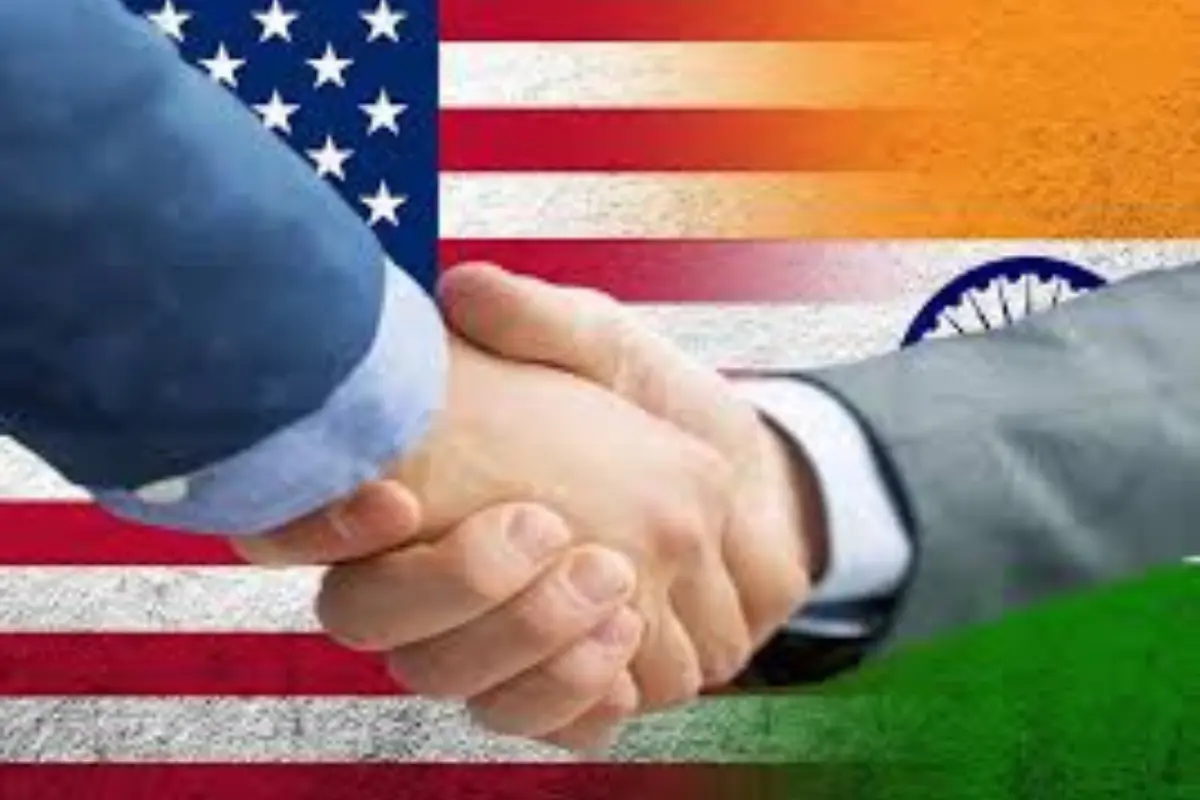
India-US Trade Deal Inches Closer Despite Tariff Challenges
India-US Trade Deal Nears Finalisation as Talks Enter Last Mile
The long-anticipated India-US trade deal appears to be on the brink of reality, with senior government sources indicating that negotiations have reached an advanced stage and only minor formalities remain before the agreement is officially signed. If concluded soon, the pact could reshape one of the world’s most strategically important economic partnerships and unlock a new era of trade expansion between the two democracies.
Officials familiar with the discussions say momentum has accelerated in recent weeks, raising expectations that the agreement could be finalised “any day now.” The development signals growing alignment between New Delhi and Washington at a time when geopolitical tensions and shifting supply chains are redefining global trade routes.
India-US Trade Deal: Talks Gain Speed Amid High Expectations
According to sources within the Ministry of External Affairs, the India-US trade deal is now in its closing phase. Negotiators from both countries have reportedly ironed out most differences, leaving what one official described as “the dotting of the Is and crossing of the Ts.”
The agreement traces its origins to Prime Minister Narendra Modi’s visit to Washington in February 2025, where leaders first announced plans to deepen commercial ties.
Should the pact materialise soon, it would mark one of the most consequential bilateral trade agreements for India in decades.
Tariff Pressure Adds Urgency
The negotiations are unfolding against the backdrop of a steep 50% tariff imposed by US President Donald Trump on Indian goods—one of the highest tariff rates applied to any major trading partner. The move injected urgency into the discussions, prompting policymakers in New Delhi to push for a balanced arrangement that safeguards domestic industries while expanding market access.
Analysts note that resolving tariff disputes will be critical for ensuring the agreement delivers meaningful benefits rather than symbolic gains.
India-US Trade Deal: Ambitious Target – $500 Billion in Trade
At the heart of the India-US trade deal lies an ambitious objective—to more than double bilateral trade from the current $191 billion to an eye-catching $500 billion by 2030.
Economists believe such growth could transform sectors ranging from technology and pharmaceuticals to defence manufacturing and clean energy. For India, greater access to American markets could accelerate export-driven growth, while US companies stand to benefit from India’s vast consumer base and rapidly expanding middle class.
Commerce Secretary Rajesh Agrawal previously hinted that the first phase of the agreement was nearing completion, reinforcing optimism that both governments see the pact as a strategic priority rather than a distant goal.
Trump Signals Confidence in Davos
Positive signals have also emerged from Washington. Speaking on the sidelines of the World Economic Forum in Davos on January 21, President Trump expressed confidence that negotiations would lead to a favourable outcome.
Praising Prime Minister Modi, Trump said he has “great respect” for the Indian leader and described him as both a trusted partner and a friend. “We are going to have a good deal,” he said when asked about the proposed bilateral agreement—comments that helped boost market sentiment and policy optimism.
Diplomatic observers view such public endorsements as an indication that political backing for the deal remains strong at the highest levels.
India Balances Multiple Trade Fronts
The near-finalisation of the India-US trade deal comes just days after India concluded negotiations on a landmark free trade agreement with the European Union—often described by policymakers as the “mother of all deals.”
With the EU pact largely settled, India has swiftly redirected its attention toward Washington, underscoring a broader strategy to secure trade partnerships with major economic blocs simultaneously. Experts say this dual-track approach could insulate the country from global economic shocks while positioning it as a central hub in future supply chains.
Energy Imports Remain a Sensitive Issue
Despite the optimism, certain challenges persist—particularly around India’s continued purchase of Russian crude oil. US Trade Representative Jamieson Greer recently noted that Washington expects India to gradually reduce such imports, though he acknowledged that New Delhi has already made notable progress.
The price advantage of Russian oil remains a complicating factor, especially for an economy heavily dependent on affordable energy. However, tighter sanctions introduced by the US Treasury in recent weeks are expected to hasten the transition toward diversified sourcing.
India-US Trade Deal: Strategic Implications Beyond Commerce
Beyond numbers, the India-US trade deal carries significant geopolitical weight. As global companies rethink manufacturing bases and diversify supply chains away from concentrated regions, closer economic ties between India and the United States could redefine trade corridors across the Indo-Pacific.
For Washington, strengthening economic cooperation with India aligns with its broader strategy of partnering with trusted allies. For New Delhi, the agreement supports its aspiration to become a $5 trillion economy while enhancing its standing as a reliable global trade partner.