
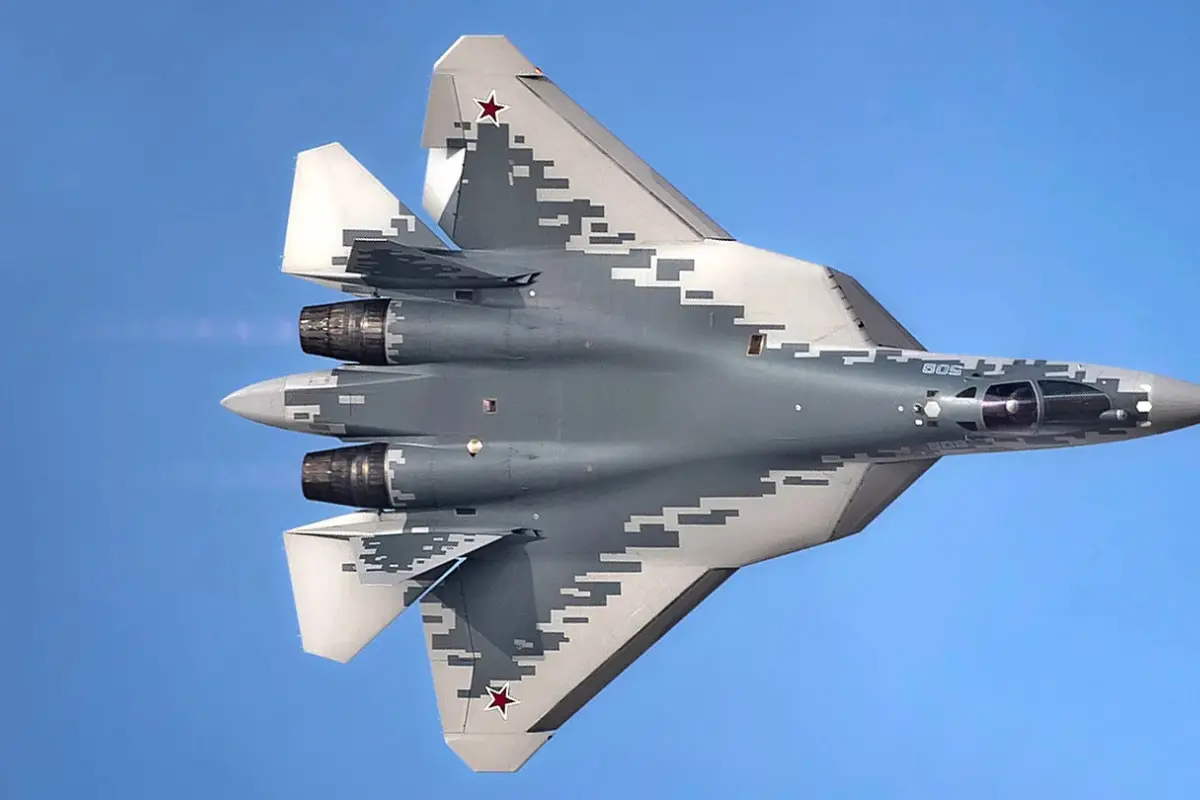
India-Russia Defence Ties Hit New High with Su-57 Proposal
India-Russia: India Set for Fifth-Gen Leap as Russia Proposes Su-57 and Su-75 Tech Transfer
India-Russia: In a sweeping strategic move ahead of President Vladimir Putin’s scheduled visit to New Delhi next month, Moscow has extended an extraordinary defence proposal to India—one that could redefine the trajectory of Indian air dominance for decades. Russia has offered full, unrestricted access to the complete technology ecosystem of its latest fifth-generation Su-57 stealth fighter jet, a level of defence transfer no country has ever offered India before.
The proposal, which includes transferring manufacturing capabilities for engines, avionics, radar, stealth composites, and next-generation weapons, has triggered significant interest within India’s defence community. At a time when Western nations have steadfastly refused to share deep technology for stealth aircraft, the Russia Su-57 Technology Transfer to India stands out as a game-changing opportunity.
India-Russia: Russia Opens Its Fifth-Generation Playbook
Sergey Chemezov, CEO of the state-owned defence conglomerate Rostec, confirmed the scale of the offer during an interaction with ANI at the Dubai Air Show 2025. Chemezov made it clear that Moscow is willing to open the doors wide—far wider than ever before—to support India’s future fighter needs.
He emphasized that Russia’s proposal includes:
-
Supply of initial Su-57 jets built in Russia
-
Gradual transfer of production lines to India
-
Complete access to the fifth-generation aviation ecosystem
-
Technology exposure ranging from stealth materials to next-gen engines
Echoing the long-standing trust between the two nations, Chemezov said, “India and Russia have been partners for many years. Even when India was under sanctions, we supplied the country with weapons to ensure its security… Whatever India requires, we are here to support.”
Russia’s state arms exporter, Rosoboronexport, reinforced the message, highlighting its readiness to share extensive know-how in AESA radars, low-signature coatings, air-to-air weapons, AI-supported avionics, and even co-development of future-generation systems.
For India—long denied access to core technologies such as engine metallurgy, high-end sensors, and stealth composites from Western partners—this proposal is far from ordinary. It is unprecedented.
The Su-75 Checkmate Enters the Conversation
In addition to the Su-57, Moscow is also believed to have revived its offer of the Su-75 Checkmate, Russia’s new single-engine stealth fighter.
Retired Indian Air Force Squadron Leader Vijainder K Thakur told The Eurasia Times that Russia appears fully open to co-producing the Su-75 in India. In fact, Moscow has previously hinted it is willing to set up Su-75 manufacturing outside Russia—making India the most strategic and feasible location.
If accepted, India could:
-
Plug its light-to-medium fifth-generation fighter gap
-
Get an affordable stealth platform parallel to the indigenous AMCA
-
Build an aircraft suitable for mass production
-
Generate export revenue similar to the success of the BrahMos missile
Crucially, experts argue that the Su-75 and AMCA are not competitors. One is single-engine, the other twin-engine. One focuses on tactical affordability, the other on top-end capability. Together, they could form a potent two-tier stealth fleet for the IAF.
India-Russia: Putin’s India Visit: The Big Picture
President Putin’s upcoming December visit for the 23rd India-Russia Annual Summit is expected to feature several crucial defence announcements. It would be his first India trip since 2021, and Moscow is preparing the ground carefully.
Earlier this week, Putin’s trusted aide Nikolai Patrushev met Prime Minister Narendra Modi in New Delhi. Discussions centered on maritime cooperation, but insiders say defence technology was a key sub-text.
The Russian Embassy later noted that the meeting also touched upon preparations for the early-December Summit, hinting that both sides want major decisions finalized before Putin lands in India.