
India-Philippines Partnership: New Axis in Asian Geopolitics
India and Philippines Forge Strategic Partnership to Boost Trade and Defence
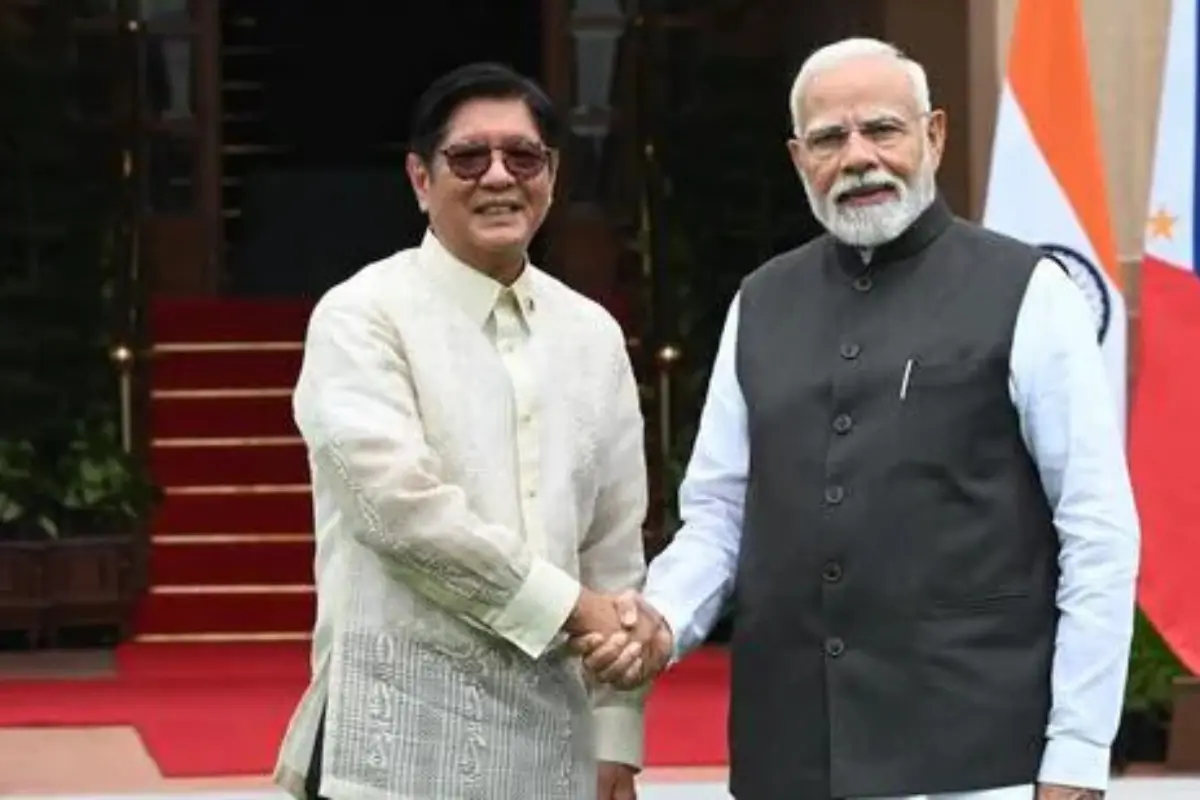
In a defining moment for regional diplomacy, India and the Philippines officially upgraded their bilateral ties to a strategic partnership on Tuesday, vowing to intensify cooperation across trade, defence, maritime security, digital technology, and connectivity. The announcement came after wide-ranging talks between Prime Minister Narendra Modi and visiting President Ferdinand Marcos Jr, who is on his first official visit to India with a high-level delegation including 14 Cabinet ministers.
The India-Philippines Strategic Partnership, marked by the signing of 14 key agreements and the launch of a five-year action plan, underscores a shared commitment to a free, open, and rules-based Indo-Pacific.
“I’m happy to share that we have decided to upgrade our ties to a strategic partnership,” said PM Modi. “We have also prepared a detailed action plan to turn this partnership’s potential into outcomes.”
President Marcos described the move as a “momentous decision”, noting that India is now one of only five countries designated as a strategic partner by the Philippines. He emphasized the strong alignment of values and interests, particularly in navigating regional security dynamics and economic challenges.
India-Philippines: Defence and Maritime Cooperation Take Center Stage
The leaders reaffirmed their intent to deepen defence ties. This comes as Indian warships participated in their first-ever naval exercise with the Philippines in the South China Sea, a move seen as a firm assertion of maritime cooperation in the contested waters.
“As maritime nations, cooperation in the maritime domain is both natural and essential,” Modi said.
Marcos echoed this sentiment, hailing India as a key partner in the Philippines’ defence modernisation. The two sides agreed to expand dialogue between their armed forces, establish service-to-service talks, and enhance information-sharing and joint training initiatives.
India will also host a Philippine liaison officer at its Information Fusion Centre–Indian Ocean Region, which plays a vital role in monitoring regional maritime traffic and countering threats such as terrorism and piracy.
Strategic Agreements Reflect Deepening Trust
Among the 14 agreements signed were:
-
A treaty on mutual legal assistance in criminal matters
-
A pact for the transfer of sentenced persons
-
MoUs on science and technology, digital transformation, space exploration, tourism, and maritime cooperation
India will also support a pilot project for the Philippines’ Sovereign Data Cloud Infrastructure, and beginning August 2025, Filipino nationals will receive free e-tourist visas for one year. The Philippines, in return, reaffirmed visa-free entry privileges for Indian citizens.
Additionally, direct flights between New Delhi and Manila are set to resume in October 2025, boosting connectivity and people-to-people ties.
India-Philippines: Unified Vision for Indo-Pacific Security
The India-Philippines Strategic Partnership also highlights growing synergy in maintaining regional peace and sovereignty, especially amid rising tensions in the South China Sea.
China, reacting strongly to the India-Philippines naval exercise, warned against third-party interference in maritime disputes. But both leaders remained firm in their stance on upholding freedom of navigation under international law, referencing the 2016 arbitration award that favored Manila over Beijing.
“We recognise India’s influence as a first responder… and we want to work with you for a free and open Indo-Pacific,” Marcos stated, implicitly referring to ongoing Chinese assertiveness in the region.
Economic Cooperation on the Rise
The two sides are also eager to enhance bilateral trade, currently valued at $3.3 billion. Discussions included:
-
A review of the ASEAN-India Trade in Goods Agreement (AITIGA)
-
Launching negotiations for a bilateral preferential trade agreement
-
Expanding the range of tradable goods
-
Enhancing market access for Indian products
-
Linking digital payment systems
-
Collaborating in oil and gas consultancy
India is eyeing opportunities in the services sector, while the Philippines invited Indian investments in upstream energy assets, underlining shared economic goals.
Standing United Against Terrorism
President Marcos condemned the recent terror attack in Pahalgam and offered his solidarity with India in combating terrorism. Modi thanked him for his support, reiterating the importance of signed agreements in enhancing legal and security cooperation.
Both sides committed to fighting terrorism, violent extremism, and transnational crimes through intelligence sharing and capacity building.
Also Read : India-US: India is not a good trading partner, says Trump