
India Slams Pakistan for Raising Kashmir at UN Assembly
India Rebukes Pakistan at United Nations Over Jammu and Kashmir Remarks
India on Thursday delivered a firm and pointed response at the United Nations after Pakistan once again raised the issue of Jammu and Kashmir during a General Assembly session, prompting New Delhi to accuse Islamabad of persistently misusing international forums to advance what it termed a divisive political narrative.
The rebuttal followed remarks made by Pakistan’s Permanent Representative to the United Nations, who referenced Jammu and Kashmir while addressing the General Assembly. India dismissed the statement as unnecessary and disconnected from the realities on the ground, reiterating its long-standing position that the region is an integral and inalienable part of the country.
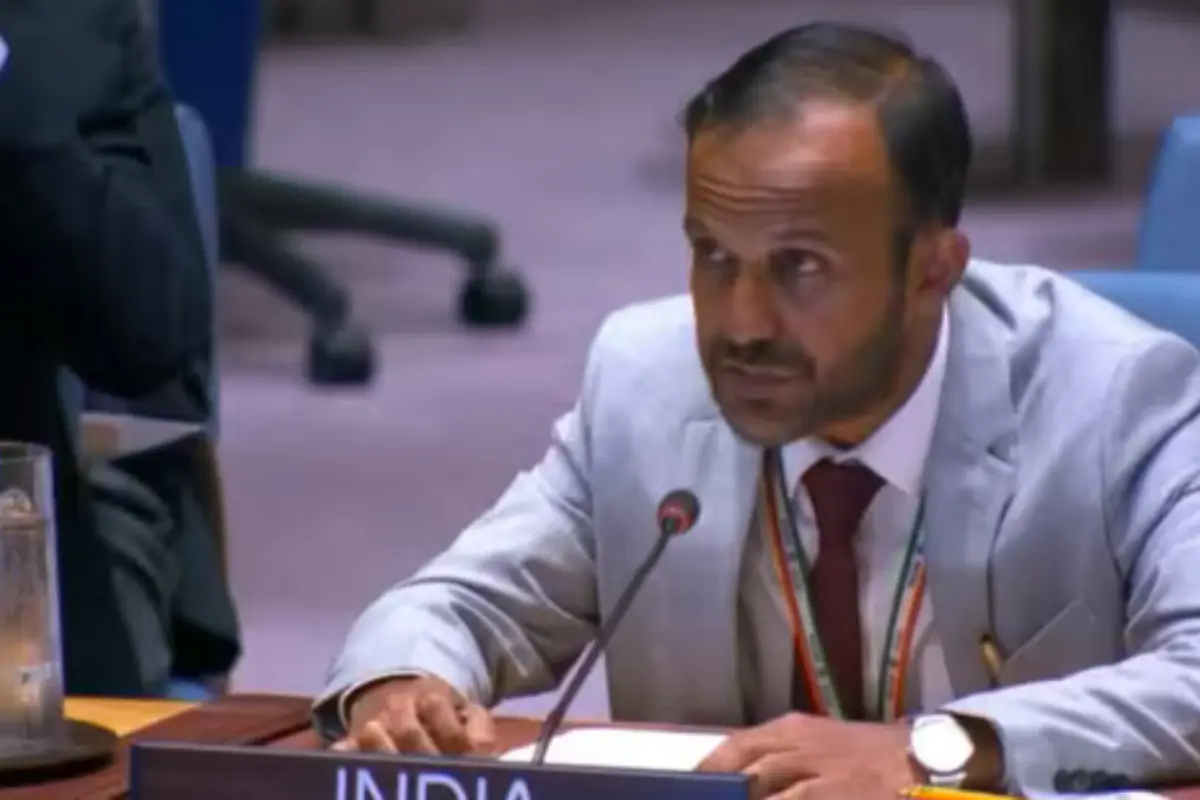
Speaking during the UN General Assembly Plenary on the Report of the Secretary-General on the work of the Organisation, India’s Counsellor at the Permanent Mission to the UN, Eldos Mathew Punnoose, said Pakistan continued to politicise multilateral platforms at a time when global cooperation was more critical than ever.
“At a moment when member states are expected to rise above narrow interests, Pakistan persists in misusing UN platforms and processes to push a divisive agenda,” Punnoose stated, underscoring India’s concern over repeated attempts to internationalise bilateral matters.
‘Unwarranted Reference to an Integral Part of India’
Calling out Pakistan’s mention of Jammu and Kashmir, Punnoose made it clear that India would not allow misinformation to go unchallenged on global stages.
“This forum is no exception. Pakistan made an unwarranted reference to the Union Territory of Jammu and Kashmir, which is an integral and inalienable part of India,” he said, reinforcing New Delhi’s consistent diplomatic position.
India’s response comes amid Pakistan’s recurring efforts to raise the Kashmir issue across various UN bodies—moves that, according to Indian officials, have failed to garner substantive international support.
Warning Against Misuse of Self-Determination
Punnoose also addressed the broader principle of self-determination, cautioning against its selective and misleading interpretation to justify secessionist narratives.
“The right to self-determination is enshrined in the UN Charter. However, it must not be misused to promote secession in pluralistic and democratic societies,” he said, adding that repeated allegations and distorted portrayals only weaken the credibility of those making them.
He further remarked that Pakistan would benefit from refraining from baseless claims that bear little resemblance to reality.
India Highlights Concerns of the Global South
Beyond the India-Pakistan exchange, the Indian envoy used the platform to draw attention to the challenges faced by the Global South, stressing that these concerns require more than symbolic acknowledgment.
“India has consistently worked to bring the priorities of the Global South to the forefront across UN platforms. What is now needed is focused follow-up and concrete action that translates these concerns into tangible outcomes,” Punnoose said.
Questions Raised Over UN’s Effectiveness
Reflecting on the broader functioning of the United Nations, Punnoose noted that the organisation was at a critical juncture, facing rising expectations across its three core pillars—peace and security, development, and human rights.
He pointed to the UN’s limited ability to respond decisively to ongoing global conflicts as a matter of concern, warning that inaction risks undermining the institution’s credibility.
“The UN’s inability to purposefully intervene in its critical functions raises serious questions about its efficacy, legitimacy, and credibility,” he said. “As conflicts rage across different parts of the world, people look to the UN to alleviate human suffering and restore peace.”