
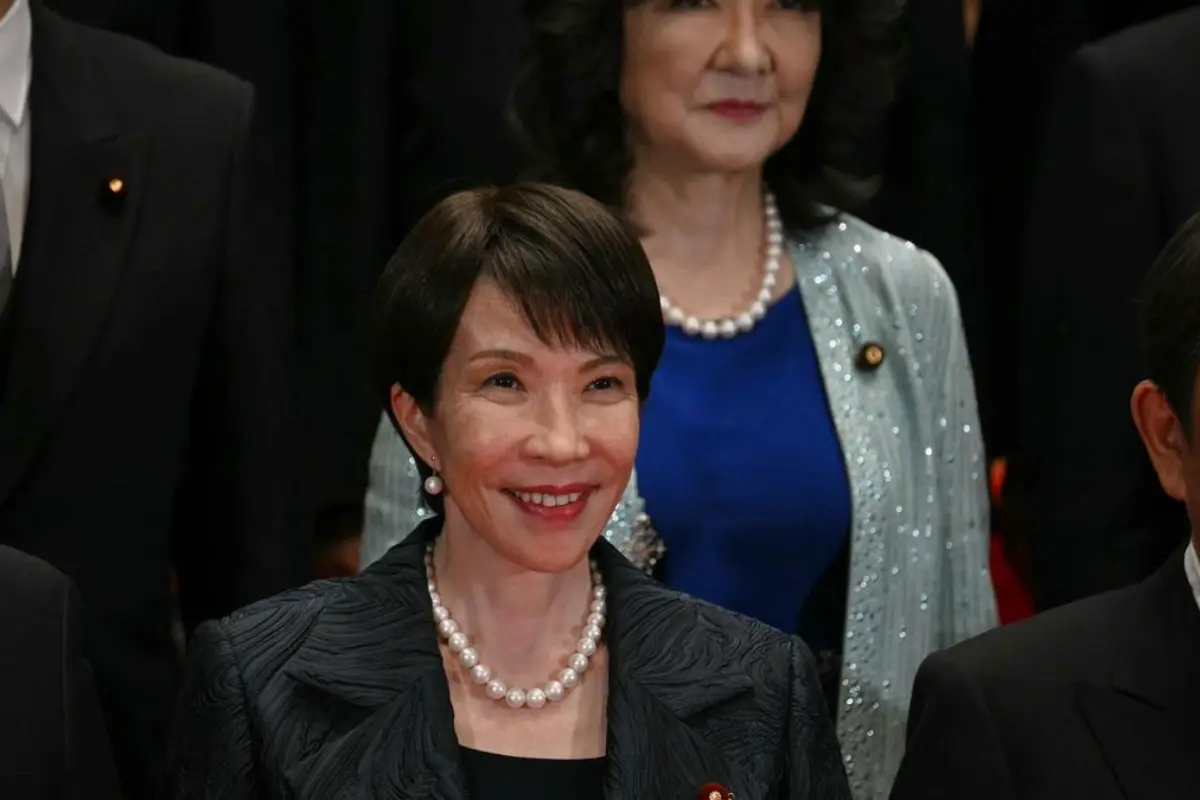
India-Japan: PM Modi Hails Ties with First Woman PM Sanae
India-Japan Strategic Partnership Strengthens as Modi Congratulates Japan’s New Prime Minister Sanae Takaichi
In a warm message of congratulations, Indian Prime Minister Narendra Modi on Tuesday (October 21, 2025) hailed the India-Japan Strategic Partnership as “vital for regional and global peace,” following the election of Sanae Takaichi as Japan’s first-ever woman Prime Minister.
The 64-year-old leader of Japan’s ruling Liberal Democratic Party (LDP) was elected by the Japanese Parliament, or Diet, marking a historic moment in Japanese politics. Her ascent to power has sparked global interest, not only for its symbolism of progress but also for the potential impact on Japan’s foreign policy, especially its deepening ties with India.
India-Japan: Modi’s Message of Friendship and Future Cooperation
Congratulating Ms. Takaichi on social media, Prime Minister Modi said he looked forward to working closely with her to further strengthen the India-Japan Strategic Partnership.
“Our deepening ties are vital for peace, stability, and prosperity across the Indo-Pacific and beyond,” Mr. Modi said, emphasizing the shared vision that both nations uphold in ensuring a free, open, and rules-based regional order.
Officials confirmed that both leaders are expected to hold a telephonic conversation within the next few days and may meet in person as early as this weekend, on the sidelines of the ASEAN Summit and East Asia Summit (EAS) in Malaysia.
While the Ministry of External Affairs (MEA) has yet to formally announce the Prime Minister’s travel schedule, sources indicate that India’s participation in these summits will underscore its commitment to regional cooperation and multilateral diplomacy.
A Transition Amid Continuity in Bilateral Ties
Ms. Takaichi’s election follows closely on the heels of Mr. Modi’s Tokyo visit in August 2025, where he met then-Prime Minister Shigeru Ishiba for the 15th India-Japan Summit. The meeting resulted in key agreements, including an Economic Security Partnership and expanded collaboration in critical minerals, semiconductors, and defence technologies.
Experts believe Ms. Takaichi will sustain this positive momentum. Her leadership is expected to reinforce the India-Japan Strategic Partnership in areas such as supply chain resilience, maritime security, and advanced technology cooperation.
India-Japan: Abe’s Legacy and the Indo-Pacific Vision
Foreign policy observers note that Ms. Takaichi’s ideological lineage traces back to former Prime Minister Shinzo Abe, often referred to as the “architect” of modern India-Japan relations.
“Ms. Takaichi is a protégé of Shinzo Abe, whose tenure (2012–2020) is considered the golden era of India-Japan ties,” said Deepa Wadhwa, former Indian Ambassador to Japan. “She is likely to continue Abe’s Indo-Pacific vision and will be a strong supporter of the Quad initiative,” she added.
Under Abe’s leadership, Japan played a pioneering role in the formation of the Quadrilateral Security Dialogue (Quad) — comprising the U.S., India, Australia, and Japan — earning him the affectionate nickname “Quadfather.”
Ms. Takaichi’s known “hawkish” stance on China and her advocacy for a stronger national defence posture suggest that Tokyo may now adopt a more assertive diplomatic approach, one that could further align with India’s Indo-Pacific strategy.
Quad Dynamics and Global Diplomacy
This weekend’s ASEAN and EAS meetings could provide an early test of Ms. Takaichi’s diplomatic priorities. Both U.S. President Donald Trump and Australian Prime Minister Anthony Albanese are expected to attend the summits, creating an opportunity for Quad members to discuss the long-delayed Quad Leaders’ Summit.
Tensions between India and the U.S. over trade and tariffs have reportedly postponed the Quad Summit originally planned for November. Diplomats believe that Ms. Takaichi could serve as a “bridge-builder” between New Delhi and Washington to revive the dialogue and inject fresh momentum into the grouping.
Collaboration on Technology and Human Capital
In addition to strategic security, India and Japan continue to expand cooperation in technology and human capital development. During his August visit, Mr. Modi invited Japan’s leadership to participate in the upcoming Artificial Intelligence (AI) Summit in Delhi, scheduled for February 2026.
The summit aims to strengthen collaboration on ethical AI, digital infrastructure, and skill development — pillars of the India-Japan Strategic Partnership in the 21st century.
However, some analysts caution that Ms. Takaichi’s hardline immigration stance could complicate the recently signed Action Plan for India-Japan Human Resource Exchange and Cooperation. The plan envisions the two-way movement of 500,000 professionals over five years, including 50,000 skilled workers from India to Japan.
“Her partnership with the right-leaning Japan Innovation Party could tighten migration policies, potentially slowing the implementation of mobility initiatives,” an expert from Tokyo’s National Institute for Policy Studies observed.
Also Read : USCIS Confirms $100,000 H-1B Visa Fee Only for New Petitions