
India-Germany Strategic Partnership Deepens with 19 MoUs
India-Germany Relations Enter New Phase as 19 MoUs Signed During Chancellor Merz’s Visit
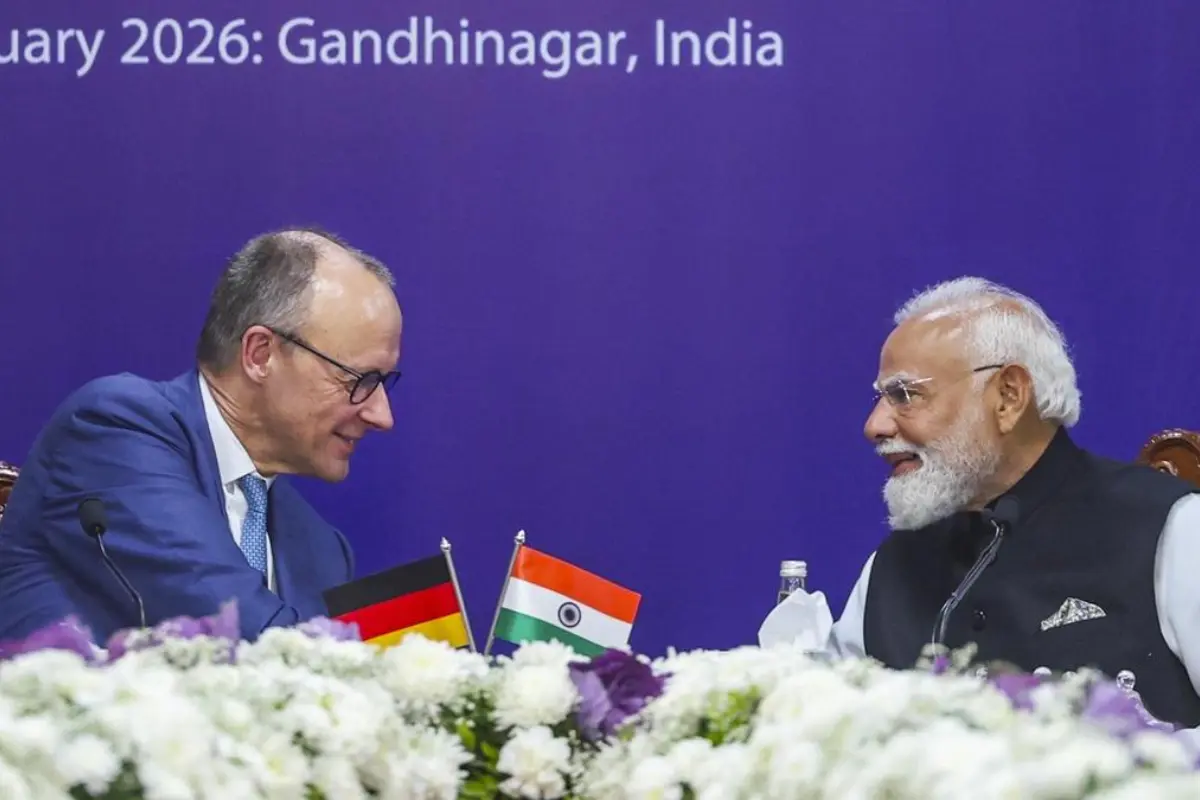
India-Germany: India and Germany have taken a decisive step toward deepening their bilateral ties, elevating the India-Germany strategic partnership through the signing of 19 Memorandums of Understanding (MoUs) and the announcement of eight major initiatives during German Chancellor Friedrich Merz’s official visit to India from January 12 to 13, according to newsonair reports.
The visit marked a significant diplomatic milestone, as it was Chancellor Merz’s first trip to India and his first engagement in Asia since assuming office. The discussions reflected a shared intent to broaden cooperation across defence, trade, clean energy, skills development, education, and global mobility, reinforcing the growing strategic alignment between the two nations.
India-Germany: Defence Cooperation Takes Centre Stage
At the heart of the announcements was a Joint Declaration of Intent aimed at strengthening bilateral defence industrial cooperation. The agreement signals a clear push toward deeper collaboration in defence manufacturing, technology development, and innovation, aligning with India’s long-term goals of self-reliance and Germany’s advanced industrial capabilities.
Officials indicated that the renewed defence focus would open new pathways for joint production, technology sharing, and co-development projects, positioning the India-Germany strategic partnership as a key pillar of stability and innovation in the Indo-Pacific region.
CEOs’ Forum to Drive Trade and Investment
Another major outcome of the visit was the decision to establish a Chief Executive Officers’ Forum, bringing together leading business figures from both countries. The forum is expected to play a catalytic role in enhancing trade flows, boosting bilateral investment, and strengthening private-sector participation in strategic sectors.
By creating a structured platform for industry leaders, India and Germany aim to translate policy intent into tangible economic outcomes, especially in manufacturing, digital technologies, and green industries.
India-Germany: Visa-Free Transit – A Major Relief for Indian Travellers
One of the most immediate and people-focused announcements was Germany’s decision to allow visa-free transit for Indian nationals. Under the new arrangement, Indians transiting through German airports to third countries will no longer require a Schengen visa, provided they remain within the international transit zone.
This move will significantly ease travel through major German hubs such as Frankfurt and Munich, reducing paperwork, costs, and waiting times for Indian passengers. Prime Minister Narendra Modi welcomed the decision, describing it as an important step toward facilitating smoother international travel.
A joint statement noted that the policy “will not only facilitate and ease travel for Indian nationals, but will further intensify people-to-people links,” underlining the human dimension of the India-Germany strategic partnership.
Strong Emphasis on People-to-People Ties
Foreign Secretary Vikram Misri termed the visit a “significant engagement,” highlighting discussions on defence, trade, skills, green energy, and mobility. Both sides acknowledged the vital contribution of the Indian community to Germany’s economy and society, agreeing that stronger people-to-people connections are essential for long-term partnership success.
Education also featured prominently, with commitments to expand academic collaboration, research partnerships, and skill development initiatives that support global workforce mobility.
Green Partnership Gains Momentum
The Green and Sustainable Development Partnership received a strong boost, with Germany pledging substantial support for climate-resilient urban infrastructure, renewable energy, and green hydrogen initiatives. Green hydrogen emerged as a key area of shared interest, reflecting the common ambition of both countries to reduce dependence on fossil fuels and accelerate the transition to sustainable energy systems.