
India-EU Free Trade Agreement: The Five-Year MFN Status
India-EU Free Trade Agreement: India and EU Grant Each Other MFN Status for Five Years
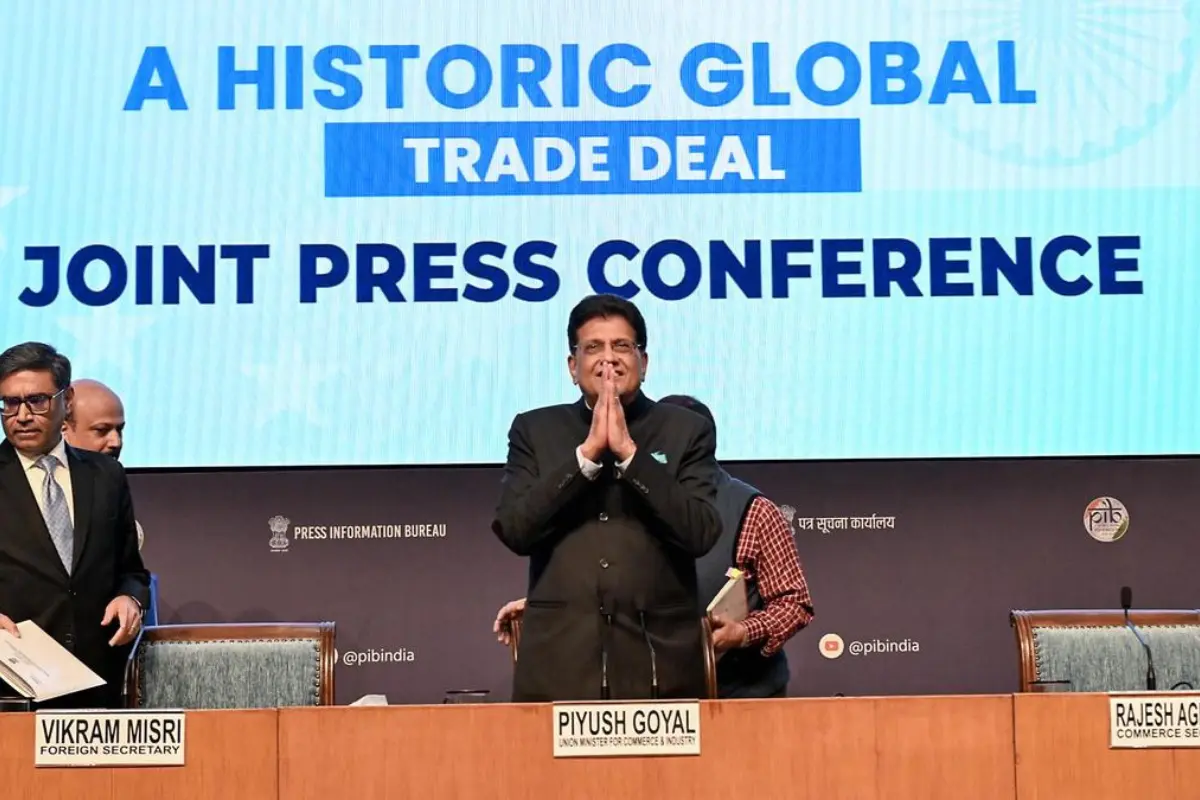
In a significant breakthrough after nearly two decades of negotiations, India and the European Union have agreed to grant each other “Most Favoured Nation” (MFN) status for five years once the India-EU Free Trade Agreement comes into force. The provisional draft text of the pact, released on February 27, offers the clearest view yet of a trade deal that could redefine economic ties between New Delhi and the 27-member European bloc.
The announcement follows high-level discussions in New Delhi involving Prime Minister Narendra Modi, European Commission President Ursula von der Leyen, and European Council President Antonio Costa.
What MFN Status Means Under the India-EU Free Trade Agreement
The MFN clause embedded within the India-EU Free Trade Agreement ensures that neither side can offer more favourable tariff concessions to other members of the World Trade Organization (WTO) without extending the same benefits to each other during the five-year window.
In practical terms, this provision strengthens predictability for exporters and investors. If either India or the EU lowers tariffs for another trading partner, the same concession must automatically apply to the other party to the agreement. This creates a level playing field and reinforces the strategic trust underpinning the pact.
However, the commitments will only become legally binding once the agreement is ratified by both sides, a process that will involve parliamentary approvals and institutional clearances.
93% of Indian Exports to Enter the EU Duty-Free
One of the most striking features of the India-EU Free Trade Agreement is the scale of tariff liberalisation. The draft indicates that approximately 93 per cent of Indian exports will gain duty-free access to the European market.
This is expected to provide a substantial boost to sectors such as textiles, pharmaceuticals, engineering goods, and information technology-enabled services. For Indian exporters, the EU represents one of the world’s most lucrative and high-value markets.
On the other side, European products—particularly luxury cars and wines—are set to see phased reductions in Indian tariffs, making them more price-competitive. However, India has safeguarded its sensitive agricultural sectors. Dairy, rice, sugar, and beef have been excluded from tariff liberalisation, reflecting domestic economic and political sensitivities.
India-EU: Customs Cooperation and Food Safety Alignment
The India-EU Free Trade Agreement also emphasises regulatory cooperation and trade facilitation. The draft text outlines measures to align food safety standards with international benchmarks while simplifying certification and audit procedures.
Customs cooperation forms another cornerstone of the deal. The agreement proposes:
-
Faster clearance of goods
-
Streamlined documentation requirements
-
Transparent and fair appeal mechanisms for trade-related decisions
-
Annual sharing of import data, beginning one year after the agreement takes effect
These steps aim to reduce bureaucratic delays, enhance transparency, and ensure effective monitoring of tariff concessions.
Digital Trade and E-Commerce Commitments
In an increasingly digital global economy, the India-EU Free Trade Agreement addresses online commerce and data-enabled trade. Both sides have pledged to reduce unjustified barriers to digital trade while preserving regulatory autonomy.
The commitments seek to promote a secure and open digital ecosystem that supports cross-border e-commerce. This balance between openness and sovereignty reflects the evolving approach of both India and the EU to digital governance and data protection.
Mediation Mechanism to Resolve Disputes
A noteworthy innovation in the India-EU Free Trade Agreement is the inclusion of a structured mediation mechanism for resolving disputes. The draft annexure outlines a process through which either party can request mediation if it believes certain measures are adversely affecting bilateral trade.
The request must clearly specify the contested measure and detail its potential trade impact. Importantly, mediation can only proceed with mutual consent, underscoring the cooperative spirit of the framework.
By incorporating a model mediation structure, both sides aim to create a faster, less adversarial alternative to formal dispute settlement systems. This could help resolve disagreements efficiently without escalating into prolonged trade conflicts.
From Stalemate to Strategic Alignment
Trade talks between India and the EU began in 2007 but were suspended in 2013 due to persistent disagreements on market access, intellectual property rights, and regulatory standards. The revival of negotiations in 2022 coincided with shifting geopolitical alignments, supply chain disruptions, and a shared interest in reducing overdependence on limited trade partners.
The conclusion of negotiations on January 27 signals a renewed commitment to economic partnership. The release of the draft text offers transparency and an opportunity for stakeholders to assess the agreement’s scope and ambition.