
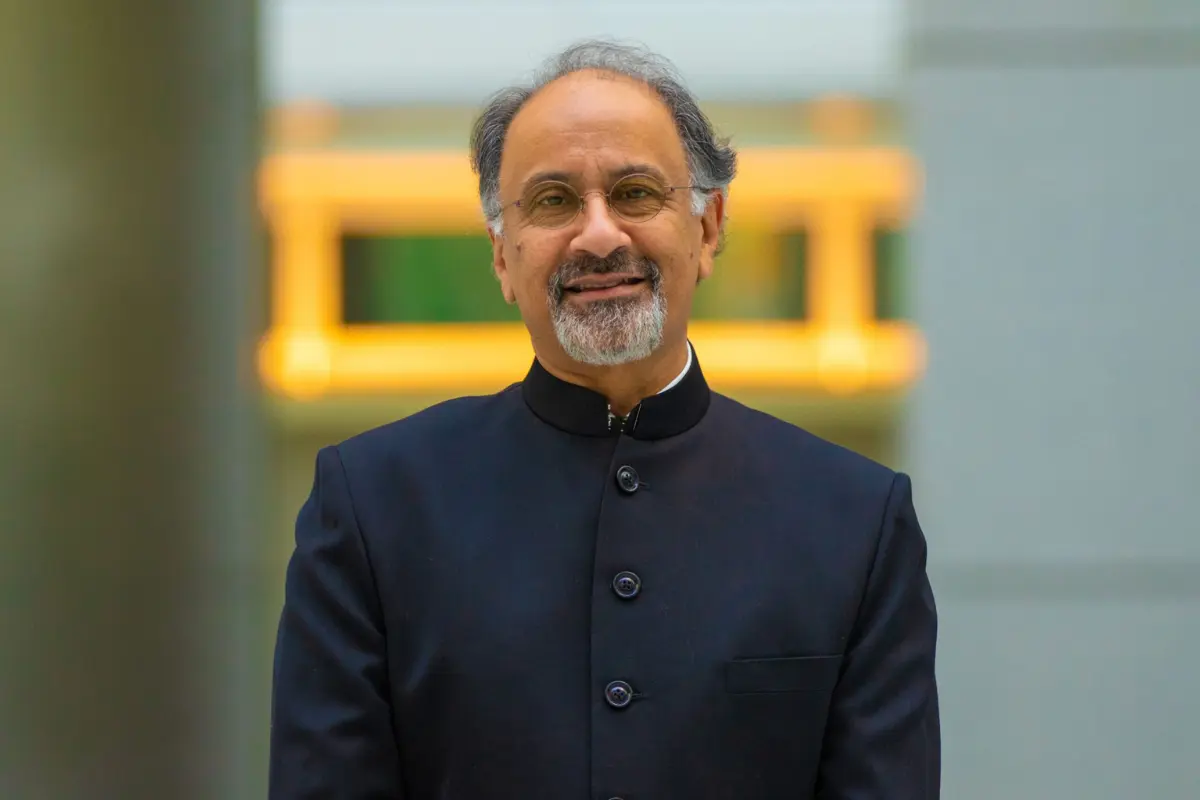
In the ever-changing landscape of global development, very few economists leave a mark that transcends borders, influences policies, and inspires future leaders. Indermit Gill, the Chief Economist and Senior Vice President for Development Economics at the World Bank, is one such trailblazer. His journey—from the classrooms of St. Stephen’s College in Delhi to the highest corridors of international policy-making—embodies dedication, resilience, and visionary leadership.
Indermit Gill: Early Foundations of Excellence
Born and raised in India, Gill’s academic journey reflects his relentless pursuit of knowledge. He earned his B.A. in Economics from St. Stephen’s College, Delhi, followed by an M.A. from the Delhi School of Economics. His intellectual curiosity and academic brilliance then took him to the University of Chicago, where he completed his Ph.D. in Economics. This strong foundation prepared him for a career that would not only analyze economies but also redefine how developing nations pursue growth.
Indermit Gill and the World Bank: A Defining Journey
Gill’s association with the World Bank is both long and impactful. He first joined the organization in 1993, where his early work centered on poverty reduction, institutional reforms, and strategies to foster inclusive growth. Over the years, he held key roles including:
-
Vice President for Equitable Growth, Finance, and Institutions, where he guided global economic responses during crises.
-
Chief Economist for Europe and Central Asia, helping nations navigate transitions and structural reforms.
-
Director of Development Policy, where his insights shaped long-term global strategies.
-
Director of the World Development Report 2009, a landmark study on reshaping economic geography.
In September 2022, Gill reached the pinnacle of his professional journey when he was appointed as the World Bank Group’s Chief Economist and Senior Vice President for Development Economics. In doing so, he became the second Indian national after Kaushik Basu to hold this prestigious role—an achievement that reflects India’s growing intellectual influence on global platforms.
Indermit Gill: The Concept of the “Middle-Income Trap”
One of Gill’s most significant contributions to economics is his pioneering work on the “middle-income trap.” This concept explains why many countries experience rapid growth after escaping poverty but then struggle to transition into high-income status. His insights have influenced development strategies across continents, offering governments a roadmap to avoid stagnation.
In the 2024 World Development Report, which he guided, Gill outlined practical solutions for nations caught in this trap. His “3i Strategy—Investment, Infusion, Innovation” has become a beacon for policymakers worldwide, emphasizing that growth must be modern, inclusive, and sustainable.
Academic Leadership and Global Influence
Before returning to the World Bank in 2021, Gill devoted several years to academia. He served as a professor at Duke University’s Sanford School of Public Policy, where he inspired students to bridge theory with practice. He also taught at the University of Chicago and Georgetown University, molding young economists who would one day tackle the world’s most pressing challenges.
Beyond universities, Gill’s intellectual contributions extended to influential think tanks. At the Brookings Institution, he worked as a non-resident senior fellow, further strengthening his reputation as a thought leader on economic growth, inequality, and climate change.
Championing Inclusive and Sustainable Development
Gill’s research and policy work span a wide range of critical issues—sovereign debt, green growth, labor markets, poverty reduction, and inequality. His writings and policy recommendations consistently stress that economic progress must be inclusive, environmentally sustainable, and resilient to shocks.
As he often emphasizes, development is not merely about increasing national income; it is about creating societies that are “quicker, kinder, and cleaner” in their pursuit of prosperity. This vision aligns perfectly with the challenges of the 21st century, where growth must balance speed with equity and environmental responsibility.
Also Read : Amarnath Ghosh: Eternal Rhythm of Art, Expression & Humanity