
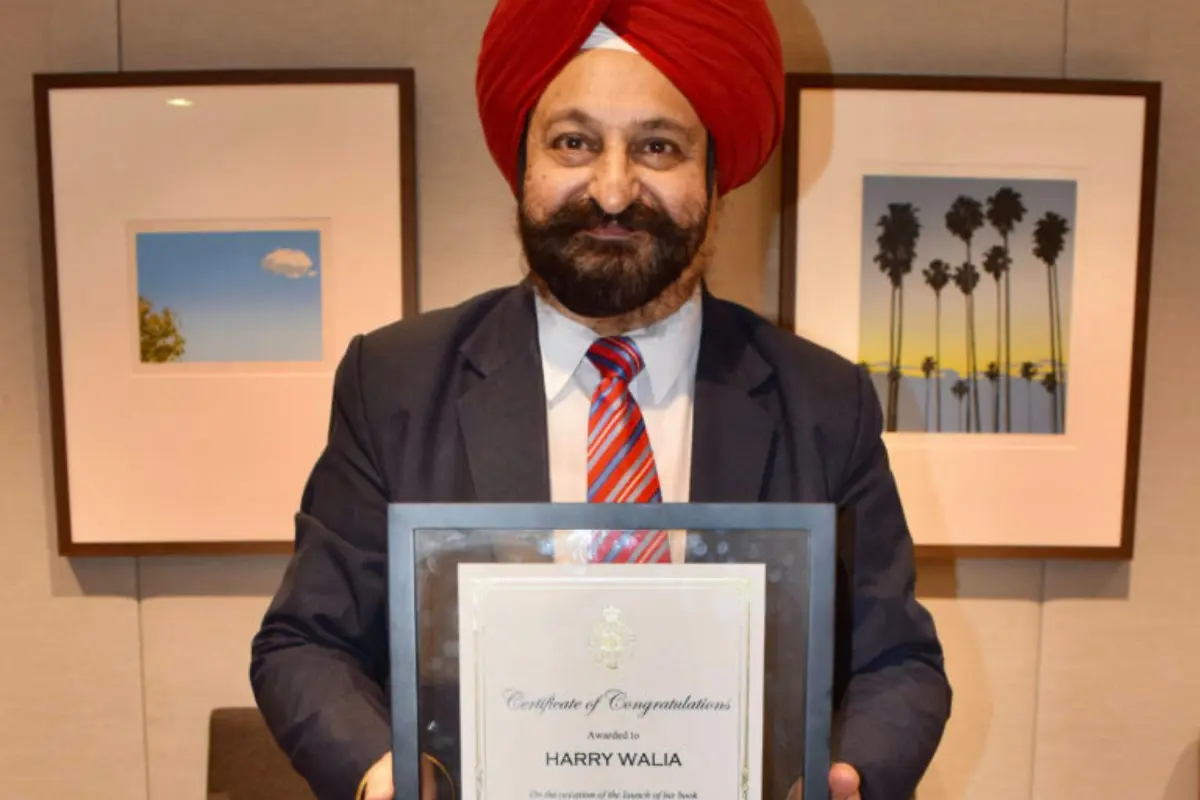
In a world often driven by self-interest, Harry Walia, community leader and visionary, stands tall as a beacon of unity, service, and compassion. Born in Hoshiarpur, Punjab, and now a celebrated figure in Australia, Walia’s journey from a mechanical engineer to an influential community icon is both inspirational and deeply rooted in the values of justice, cultural pride, and inclusivity.
From Punjab to Prominence: Harry Walia
Harmohan Singh Walia—known affectionately across Australia as Harry Walia—carved his early path through hard work and academic excellence. Armed with a B.Sc. in Mechanical Engineering from Guru Nanak Dev Engineering College and a master’s degree in Industrial Engineering from Thapar University, his initial career saw him take on managerial roles in India’s top automotive firms like Escorts Limited and Jamna Auto Industries.
In 1991, Walia migrated to Australia, stepping into a new world with hope, experience, and a spirit of service. Over the years, he has applied his engineering expertise across various industries, including defence, automotive, electronics, and IT. But it was beyond the realm of his profession where Harry Walia found his true calling—as a community leader determined to uplift others.
A Torchbearer at Sydney 2000: Symbol of Unity
Walia’s selection as an Olympic Torchbearer during the Sydney 2000 Olympic Games marked a defining moment. More than a ceremonial honor, it symbolized his commitment to building bridges between cultures, communities, and values. “It was a moment that helped me promote diversity, foster inclusion, and affirm a sense of belonging for Indian-Australians,” he recalls.
This milestone became a catalyst, driving Walia’s deeper involvement in community service, one that would span decades.
Harry Walia: The Voice of the People
Recognizing the power of media to connect diasporas, Walia served as a popular Punjabi newsreader in the early 1990s. In the pre-Internet age, he relayed updates from India via fax, earning admiration not only in Sydney but also from listeners across Brisbane and Perth. His dedication led to a role as a broadcaster on SBS Punjabi Radio, further establishing his influence.
In 2004, Harry Walia made history as the first Indian to contest the federal election from Mitchell, NSW, as a Labour Party candidate. Though he had to step down from his radio role due to a conflict of interest, the campaign marked a significant milestone for Indian political representation in Australia.
His political involvement didn’t go unnoticed—Walia was awarded the prestigious McKell Award in 2017 for his meritorious service to the Australian Labor Party.
GOPIO and Global Impact: Representing the Indian Voice
A founding member of GOPIO Sydney since 2008 and a life member of GOPIO International, Walia has continuously worked to connect Indian Australians with their global roots. His current position as International Coordinator Oceania reflects not just seniority but trust-a trust earned through decades of service and integrity.
His prior leadership as Chair of the Bylaws Committee and Executive Committee member at the GOPIO Northwest chapter is a testament to his consistent advocacy for unity, cultural pride, and collective progress.
Ground-Level Change: From Gurdwaras to Grassroots
Walia’s impact has not been limited to boardrooms and ballots. As secretary at Austral Gurdwara and later as Acting General Secretary at Glenwood Gurdwara, he supported countless community members with legal, social, and spiritual guidance.
Even in retirement, he continues to serve through the lens—literally. Over the past 15 years, Harry has become a community photographer, capturing the joy and vibrance of cultural events across Sydney, all self-funded and done purely out of love.
A Call to Empower: Challenges, Vision, and Hope
According to Walia, the Indian diaspora in Australia still faces systemic barriers—language challenges, financial constraints, lack of political grooming, and cultural disconnects. Yet, he sees hope in the growing civic participation, especially when the community comes together during crises like bushfires or the COVID-19 pandemic.
“Candidates of Indian origin must not just aim for representation—they must be equipped with the right tools to stand strong in Australia’s political and cultural climate,” he asserts.
Also Read : Group Captain Shukla Makes History as India Returns to Space with ISS Mission