
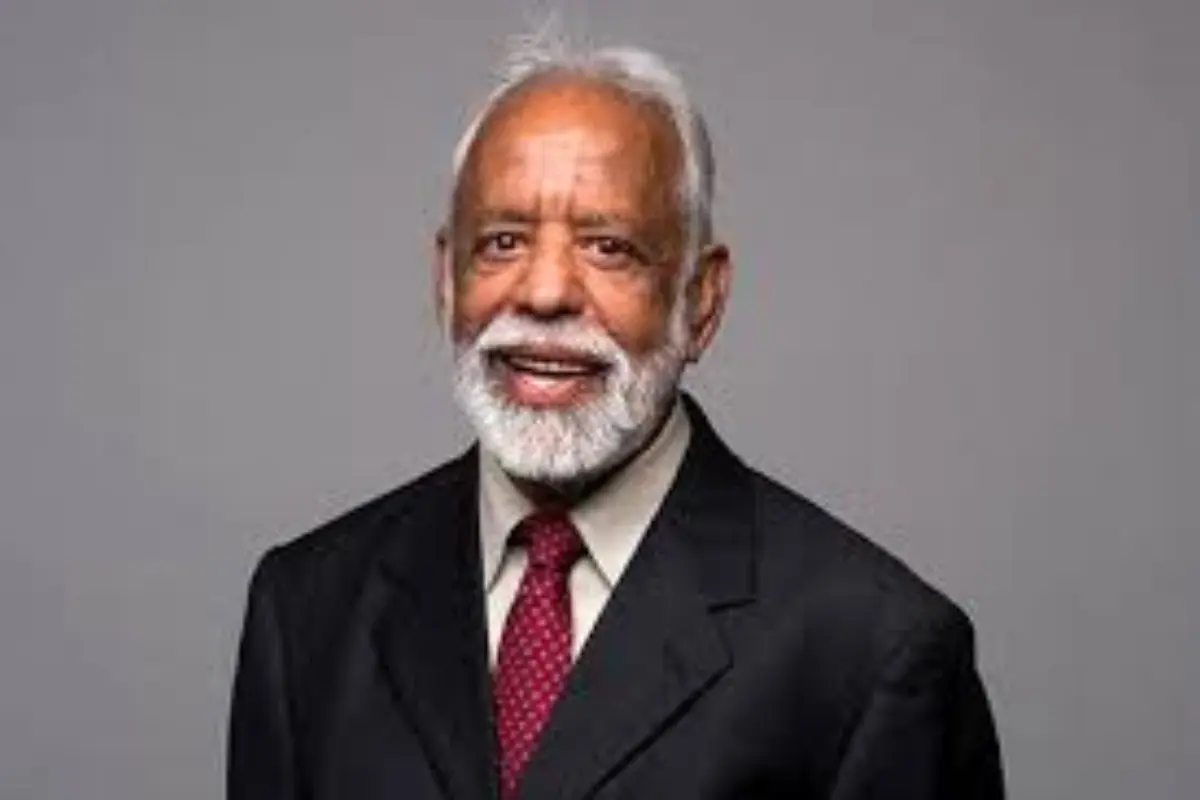
In the vast universe of scientific exploration, there are a few rare individuals whose work not only expands knowledge but also reshapes humanity’s understanding of its own planet. Hanwant B Singh is one such extraordinary figure—a scientist whose vision, persistence, and brilliance helped decode some of the atmosphere’s most elusive secrets.
Hanwant B Singh: A Journey Rooted in Curiosity and Academic Excellence
Born and educated in India, Hanwant B Singh laid the foundation for his scientific journey at the Indian Institute of Technology Delhi, earning his B.Tech in Chemical Engineering. His quest for deeper understanding took him to the University of Pittsburgh School of Engineering, where he completed a Ph.D. marked by rigor, innovation, and an early sensitivity to the complexities of environmental chemistry.
His postdoctoral research at Rutgers University sharpened his focus on atmospheric and environmental sciences. What began as a young scholar’s interest soon evolved into a lifelong mission: unraveling how human activities influence the planet’s delicate chemical balance.
Illuminating the Invisible: Transformative Contributions to Atmospheric Science
Across more than 30 years of research—accumulating over 220 scientific publications, an h-index of 93, and 28,000 citations—Dr. Singh became a global authority in atmospheric composition and chemistry. His discoveries did not simply fill gaps in scientific knowledge; they shifted paradigms.
Some of his most influential contributions include:
1. First Detection of Phosgene in the Atmosphere
Dr. Singh and his team were the first to prove that phosgene—once known primarily as a chemical weapon—was present in the atmosphere. This discovery opened new pathways for understanding industrial impacts on air chemistry.
2. Proving the Man-Made Origin of Carbon Tetrachloride
He was the first to demonstrate conclusively that atmospheric carbon tetrachloride originates from human sources, a revelation that reshaped environmental policy discussions worldwide.
3. Introducing Methyl Chloroform as a Marker for OH Radicals
His innovative concept of using methyl chloroform to track OH radicals became a foundational method in global oxidation studies, influencing decades of atmospheric research.
4. Discovering the Background Reservoir of PAN in the Troposphere
By revealing the abundance and role of PAN (peroxyacetyl nitrate) in ozone chemistry, Dr. Singh helped explain atmospheric behavior across continents and climates.
5. Global Measurements of Oxygenated Organic Species
He pioneered measurements of compounds like acetone and methanol on a global scale, proposing new mechanisms for the production of HOx radicals—critical components of atmospheric chemistry.
6. Advancing Detection of Chlorine Atom Chemistry in the Troposphere
His sensitive measurement techniques brought new clarity to chlorine-related tropospheric processes, a previously underexplored domain.
Beyond these breakthroughs, he designed and led major international atmospheric field campaigns, deploying sophisticated instrumentation across air, land, and ocean platforms. His work strengthened the scientific community’s ability to track pollutants, analyze climate dynamics, and anticipate environmental change.
Hanwant B Singh: Leadership that Elevated NASA’s Scientific Excellence
As a senior leader at NASA Ames, Hanwant B Singh guided some of the best minds in atmospheric research. His leadership combined scientific rigor with genuine mentorship, fostering an environment where innovation thrived.
He also served as the Director of the Atmospheric Chemistry Laboratory at SRI International, formerly the Stanford Research Institute—another role where his influence shaped global atmospheric science.
For his exceptional achievements, NASA recognized him with:
-
NASA Distinguished Service Medal (2018)
-
NASA Exceptional Achievement & Leadership Medals (1998, 2005, 2009)
-
Finalist, Samuel J. Heyman Service to America Medals (2017)
His scientific excellence was further honored with the HJ Allen Prize, shared with Nobel Laureate Paul Crutzen, and the Frank A. Chambers Award for outstanding contributions to air pollution science.
He is also a Fellow of the American Geophysical Union, the World Innovative Foundation, and a Distinguished Alumnus of both IIT Delhi and the University of Pittsburgh.
A Global Torchbearer in Atmospheric Research
From 1992 to 2017, Hanwant B Singh served as Editor-in-Chief of Atmospheric Environment, one of the world’s leading journals in environmental science. For a quarter of a century, he shaped scientific discourse, elevated research standards, and nurtured a global community of atmospheric scientists.
Even after retiring from NASA in 2018, he remains deeply connected to the field as an Ames Associate, continuing to advise, collaborate, and inspire.