
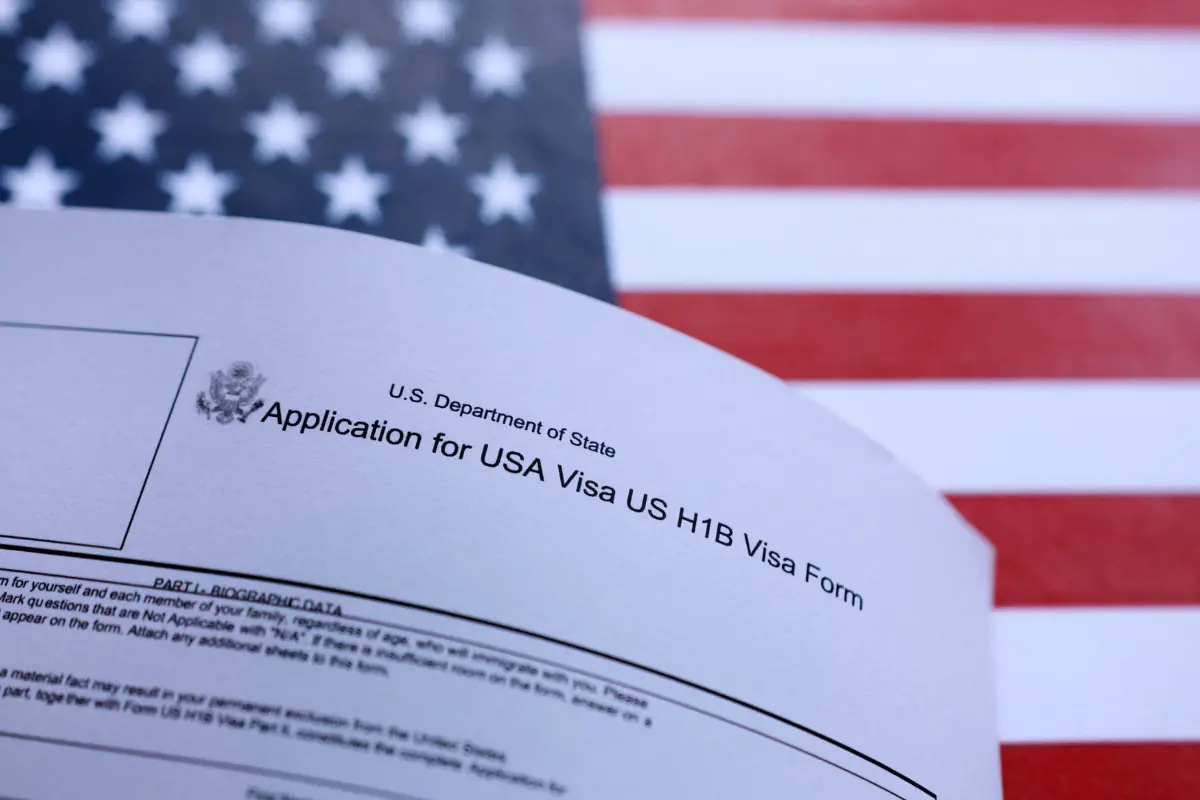
H-1B Visa: Trump Policies are Driving U.S. Firms to India
U.S. Firms Shift High-Value Work to India Amid Trump H-1B Visa Crackdown
Donald Trump’s H-1B visa crackdown is reshaping global talent strategies, with U.S. companies moving high-end operations to India’s Global Capability Centres (GCCs). Industry leaders and economists say the move could turbocharge India’s position as the world’s hub for innovation-driven outsourcing.
H-1B Visa: India’s Rise as a Global Capability Centre Powerhouse
India is already home to more than 1,700 GCCs—over half of the world’s total. What started as back-office support has evolved into a thriving ecosystem managing everything from luxury car dashboard design to advanced drug discovery. With artificial intelligence (AI), cybersecurity, and analytics driving corporate agendas, GCCs are stepping into more strategic, innovation-led roles.
“GCCs are uniquely positioned for this moment. They serve as a ready in-house engine,” said Rohan Lobo, partner and GCC industry leader at Deloitte India. He noted that several U.S. firms are reassessing workforce models, especially in finance, technology, and sectors tied to federal contracts.
Trump’s H-1B Visa Crackdown and Its Ripple Effects
Earlier this month, President Trump raised the cost of H-1B visa applications to $100,000—up from the current $2,000–$5,000 range—making it prohibitively expensive for firms dependent on foreign talent. On September 29, U.S. senators reintroduced a bill targeting loopholes in both H-1B and L-1 visas, adding fresh uncertainty for corporations.
Industry watchers believe the restrictions will force U.S. companies to move critical projects offshore, particularly to India. High-value functions like AI-driven product development, financial analytics, and R&D are expected to shift to GCCs rather than being outsourced to third-party vendors.
“There is a sense of urgency,” said Lalit Ahuja, founder and CEO of ANSR, which has helped major firms like FedEx, Target, and Lowe’s establish their India centres. “This whole ‘gold rush’ will only get accelerated.”
H-1B Visa: Big Tech and Wall Street Players Lead the Transition
Companies such as Amazon, Microsoft, Google’s parent Alphabet, Apple, JPMorgan Chase, and Walmart—some of the largest H-1B visa sponsors—already operate massive India-based teams. While they remain tight-lipped given the political sensitivities, insiders say expansion plans are underway.
“Either more roles will move to India, or corporations will near-shore them to Mexico or Colombia. Canada could also take advantage,” said the India head of a major retail GCC.
Risks and Rewards: India’s Strategic Opportunity
While the shift promises growth for India’s $283-billion IT services sector, risks loom. The proposed HIRE Act in the U.S. could impose a 25% tax on outsourced work, which may squeeze India’s cost advantage. Trade tensions are already spilling into services, threatening to complicate cross-border flows.
“For now, we are observing and studying, and being ready for outcomes,” said the India head of a U.S. pharmaceutical GCC.
Still, analysts believe the net effect will be positive. According to Nomura, “Lost revenues from H-1B visa-reliant businesses could be somewhat supplanted by higher services exports through GCCs, as U.S.-based firms look to bypass immigration restrictions to outsource talent.”
The Road Ahead for India’s GCC Ecosystem
Before Trump’s H-1B visa crackdown, India was already projected to host over 2,200 GCCs by 2030, creating a $100 billion market. Now, that trajectory could accelerate dramatically. COVID-19 proved that critical tech and R&D tasks can be executed remotely, and India’s talent pool remains unmatched in both scale and expertise.
“Extreme offshoring is not off the table,” said Ramkumar Ramamoorthy, former managing director of Cognizant India. “What we’re seeing now is a structural realignment of global labour models.”
For India, the moment represents both a challenge and an opportunity. As U.S. corporations navigate political headwinds, India’s GCCs are emerging as resilient engines of innovation, bridging global ambitions with local leadership.
Also Read : Parul Somani: Mindset Coach, Speaker, and Cancer Survivor