
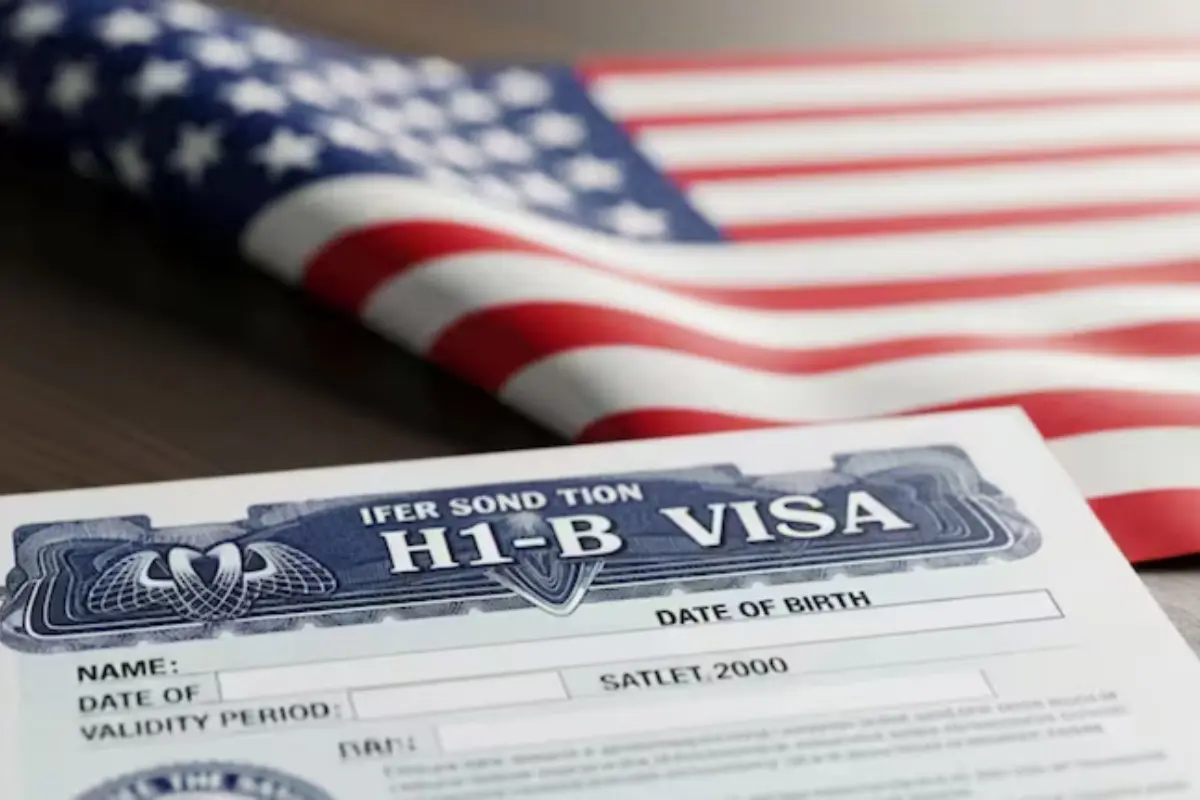
H-1B Visa Rules Spark Panic Among Indian Tech Talent
New H-1B Visa Rules: Students, Freshers Fear Rejection Under Wage-Based Selection
H-1B Visa Rules: In a paradox that many around the world struggle to make sense of, US President Donald Trump continues to argue that America doesn’t have enough talented people, even as he tightens immigration controls and rewrites the very rules that allowed skilled workers to study, work, and thrive in the world’s largest economy. This conflicting stance has once again sent shockwaves across India — the country that remains the single largest source of H-1B workers.
Two back-to-back policy moves have effectively put a spanner in the wheel of the American dream, particularly for young Indian graduates aspiring to build careers in the US. First, the Trump administration pushed through a massive $100,000 surcharge on new H-1B visa petitions filed from outside the United States. Then, this week, the government scrapped the long-standing random lottery system, replacing it with a wage-weighted and skill-based selection model — a shift that fundamentally reshapes who gets a ticket into America.
The $100,000 surcharge faced legal opposition from the US Chamber of Commerce, but a US court dismissed the plea, clearing the path for what may now become the world’s costliest hiring permit.
H-1B Visa: Why Indian Professionals Are the Most Exposed
The New H-1B Visa Rules hit hardest where the numbers are largest. Indian nationals already account for more than 70% of all H-1B visas issued in FY24, and they also top the charts for advanced degrees among immigrant groups. Their median income — an impressive $145,000 — stands highest among immigrant communities.
Yet, despite this dominance, India has only two homegrown companies — TCS and Cognizant — in the top 10 H-1B sponsoring employers of 2025. The remaining eight are American firms, raising a pointed question: is the crackdown really aimed at protecting American jobs — or reshaping immigration priorities?
What Exactly Changed: New H-1B Visa Rules Explained
Two policy decisions now define the future of foreign skilled talent in the US:
| Old System | New System |
|---|---|
| Random Lottery-Based Selection – every applicant had an equal chance | Wage & Skill-Based Selection – preference to higher salaries & specialized skills |
| Filing Fee Averaged $5,000 | One-time surcharge of $100,000 per new petition from outside the US |
These New H-1B Visa Rules will take effect on February 27, 2026, applying to the FY 2027 cap season. What does NOT change is the annual quota — still fixed at 85,000 visas, including 20,000 for US-degree holders.
H-1B Visa: Who Will Be Hit the Hardest?
Immigration and tax experts warn that this could shut the door on thousands of early-career Indian applicants — especially those who relied solely on the lottery for a shot.
At-risk groups include:
-
Fresh software engineers
-
Data analysts and data scientists
-
Civil, electrical & mechanical engineers
-
Architects
-
Accountants
-
Researchers and scientists
These categories traditionally lack alternative US visa options, making H-1B their only route.
“The number of H-1B registrations has been two to three times higher than quota for years. Now, a $100,000 filing cost alone will shrink applicant numbers,”
— says Kuldip Kumar, Partner, Mainstay Tax Advisors.
The New Cost of the American Dream
Immigration lawyer Sukanya Raman breaks down the brutal new math:
| Component | Earlier Cost | Now Estimated |
|---|---|---|
| Filing & Attorney Fees | $10,000 – $15,000 | $110,000 – $120,000 (including $100,000 surcharge) |
“This system will automatically filter — only companies who believe the talent is worth a ₹90-lakh fee will apply,”
— she explains.
Her conclusion echoes the sentiment many fear:
Only the “creamy layer” will now make it to America.
The Silver Lining Few Are Talking About
While anxiety dominates the headlines, there is a contrarian view — if sky-high fees reduce overall registrations, competition may fall, and the wage-weighting rule will matter less.
Some analysts believe this could even force Indian IT companies to invest more in domestic and alternative-market job creation, reducing brain drain.
Others argue that this aligns America with a global trend:
Countries like Canada, the UK, Germany, Japan and the UAE have already begun rewarding high-earning and STEM-skilled immigrants over general applicants.