
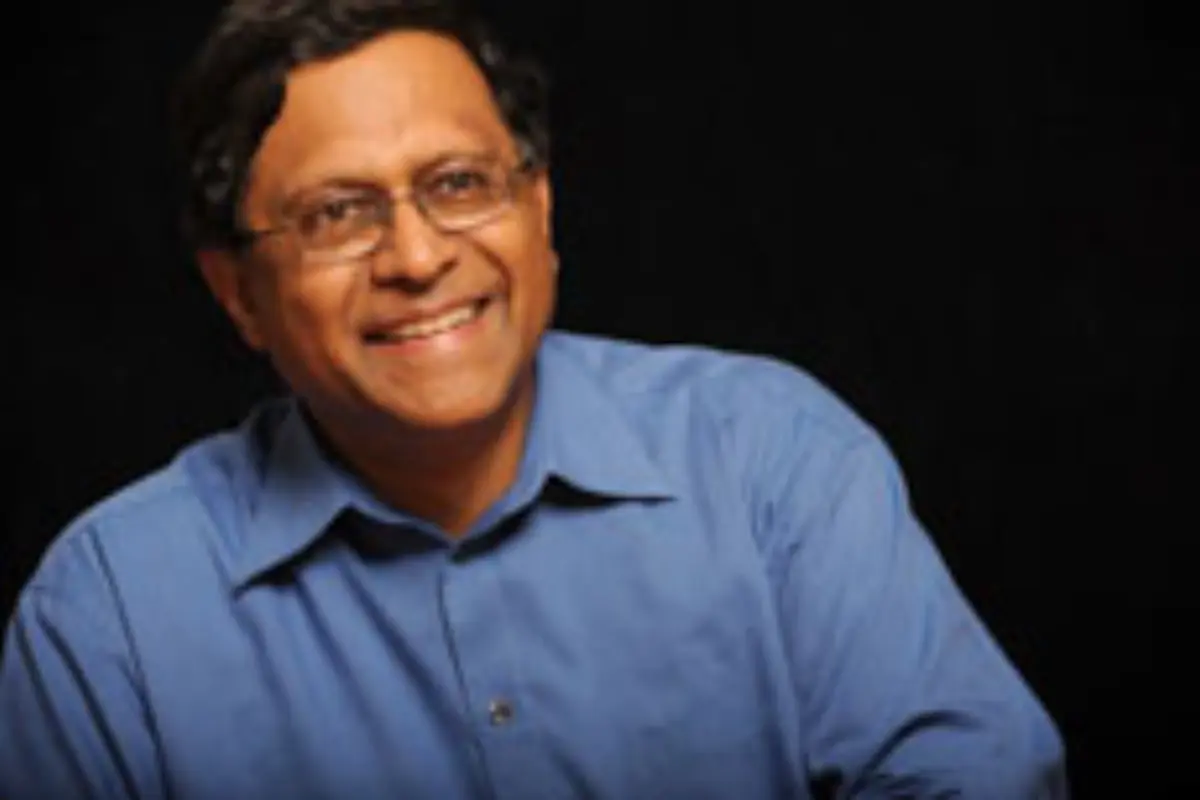
The intellectual path of George Verghese began with a strong foundation in electrical engineering. He earned his Bachelor of Technology degree from the Indian Institute of Technology (IIT) Madras in 1974, a period when India was nurturing a new generation of engineers destined to influence global technology. His academic brilliance quickly became evident, propelling him to pursue advanced studies abroad.
He completed his Master of Science degree at the State University of New York at Stony Brook in 1975, followed by a Ph.D. in Electrical Engineering from Stanford University in 1979. These formative years exposed him to cutting-edge research environments and diverse academic perspectives. At Stanford, he refined his focus on dynamical systems, modeling, and control theory—fields that would become the backbone of his future work.
In the same year he earned his doctorate, he joined the faculty of MIT’s Department of Electrical Engineering and Computer Science (EECS). What began as the early stage of an academic career soon evolved into a decades-long legacy of teaching, research, and mentorship.
George Verghese: Building a Legacy at MIT
Since 1979, George Verghese has been a cornerstone of MIT’s engineering community. His appointment as the Henry Ellis Warren Professor of Electrical and Biomedical Engineering reflects not only his scholarly achievements but also the profound respect he commands within academia.
At MIT, he distinguished himself not just as a researcher but also as an extraordinary educator. His passion for teaching and his ability to make complex concepts accessible earned him the prestigious MacVicar Faculty Fellowship, MIT’s highest recognition for excellence in undergraduate education, which he held from 2011 to 2021.
Students describe his classes as intellectually demanding yet deeply inspiring. He has a reputation for nurturing critical thinking and encouraging students to see engineering not merely as technical work but as a creative discipline capable of solving humanity’s toughest challenges.
Early Research: Transforming Power Systems and Electronics
During the early decades of his career, George Verghese focused extensively on power systems and power electronics. His work in modeling and analysis of electrical networks played a significant role in advancing the understanding of complex energy systems. His contributions to generalized state-space theory and power conversion modeling became essential tools for engineers worldwide.
One of his most influential achievements during this period was co-authoring the landmark textbook Principles of Power Electronics. First published in 1991 and later revised in 2023, the book has educated generations of engineers and remains a foundational resource in the field.
His innovative contributions earned him election as a Fellow of the Institute of Electrical and Electronics Engineers (IEEE), recognizing his impact on the advancement of electrical engineering and his leadership within the global research community.
George Verghese: A Transformational Shift Toward Biomedicine
A defining feature of George Verghese’s career has been his willingness to embrace change and explore new frontiers. After decades of groundbreaking work in power electronics, he shifted his research focus toward biomedicine. This transition was not merely a change in application area—it represented a deeper commitment to using engineering principles to improve human health.
At MIT’s Research Laboratory of Electronics (RLE), he became a Principal Investigator and co-director of the Computational Physiology and Clinical Inference Group. His research began to address complex medical challenges through advanced modeling, signal processing, and control theory.
This interdisciplinary approach opened new possibilities for medical diagnostics and patient monitoring. By applying engineering frameworks to physiological data, he helped create systems capable of providing real-time clinical insights and improving decision-making in healthcare settings.
Recent Research: Engineering the Future of Healthcare
In recent years, George Verghese has led or contributed to several innovative projects that demonstrate the transformative potential of engineering in medicine.
Respiratory Monitoring
His work on low-order mechanistic models for capnography enables clinicians to differentiate between conditions such as Chronic Obstructive Pulmonary Disease (COPD) and Congestive Heart Failure (CHF). These models help make complex respiratory data more interpretable and clinically useful.
Open-Source Medical Imaging
Through initiatives like the MRI4All project, he has contributed to the development of ultra-low-field, open-source MRI systems. These technologies aim to expand access to diagnostic imaging in underserved regions, making advanced medical tools more affordable and widely available.
Hemorrhage Detection
His research on using ultra-wideband microwaves combined with deep learning techniques offers promising methods for detecting and localizing internal bleeding. This work could significantly enhance emergency medicine and trauma care.
Cardiovascular and Neurological Inference
By studying ECG variability and developing non-invasive techniques for estimating intracranial pressure, he is advancing the understanding of brain-heart interactions and enabling safer patient monitoring methods.
Influential Publications and Intellectual Contributions
With more than 240 publications, George Verghese has made lasting contributions to engineering theory and application. His textbooks and scholarly works continue to shape the education of engineers and researchers worldwide.
Notable works include:
-
Signals, Systems and Inference (with Alan S. Oppenheim), a modern textbook that blends classical signal processing with contemporary data-driven approaches.
-
Foundational research papers on generalized state-space representations and power conversion modeling.
-
Studies on failure detection and robust control systems that have influenced industries ranging from energy to aerospace.
His publications are known for their clarity, depth, and practical relevance, bridging the gap between theory and real-world application.
Mentorship & Recognition
Beyond research and teaching, George Verghese has built a reputation as a mentor who invests deeply in the growth of students and young researchers. His dedication to advising earned him the 2021 Capers and Marion McDonald Award for Excellence in Mentoring and Advising.