
Dream Act 2025: New Bill Offers Lifeline to Dreamers
Dream Act 2025: New Bill Promises Stability for Children of H-1B and L-1 Visa Holders
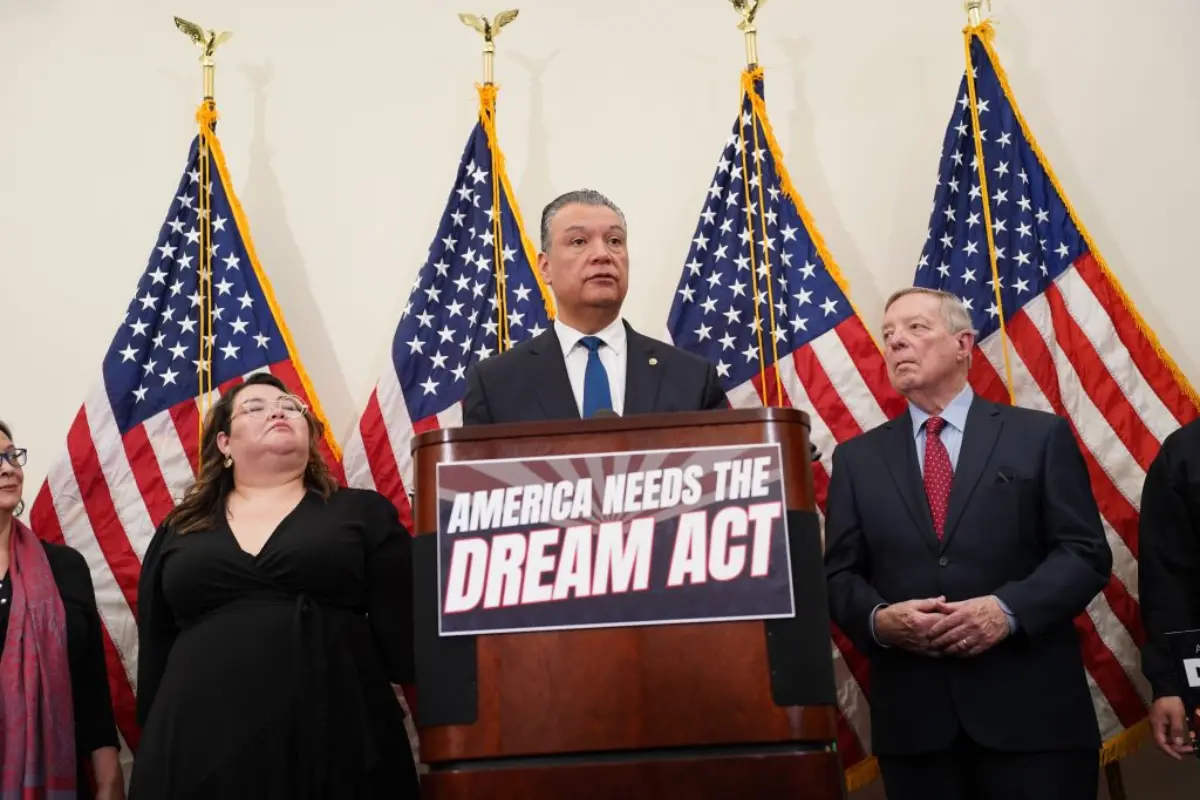
In a significant development that could reshape the lives of hundreds of thousands of young immigrants, a revised Dream Act 2025 has been introduced in the U.S. Senate, carrying rare bipartisan support. Sponsored by Senator Dick Durbin and Senator Lisa Murkowski, the bill attempts to confront a decades-old immigration challenge—one that has left countless children caught between legal limbo, family separation, and an uncertain future.
Dream Act: A Landmark Shift – Relief for Documented Dreamers
While earlier versions of the Dream Act focused solely on children brought into the country without legal documentation, this year’s bill expands its protective fold to include Documented Dreamers—children of long-term non-immigrant visa holders such as H-1B, E-1, E-2, and L-1 workers.
These children grow up in the U.S., attend American schools, and embrace the only home they know. Yet, on turning 21, they “age out” of their dependent visas (often H-4), losing their legal status overnight. Their options are painfully limited: shift to an international student visa, leave the country altogether, or uproot their lives to start anew elsewhere. For many Indian families, this age-out crisis has become a recurring nightmare.
According to an earlier analysis by immigration expert David J. Bier of the Cato Institute, as of March 2023, India’s employment-based green card backlog in categories EB-2 and EB-3 had surged to 10.7 lakh, with nearly 1.34 lakh children projected to age out before their families receive permanent residency. This staggering number stems from the rigid per-country green card cap that restricts each nation to just 7% of annual employment-based green cards—regardless of demand.
What the Dream Act 2025 Proposes
The Dream Act 2025 introduces a structured, humane pathway for both Dreamers and Documented Dreamers to obtain lawful permanent residence. The bill would create a conditional permanent resident status, valid for up to eight years, offering protection from deportation, legal work authorization, and the freedom to travel outside the U.S.
To qualify, applicants must meet several criteria:
-
Arrival in the U.S. before age 18
-
A minimum of four years of U.S. residency
-
Successful completion of background and medical checks
-
Fulfillment of education, military service, or employment standards
-
Clearance of federal tax obligations
-
Payment of associated fees
Once granted conditional status, recipients can secure full green-card eligibility by:
-
Completing at least two years of higher education, or
-
Serving honorably for two years in the U.S. military, or
-
Demonstrating at least three years of lawful employment
They must also prove English proficiency, civic knowledge, continued residence, good moral character, and pass additional security screenings.
A Lifeline for Nearly One Lakh Indian Children
For Indian immigrant families, the proposed legislation could be nothing short of transformative. Decades-long green-card wait times have fractured households, forced talented young adults into self-deportation, and eroded the sense of belonging among children raised on American soil.
If the Dream Act 2025 passes, immigration advocates estimate that nearly one lakh Indian children could finally breathe easier—freed from the fear of losing their status at age 21.
Dream Act: Strong Support from Educational and Advocacy Organisations
The Presidents’ Alliance on Higher Education and Immigration, representing almost 600 colleges and universities, welcomed the reintroduction of the bill, emphasizing the urgent need for stability for students who have grown up fully integrated into American communities.
Similarly, the National Immigration Forum highlighted that the bill’s expanded definition of Documented Dreamers acknowledges a long-ignored demographic—children who followed every rule yet remain trapped in systemic delays.