
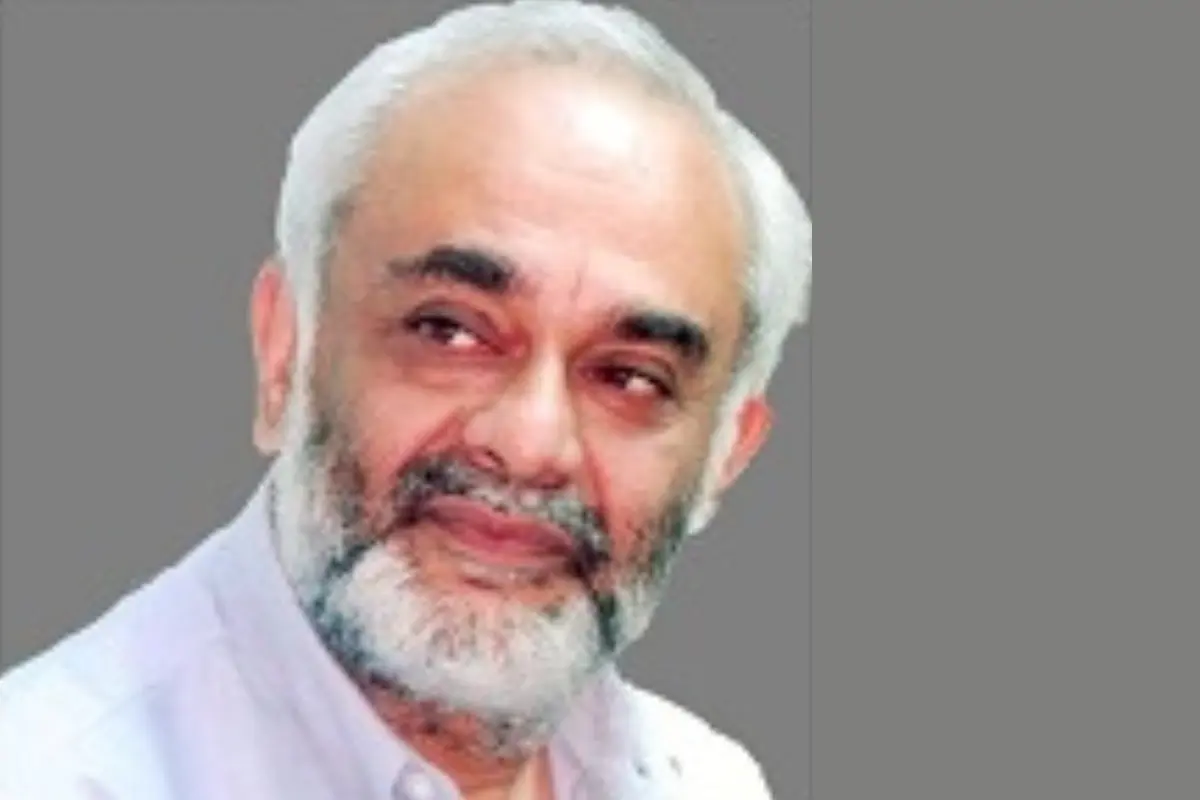
The journey of Dipankar Banerjee began with a strong curiosity for materials and engineering. After completing his schooling with a passion for science, he entered the Indian Institute of Technology Madras, graduating in metallurgical engineering in 1974. IIT Madras provided the rigorous intellectual training that shaped his analytical thinking and experimental discipline.
Determined to deepen his expertise, he pursued advanced studies at the Indian Institute of Science (IISc), Bengaluru, earning his PhD in 1979. During this period, he developed a keen interest in understanding how microscopic structures influence the strength and durability of metals—a theme that would define his lifelong research.
His early post-doctoral work with the Aeronautical Research and Development Board of DRDO introduced him to defence-oriented materials science, setting the stage for a career that would blend academic excellence with national service.
Dipankar Banerjee: Entry into DRDO and Rise as a Scientific Leader
In 1979, Dipankar Banerjee joined the Defence Metallurgical Research Laboratory (DMRL) in Hyderabad. The laboratory was at the forefront of developing advanced materials for India’s defence programs, and his arrival coincided with a growing national need for indigenous technology.
Over the years, his leadership and scientific insight propelled him to the position of Director of DMRL in 1996. Under his stewardship, the laboratory became a hub of innovation. He oversaw crucial initiatives, including:
-
Development of special naval steels for aircraft carriers.
-
Advancement of titanium alloys for aerospace engines.
-
Progress in nickel-based superalloys and investment casting technologies.
These efforts strengthened India’s self-reliance in strategic materials, reducing dependence on imports and building a robust domestic defence manufacturing ecosystem.
Chief Controller of R&D at DRDO: Guiding National Innovation
In 2003, Dipankar Banerjee was appointed Chief Controller of Research and Development (Aeronautics and Materials Sciences) at DRDO, a role that placed him at the helm of critical national programs.
During this period, he coordinated complex initiatives that integrated advanced materials with cutting-edge systems. His contributions included:
-
Supporting the development of military aircraft engines and combat platforms.
-
Driving programs in airborne electronic warfare and unmanned vehicles.
-
Advancing airborne early warning systems and associated technologies.
His ability to bridge scientific research with strategic objectives helped shape India’s modern defence capabilities, ensuring that materials innovation remained central to technological progress.
Dipankar Banerjee: Return to Academia – Inspiring a New Generation at IISc
After decades in national laboratories, Dipankar Banerjee returned to IISc in 2010 as Professor in the Department of Materials Engineering. As head of the Processing, Structure and Properties of Materials Laboratory, he focused on mentoring young scientists and exploring new frontiers in engineering alloys.
His research emphasized understanding the relationships between material processing, microstructure, and performance. By guiding students and researchers, he ensured that his legacy extended beyond discoveries into the cultivation of future innovators.
Scientific Contributions: Transforming Titanium and Intermetallic Alloys
The scientific legacy of Dipankar Banerjee is deeply rooted in physical metallurgy, particularly in titanium alloys and titanium aluminides. His work provided critical insights into how advanced alloys behave under extreme temperatures and stresses—knowledge vital for aerospace and energy systems.
One of his most notable achievements was the discovery and characterization of the Ti₂AlNb phase, which played a key role in the development of next-generation high-temperature alloys. His research group employed advanced electron microscopy to understand microstructural behavior, enabling the design of materials with superior strength and durability.
His contributions also include:
-
Development of intermetallic compounds for high-temperature applications.
-
International patents on advanced alloy systems.
-
Extensive research publications that continue to influence global materials science.
Global Collaborations and Professional Leadership
Throughout his career, Dipankar Banerjee engaged with leading international research institutions, including Carnegie Mellon University, Los Alamos National Laboratory, and General Electric’s research laboratories. These collaborations expanded the global reach of Indian materials science and fostered cross-border innovation.
Beyond research, he served in numerous leadership roles:
-
Chair of research councils in premier scientific institutions.
-
President of the Indian Institute of Metals.
-
Member of governing boards of academic and industrial organizations.
-
Editorial roles in prestigious scientific journals.
These contributions strengthened India’s scientific ecosystem and connected it to the global research community.
Honors and Recognition: Celebrating Excellence
The achievements of Dipankar Banerjee have been widely recognized through prestigious awards and fellowships. Among his most notable honors are:
-
Shanti Swarup Bhatnagar Prize (1993) for Engineering Sciences.
-
Padma Shri (2005), one of India’s highest civilian awards.
-
DRDO Lifetime Achievement Award (2014).
-
Professor Jai Krishna Memorial Award (2011).
-
Distinguished Alumnus Award from IIT Madras (2003).
-
Scientist of the Year Award by DRDO (1987).