
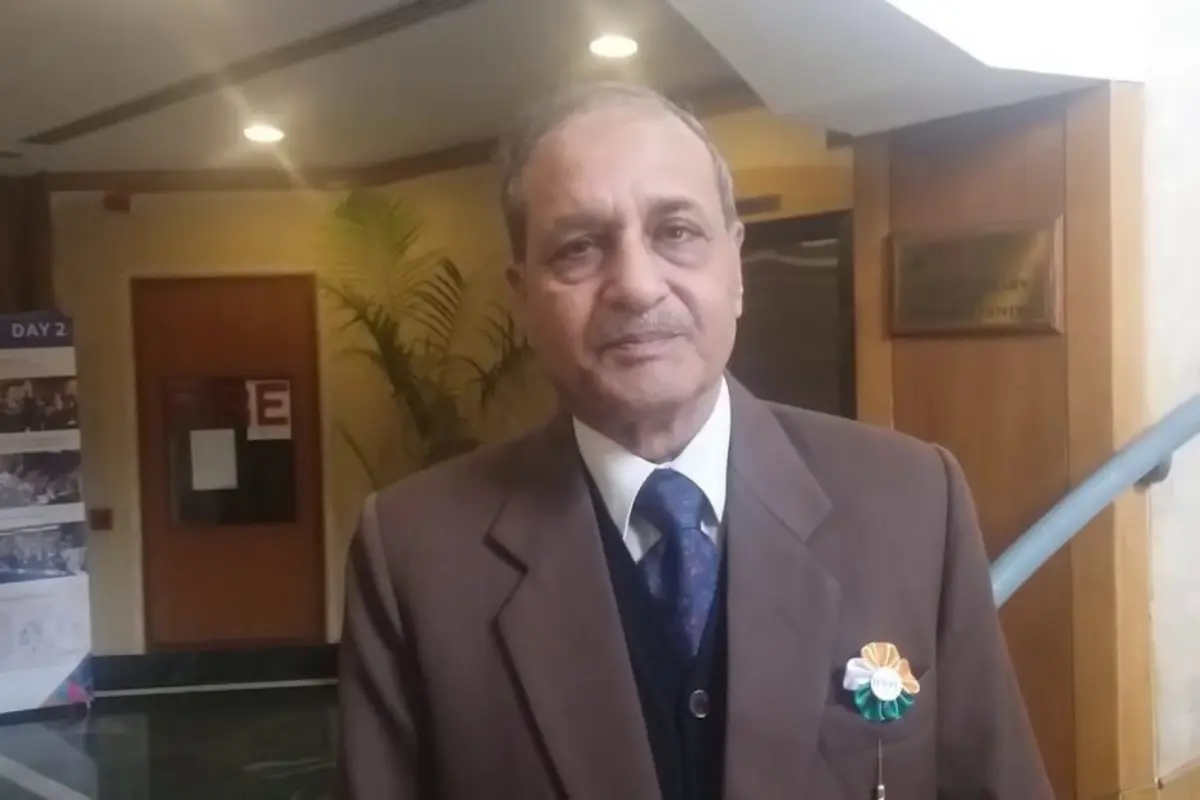
In the story of modern India’s institutional evolution, few names stand as tall and as influential as D P Agarwal. A teacher, reformer, institution-builder, policy-maker and visionary administrator, he reshaped how India identifies talent, builds academic excellence, and prepares leaders for the future.
Early Foundations of Excellence of D P Agarwal
Born with an innate curiosity and a deep sense of public duty, D P Agarwal began his academic journey in Mechanical Engineering at Aligarh Muslim University, graduating with honours in 1970. His desire to serve the country through the civil services was strong enough to lead him to attempt the UPSC examination. Although destiny had another route planned, this aspiration would one day come full circle—placing him at the helm of the very institution that selects India’s most capable administrators.
He pursued advanced studies at IIT Delhi, earning his M.Tech in 1972 and his Ph.D. in 1978. These years shaped not only his intellectual depth but also his passion for research, innovation, and mentorship. He soon joined IIT Delhi as a faculty member in Mechanical Engineering in 1975, eventually becoming a Professor and Dean. His commitment to students extended beyond classrooms—he even served as the warden of Kumaon hostel, guiding young minds during their most formative years.
From Academia to National Leadership
academics, Prof. D P Agarwal stepped into national policymaking in 1994 as the Joint Educational Adviser (Technical) at the Ministry of Human Resource Development. This role became a turning point—for him and for India’s technical education ecosystem.
Here, he conceptualized and guided transformative policies that strengthened engineering education, improved polytechnic systems, and laid the foundation for Centres of Excellence. His leadership in the World Bank–assisted Technician Education Projects enabled unprecedented participation of women—nearly 30%—a milestone considered exemplary even today.
His guidance played a significant role in elevating the Regional Engineering Colleges (RECs) into the prestigious National Institutes of Technology (NITs), institutions now central to India’s technical progress.
D P Agarwal: Architect of IIITM Gwalior – Building Institutions from Ground Zero
Before his landmark UPSC years, D P Agarwal served as the Founder Director of the Indian Institute of Information Technology and Management (IIITM), Gwalior. His leadership extended far beyond academics—he conceptualized, designed, and built the entire institute from scratch.
He introduced innovative academic models that championed peer learning, self-directed learning, dynamic curriculum design, and meaningful industry linkages. His vision established IIITM as one of India’s most forward-thinking institutions of technology and management.
Transforming EdCIL and the Culture of Governance
As Managing Director of Educational Consultants India Ltd. (EdCIL), a Government of India PSU, he revolutionized organizational culture. Through decentralised decision-making and empowerment of younger executives, he turned EdCIL into a more agile, professional, and outcomes-driven institution.
A Scholar of International Stature
Throughout his academic and administrative career, Prof. D P Agarwal remained deeply committed to research and teaching. He supervised over 100 theses—including 20 Ph.Ds.—and published more than 150 research papers across turbomachinery, IT, management, and e-governance. His papers have earned awards globally, attesting to his international reputation.
Invited to lecture in Germany, the UK, and Czechoslovakia, he also served as British Council Visiting Fellow at Cranfield University and Imperial College London. His editorial roles and keynote addresses at national and international conferences underscore his thought leadership.
Chairmanship of UPSC: A New Era of Reform
In 2003, D P Agarwal joined the Union Public Service Commission as a Member. Five years later, on 16 August 2008, he was appointed Chairman of UPSC—one of the highest constitutional positions in India.
His tenure marked one of the most progressive periods in UPSC’s history.
1. Introduction of the Civil Services Aptitude Test (CSAT)
Understanding the evolving needs of public administration, he revamped the recruitment process by introducing aptitude testing. This landmark change aligned India’s selection process with global standards, ensuring a more holistic assessment of candidates’ analytical, decision-making, and comprehension abilities.
2. Pioneering E-Governance in UPSC
Under his leadership, UPSC embraced the digital era. Online applications and e-governance systems replaced outdated processes, improving transparency, efficiency, and accessibility. These changes continue to shape UPSC’s functioning today.
With these reforms, D P Agarwal not only modernized the institution but also democratized access for millions of aspirants across India.
Honours and Recognition
His contributions have been widely celebrated with several prestigious awards:
-
Eminent Engineer Award (2003)
-
Engineer of the Year (2006) – Institution of Engineers
-
Honorary Fellowship of ISTE (2006)
-
Honorary D.Sc., Jiwaji University (2009)
-
Honorary Fellowship of IETE (2011)