
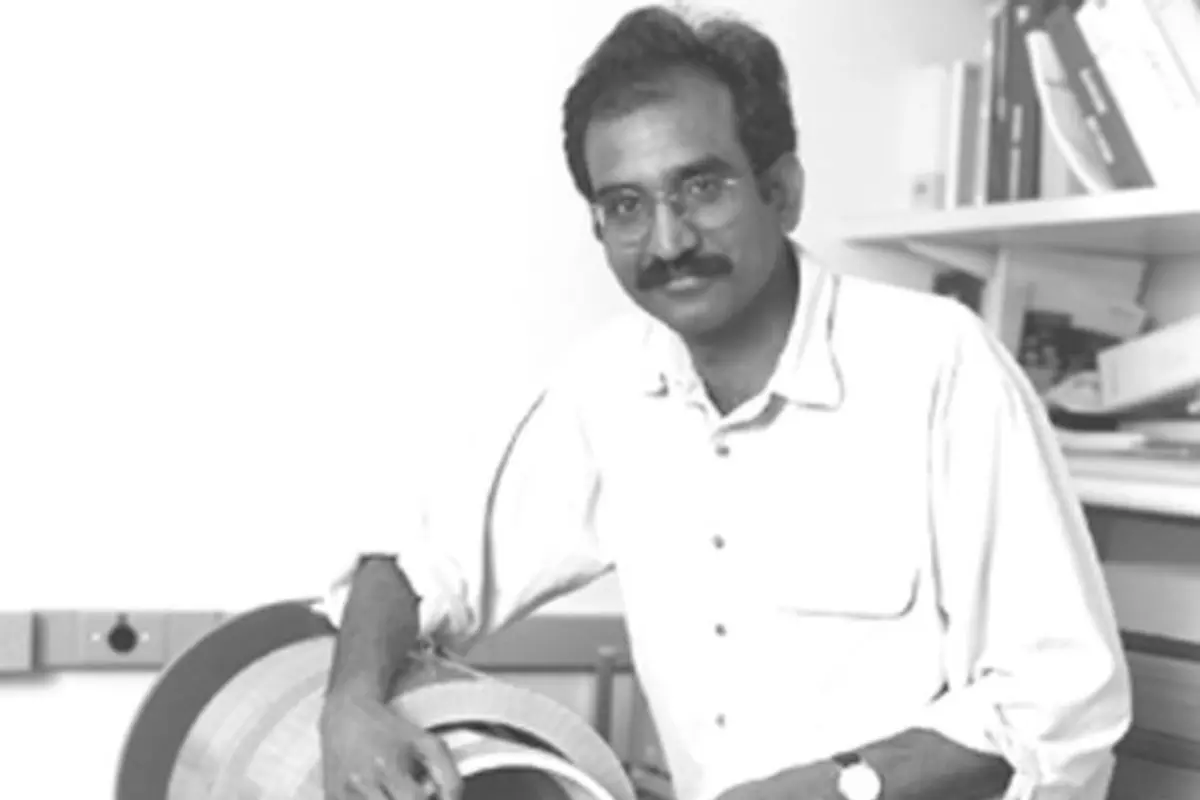
Cherukuri Murali Krishna serves as a Senior Investigator at the National Institutes of Health (NIH) and Head of the Biophysics Section within the Radiation Biology Branch of the National Cancer Institute’s Center for Cancer Research (CCR).
Early Foundations of Cherukuri Murali Krishna: A Physicist with a Broader Vision
Born with a deep curiosity for how the physical world works, Cherukuri Murali Krishna began his academic journey in India at a time when interdisciplinary science was still in its infancy. He earned his Bachelor’s degree in Physics from Loyola College, Chennai, in 1976, followed by a Master’s degree in Physics from Andhra University, Waltair, in 1978.
His intellectual trajectory sharpened further at the Indian Institute of Technology Madras, where he completed his Ph.D. in Physics (Magnetic Resonance) in 1984, under the guidance of Professor Sankaran Subramanian. At IIT Madras, Murali Krishna mastered magnetic resonance techniques—tools that would later become central to his revolutionary contributions in cancer research.
Joining the NIH: A Turning Point in Scientific Purpose
Immediately after completing his doctorate in 1984, Cherukuri Murali Krishna joined the National Cancer Institute (NCI) at the NIH as a post-doctoral fellow. The move marked a pivotal shift—from pure physics to mission-driven biomedical research.
At the NIH, the world’s largest clinical research establishment, Murali Krishna recognized that cancer was not merely a genetic disease, but also a physiological and metabolic one. Tumors, he observed, behave like distorted ecosystems—marked by poor blood flow, oxygen deprivation, acidic environments, and altered metabolism. Understanding these conditions, he believed, was key to defeating therapeutic resistance.
His rapid ascent was extraordinary. In 1993, he became one of the youngest tenured independent investigators at the NCI—an achievement made even more remarkable by the fact that it occurred while he was on a J-1 visa. The moment cemented his reputation as a scientist of rare originality and rigor.
Cherukuri Murali Krishna: Defining a Scientific Legacy – Imaging the Tumor Microenvironment
At the core of Cherukuri Murali Krishna’s research lies a singular objective: to make the invisible biology of tumors visible.
Solid tumors are notoriously hostile environments. They exhibit:
-
Low oxygen levels (hypoxia)
-
High interstitial fluid pressure
-
Acidic pH
-
Elevated aerobic glycolysis
-
Abnormal vasculature
These features drive resistance to radiation, chemotherapy, and immunotherapy, while also promoting metastasis. Traditional imaging tools, however, fail to capture this complexity.
Murali Krishna changed that.
Pioneering EPR Imaging for Oxygen Mapping
His laboratory developed low-field Electron Paramagnetic Resonance (EPR) imaging, currently the only imaging modality capable of quantitatively mapping tissue oxygenation and tracking it dynamically over time. This technology allows researchers to monitor how tumors respond to therapy in real time—before size changes become visible.
Initially implemented for small-animal research, EPR imaging from Murali Krishna’s group has laid the groundwork for human clinical translation, opening new frontiers in radiation oncology and drug development.
Advancing Hyperpolarized MRI
His team is also among a select few worldwide working on hyperpolarized MRI using carbon-13-labeled endogenous molecules, such as pyruvate. This approach enables real-time visualization of enzyme activity, including LDHA and citric acid cycle enzymes, which are abnormally elevated in cancer cells.
This technology has transformed metabolic imaging from a theoretical concept into a clinical reality, now used in both preclinical models and patient studies within the CCR.
Leadership at the NIH and Beyond
By 2006, the NIH formally recognized his impact by inducting him into the Senior Biomedical Research Service (Title 42)—an executive-level appointment reserved for scientists regarded by peers as exceptional leaders in biomedical research.
From 2011 to 2015, Cherukuri Murali Krishna served as Director of the Image Probe Development Center at the National Heart, Lung, and Blood Institute, expanding his influence across NIH institutes.
He has also chaired the NCI Tenure Selection Committee, helping shape the next generation of scientific leaders at one of the world’s most competitive research institutions.
Global Recognition and Scholarly Impact
The influence of Cherukuri Murali Krishna extends far beyond his laboratory.
-
Publications: Over 200 peer-reviewed scientific papers
-
Patents: Multiple inventions in cancer imaging and therapy, several licensed for commercialization
-
Editorial Leadership: Former editorial board member of Cancer Research and Magnetic Resonance in Medicine
-
Advisory Roles: Scientific Advisory Board member for Cornell University (ACERT) and Dartmouth Medical School
-
Policy Influence: Voting member of the U.S. Government Interagency Policy Committee for Helium-3 allotments
Honors and Awards
Recognition has followed achievement throughout his career:
-
NIH Director’s Merit Award – 2011, 2012, 2015
-
Silver Medal, International Magnetic Resonance Society – 2015
-
Japan Society for the Promotion of Science Invitational Professor – 2005