
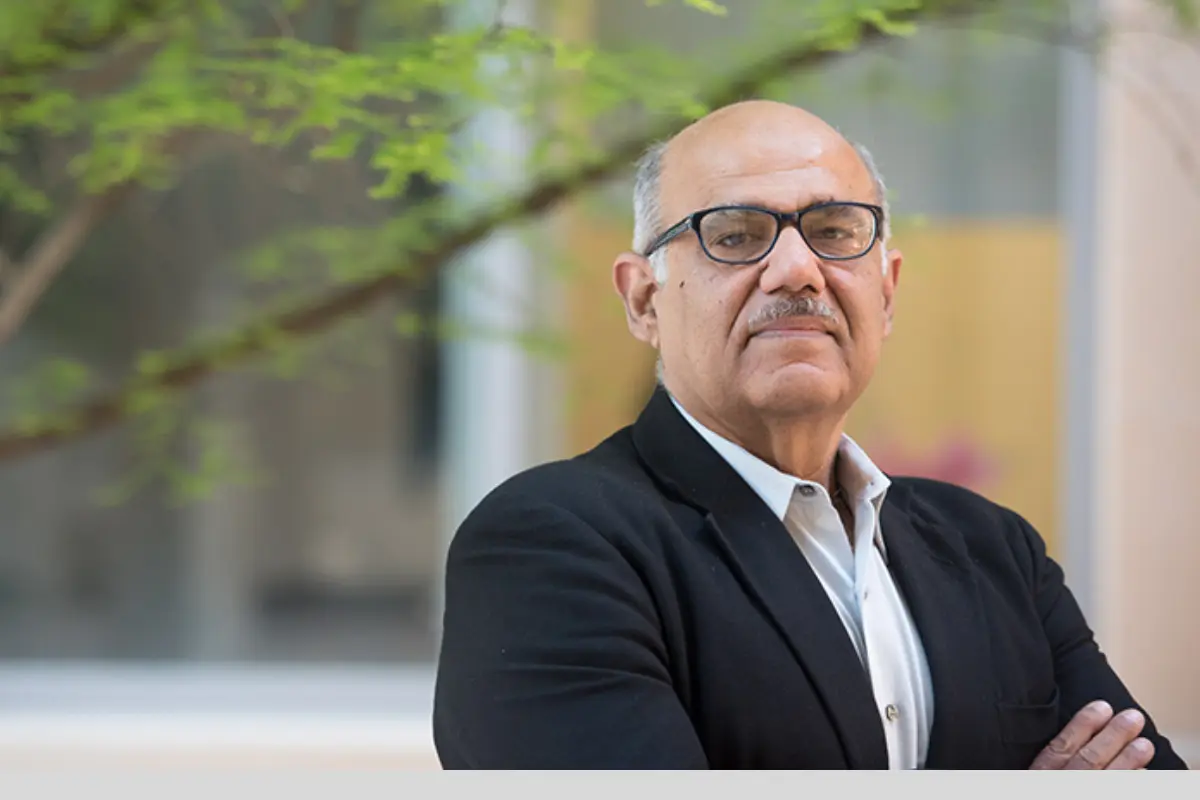
In the world of modern science—where complex datasets inform decisions, where molecules are mapped atom by atom, and where digital models save lives—few individuals have shaped the landscape as profoundly as Chandrajit Bajaj. Born in Calcutta in 1958 and educated across two continents, Bajaj has grown into one of the most respected computational scientists of his generation.
Chandrajit Bajaj: A Brilliant Beginning – The Foundations of a Visionary
The story of Chandrajit Bajaj begins at the prestigious Indian Institute of Technology Delhi, where he earned his B.Tech in 1980. Even during his formative years, he demonstrated a rare blend of creativity and analytical brilliance—qualities that would later define his career.
With an insatiable hunger for deeper inquiry, he moved to Cornell University, where he completed both his master’s and Ph.D. in Computer Science by 1984. At a time when computers were still entering mainstream scientific research, Bajaj was already envisioning a future where computational methods would unravel the mysteries of biology, physics, chemistry, and beyond.
His academic ascent was swift and distinguished. By age 26, he was a faculty member at Purdue University. By 1996, he was leading its Image Analysis and Visualization Center. And by 1997, his expertise drew the attention of the University of Texas at Austin, which recruited him to build and direct what would become a globally acclaimed center for computational visualization.
Architect of a New Scientific Paradigm
As the Director of the Computational Visualization Center at the Oden Institute for Computational Engineering and Sciences, Chandrajit Bajaj holds a role that combines leadership, mentorship, and visionary scientific thinking. He also holds the Computational Applied Mathematics Chair in Visualization, a prestigious recognition of his world-class contributions.
His scientific reach spans an exceptional spectrum:
-
Computational biology and bioinformatics
-
Geometric modeling and computational geometry
-
Image processing and scientific visualization
-
Compression, mesh generation, and computer graphics
-
Microscopy and biomedical imaging
-
Predictive and computational medicine
-
Machine learning and quantum algorithms
In every one of these fields, Bajaj has not merely participated—he has revolutionized them.
Chandrajit Bajaj: The Power of Visualization – Beyond Images, Toward Insight
Visualization, in Bajaj’s philosophy, is not art—it is intelligence.
He has spent decades building the mathematical and algorithmic foundations that allow researchers to:
-
Map biological structures with atomic precision
-
Predict molecular interactions with bounded uncertainty
-
Understand neuronal form-function connections
-
Solve complex forward and inverse problems in biomedical imaging
-
Analyze high-dimensional data with clarity and confidence
His pioneering work has transformed the way scientists observe life itself, turning digital data into meaningful scientific narratives.
Bridging Disciplines and Nations
One of the most inspiring dimensions of Chandrajit Bajaj’s journey is his commitment to global and interdisciplinary collaboration. Beyond computer science departments, his work seamlessly integrates with:
-
Biomedical engineering
-
Neuroscience
-
Mathematics
-
Architecture
-
Chemical and physical sciences
He has partnered with researchers across Asia, Europe, and North America, serving as a bridge between cultures, disciplines, and scientific traditions. His students—undergraduates, master’s scholars, Ph.D. candidates, and postdoctoral researchers—span a wide range of academic domains and continue to extend his legacy across the world.
A Distinguished Scholar with Global Honors
Bajaj’s contributions have earned him some of the highest recognitions in science and engineering:
-
Fellow of the Association for Computing Machinery (ACM)
-
Fellow of the American Association for the Advancement of Science (AAAS)
-
Fellow of the Institute of Electrical and Electronics Engineers (IEEE)
-
Fellow of the Society for Industrial and Applied Mathematics (SIAM)
-
Distinguished Alumnus of IIT Delhi
His research has won numerous awards, including multiple Moncrief Grand Challenge Faculty Awards, the UT Faculty Research Award, the Dean’s Research Assignment Award, and best-paper honors in leading scientific venues.