
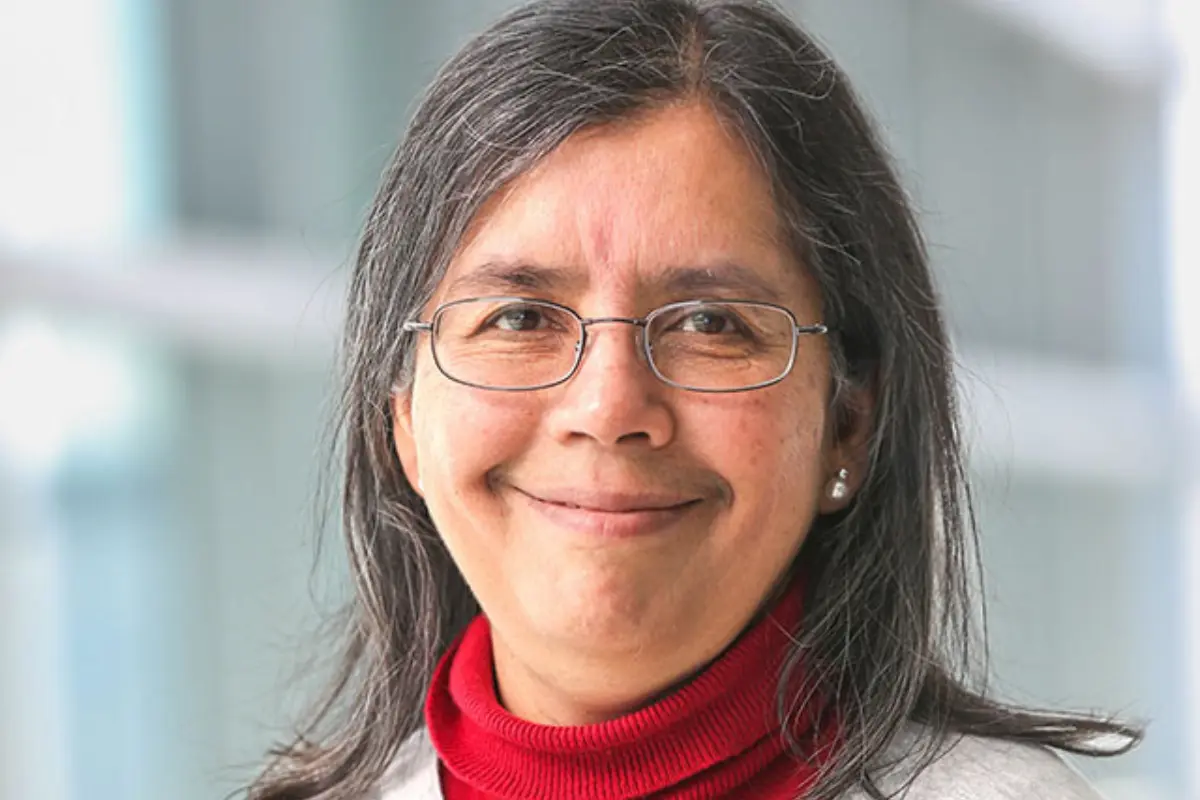
Bulbul Chakraborty’s journey into physics began with rigorous academic training and relentless intellectual curiosity. She earned her Bachelor of Science degree in physics from the prestigious Indian Institute of Technology Kharagpur in 1974. At a time when women were significantly underrepresented in the physical sciences, her pursuit of theoretical physics required not only talent but also resilience.
She went on to complete her Ph.D. at State University of New York at Stony Brook in 1979. Her doctoral thesis, titled “Influence of thermal disorder on electronic properties of solids,” signaled what would become a lifelong fascination: how disorder influences the behavior of matter.
Bulbul Chakraborty: Building a Global Scientific Career
After earning her doctorate, Bulbul Chakraborty broadened her academic horizon through postdoctoral and research appointments at some of the world’s most respected institutions. She conducted research at Argonne National Laboratory, expanded her theoretical insights at Nordic Institute for Theoretical Physics (NORDITA), and contributed to materials research at the Indian Institute of Science.
In 1989, she joined the faculty at Brandeis University. By 2000, she had risen to the rank of Full Professor. In 2009, she was appointed the Enid and Nate Ancell Chair of Physics—a recognition of her profound influence on condensed matter theory.
Over decades of scholarship, Bulbul Chakraborty’s work accumulated more than 6,000 citations and an h-index of 39, reflecting her deep and lasting impact on the scientific community.
Revolutionizing Soft Condensed Matter Physics
Granular materials like sand, powders, and dense suspensions behave in perplexing ways. Under certain conditions, they flow like liquids. Under others, they suddenly stiffen like solids. This dramatic shift, known as the “jamming transition,” challenged traditional theoretical frameworks.
Bulbul Chakraborty helped change that.
She pioneered statistical and theoretical frameworks to explain how non-thermal systems respond to external stress. Her research demonstrated that elasticity and friction in disordered systems are correlated with athermal fluctuations—revealing hidden structural principles governing seemingly chaotic materials.
A simple yet striking example of this phenomenon is Oobleck—a dense suspension that becomes rigid when subjected to sudden force. While children delight in running across tanks of Oobleck, physicists struggled to explain why such materials “shear jam.” Bulbul Chakraborty’s work provided a rigorous theoretical backbone for understanding this behavior.
Her contributions reshaped how physicists think about:
-
Granular materials
-
Amorphous systems
-
Statistical mechanics
-
Systems far from equilibrium
By confronting disorder head-on, Bulbul Chakraborty illuminated one of physics’ most stubborn mysteries.
Bulbul Chakraborty: Recognition from the Scientific Community
Bulbul Chakraborty’s contributions have been honored by some of the most prestigious scientific organizations in the world.
In 2008, she was elected Fellow of the American Physical Society for her theoretical contributions across diverse areas of condensed matter physics—including frustrated magnets, glass transitions, and jamming in granular systems.
Named a Simons Fellow in 2018 in Theoretical Physics by the Simons Foundation, a recognition reserved for scientists whose work pushes the frontiers of knowledge.
In 2020, elected Fellow of the American Association for the Advancement of Science, affirming her leadership not only in physics but in advancing science more broadly.
Each honor marked another milestone in a career defined by intellectual depth and fearless inquiry.
Rheology: When Physics Met the Stage
Just when it seemed Bulbul Chakraborty had already authored a complete scientific legacy, she surprised the world.
In collaboration with her son, playwright Shayok Misha Chowdhury, she stepped onto the stage in the play Rheology. The production explored the science of how matter flows, weaving it with reflections on life, grief, memory, and human resilience.
At age 71, with no formal acting training, Bulbul Chakraborty played herself.
She delivered physics lectures about sand and shear jamming while revealing deeply personal experiences. The result was a rare fusion of science and storytelling—an intellectual performance charged with emotional honesty.
In February 2026, she received an Obie Award for Performance, one of off-Broadway theatre’s highest honors. The award recognized her “brave work” and the profound emotional force she brought to the stage.