
Australia: Anti-Immigration Rallies Mostly Targeting Indians
Australia Anti-Immigration Rallies Draw Thousands, Targeting Indian Migrants Amid Backlash
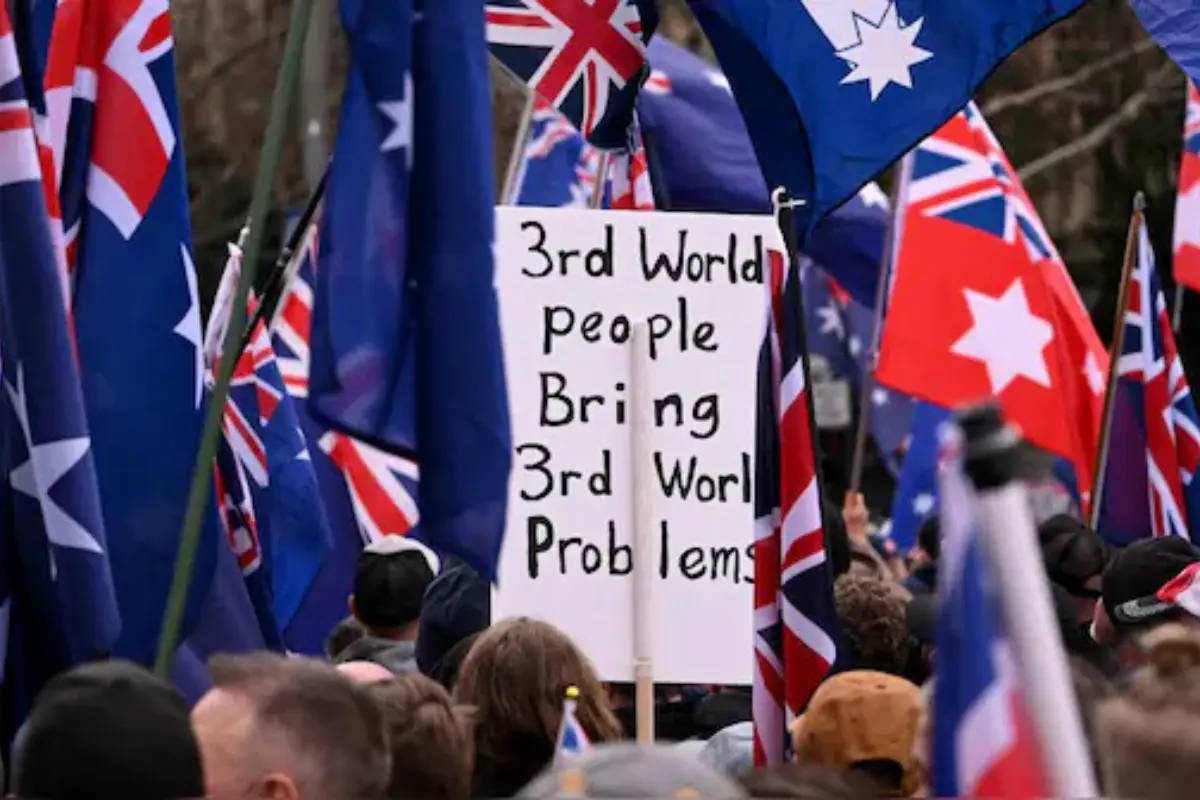
On Sunday, thousands of demonstrators gathered for Australia anti-immigration rallies across major cities, with organizers distributing controversial flyers that singled out Indian migrants. The marches, held under the banner “March for Australia,” were immediately condemned by political leaders, community organizations, and advocacy groups as racist, divisive, and influenced by neo-Nazi movements.
Australia: Flyers Stir Controversy by Targeting Indian Migrants
Promotional material circulated ahead of the rallies sparked outrage for focusing on Indian-born residents, who now represent over 3% of Australia’s population. One flyer read: “More Indians in 5 years, than Greeks and Italians in 100. This isn’t a slight cultural change – it’s replacement plain and simple.”
According to census data, the number of Indian-born residents doubled between 2013 and 2023, reaching approximately 845,800. Activists and community leaders said this deliberate targeting of Indians was a dangerous attempt to fuel xenophobia and cultural fear.
Large Turnouts in Major Cities
In Sydney, between 5,000 and 8,000 people assembled near the marathon course, many draped in national flags and holding anti-immigration placards. A counter-rally organized by the Refugee Action Coalition, attended by hundreds, challenged the message of March for Australia. Police deployed hundreds of officers but reported no major incidents.
Melbourne saw heightened tensions outside Flinders Street Station and during a march to state parliament. Neo-Nazi figure Thomas Sewell addressed the crowd, openly declaring that “his men” had led the rally. Police clashed with counter-protesters, using pepper spray and baton rounds, arresting six individuals and reporting injuries to two officers.
In Canberra, a smaller rally drew several hundred near Parliament House, attended by One Nation leader Pauline Hanson and Senator Malcolm Roberts. In Queensland, maverick MP Bob Katter appeared at a rally in Townsville, where he was greeted by hundreds of supporters.
Australia: Voices from the Protests
Some protesters expressed frustration not only with immigration but with broader public service issues. Sydney participant Glenn Allchin said: “It’s about our country bursting at the seams. Our kids can’t buy homes, hospitals have seven-hour waits, our roads are jammed, and yet the government keeps bringing more people in.”
Political and Social Leaders Condemn the Rallies
Government leaders strongly denounced the Australia anti-immigration rallies, warning against the rise of extremism.
-
Murray Watt, Federal Labour Minister: “This is not about social harmony but about spreading hate. These rallies were organized and promoted by neo-Nazi groups.”
-
Tony Burke, Home Affairs Minister: “There is no place in Australia for people who seek to divide and undermine our cohesion.”
-
Anne Aly, Minister for Multicultural Affairs: “We stand with all Australians, no matter where they were born. This brand of far-right activism has no place in modern Australia.”
Opposition leaders also voiced concerns. Shadow Attorney General Julian Leeser highlighted the rallies’ “anti-Indian sentiment” and antisemitic undertones, warning that even those who genuinely wanted migration policy debates should be cautious of the extremist company they were keeping.
Community Organizations Push Back
Civil society strongly rejected the rallies. Cassandra Goldie, CEO of the Australian Council of Social Services, said: “Australia’s diversity is our strength, not a threat. There is no place in Australia for ideology that targets people because of who they are or where they come from.”
The Refugee Action Coalition, which organized counter-demonstrations, called the March for Australia events “a dangerous attempt to mainstream the far-right agenda” and pledged continued resistance against racial hatred.
Rising Far-Right Activity Raises Concerns
Australia has witnessed an uptick in far-right activity in recent years. Following a surge in antisemitic incidents linked to the Israel-Gaza conflict, new laws were introduced banning the Nazi salute and extremist symbols, with offenders facing mandatory prison sentences.
Sunday’s rallies underscored the growing tension between rising migration, public anxieties, and the emboldening of extremist voices. Yet the overwhelming response from leaders and communities sent a clear message: Australia’s identity as a diverse, multicultural society remains firmly defended against hate-driven campaigns.
Also Read : Manju Sheth: Woman Behind Chai with Manju and Women Who Win