
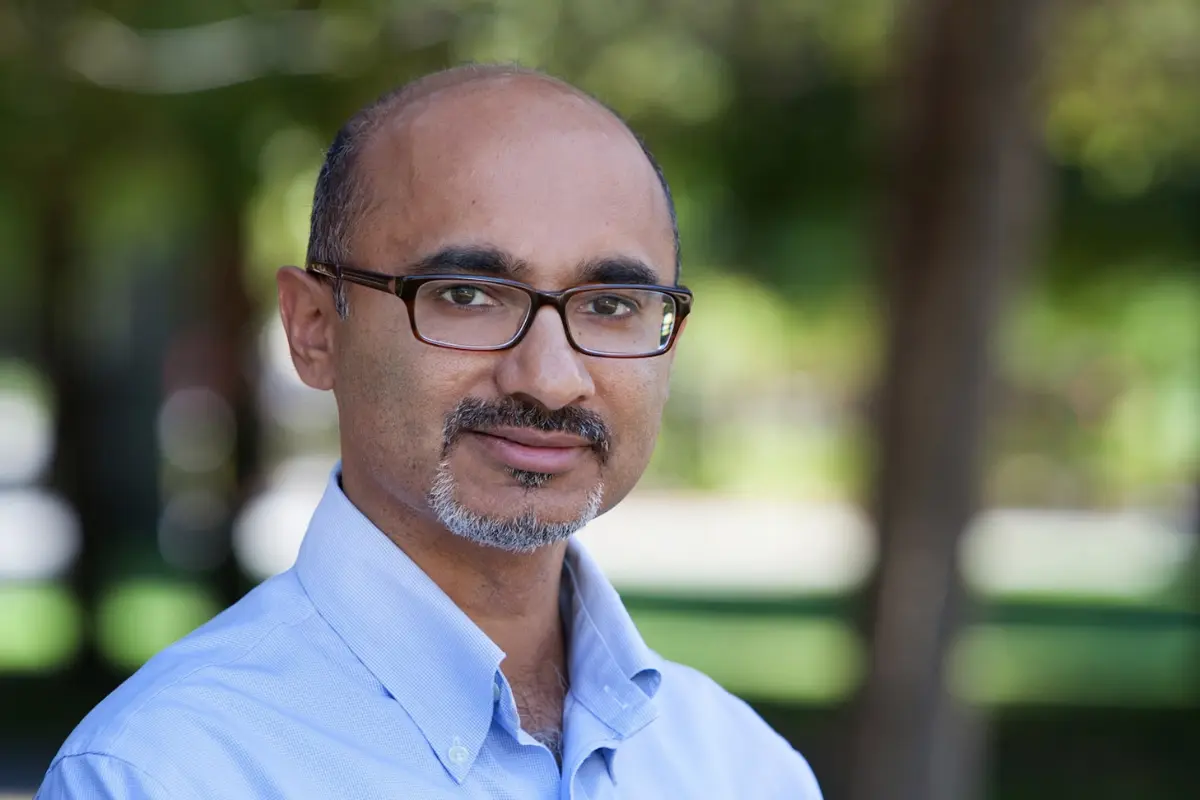
The path of Arvind Krishnamurthy began with a rare blend of technical precision and economic insight. He earned dual undergraduate degrees—a BS in Economics and a BSE in Electrical Engineering—from the University of Pennsylvania in 1990. This combination of economics and engineering cultivated a mindset that balances theory with structure, creativity with logic.
He went on to complete his PhD in Financial Economics at the Massachusetts Institute of Technology in 1998, one of the world’s foremost institutions for economic research. At MIT, he refined the analytical rigor that would later define his groundbreaking contributions to finance and macroeconomics.
Arvind Krishnamurthy: Academic Leadership and Professional Journey
Arvind Krishnamurthy began his academic career at the Kellogg School of Management in 1998, where he would spend over a decade shaping the field and mentoring future leaders. Rising from Assistant Professor to Harold Stuart Professor of Finance, he left an indelible mark on Kellogg between 1998 and 2014.
In 2014, he joined Stanford, and by 2015 he was appointed the John S. Osterweis Professor of Finance. His influence at Stanford extends beyond the classroom. He serves as:
-
Senior Fellow at the Stanford Institute for Economic Policy Research
-
Faculty Affiliate at the Freeman-Spogli Institute for International Studies
-
Faculty Affiliate at the King Center on Global Development
Through these roles, Arvind Krishnamurthy bridges academic research and global policy discussions, ensuring that ideas generated in universities translate into real-world solutions.
Research That Reshaped Crisis Understanding
At the heart of Arvind Krishnamurthy’s work lies a central question: How do financial systems behave under stress—and how can policy stabilize them?
His research spans:
-
Financial intermediation
-
Debt markets and housing markets
-
Liquidity crises in emerging and developed economies
-
Monetary policy transmission
-
Financial regulation
-
The global role of U.S. Treasury securities and the dollar
During periods of financial turmoil, including global banking and liquidity crises, his work provided clarity when markets were clouded by uncertainty. He analyzed how liquidity shortages propagate across economies and demonstrated the powerful role government interventions can play in restoring stability.
Central banks around the world have cited his research. Policymakers have drawn on his insights to better understand safe asset shortages, sovereign debt pricing, and systemic risk.
Arvind Krishnamurthy: Awards and Global Recognition
Excellence naturally attracts recognition. Over the years, Arvind Krishnamurthy has received numerous prestigious honors, including:
-
Smith Breeden Prize (2008) for best paper in the Journal of Finance
-
Western Finance Association Prize (2003)
-
Swiss Finance Institute Outstanding Paper Award (2012, 2015)
-
Spence Faculty Fellow (2022–23)
-
R. Michael Shanahan Faculty Fellow (2020–21)
Beyond awards, his professional service speaks volumes. He has served as Associate Editor of the American Economic Review and the Journal of Finance, shaping the direction of leading scholarly discourse. As a Board Member of the American Finance Association (2015–2019), he helped guide one of the most influential bodies in financial economics.
Dollar Dominance and the Global Monetary System
In recent years, Arvind Krishnamurthy has turned his focus toward one of the most consequential questions in international economics: Why does the U.S. dollar dominate the global monetary system?
His research explores the unique position of U.S. Treasury bonds as safe assets and how their pricing affects global financial conditions. He examines the deep structural forces that sustain reserve currency status—financial markets, trade invoicing, legal frameworks, and geopolitical trust.
This work gained international attention in 2026 when he was appointed MAS Distinguished Term Professor at the National University of Singapore and hosted in partnership with the Monetary Authority of Singapore.
During his February 2026 visit, Arvind Krishnamurthy delivered a widely anticipated public lecture titled “Dollar Dominance.” In it, he analyzed how the dollar’s central role in global finance shapes macroeconomic outcomes in both the United States and the broader world. He also engaged policymakers and economists in high-level dialogues on international finance and monetary strategy.