
Born in Glasgow, Scotland, into a Baidya Brahmin family, Anita Sengupta was immersed early in a multicultural environment that valued scholarship, precision, and language. Her father, a mechanical engineer from the Indian Institute of Technology with roots in West Bengal, brought analytical discipline into the household.
Her British mother, fluent in French and German, contributed a deep appreciation for global culture and communication. Their shared academic journey began during doctoral studies at the University of Liverpool, setting the intellectual tone of the family.
After emigrating to New York, Sengupta’s childhood imagination was ignited not by toys, but by the cosmos. At just six years old, she found herself captivated by Star Trek, particularly the character Spock, whose rationality, logic, and scientific calm left a lasting imprint. That fascination with the future, space travel, and exploration would quietly mature into a lifelong mission.
Anita Sengupta: Academic Foundation – Building the Mind of an Engineer
Anita Sengupta pursued aerospace and mechanical engineering at the University of Southern California’s prestigious Viterbi School of Engineering, earning her Master’s degree in 2000 and her Ph.D. in 2005. At USC, she developed not only technical expertise but also a systems-level mindset—learning to see engineering challenges not as isolated components, but as interconnected ecosystems.
Her doctoral research focused on advanced propulsion systems, specifically ion engines—technologies that would soon become critical to deep-space exploration. This academic rigor prepared her for the demanding, high-stakes world of national space missions.
From Boeing to NASA: Entering the Frontier of Space
Sengupta began her professional journey at Boeing Space and Communications, working on launch vehicles and satellite systems. There, she gained firsthand experience with the complexity, discipline, and accountability required in aerospace programs where precision is non-negotiable.
Her transition to NASA marked a defining chapter. At the Jet Propulsion Laboratory (JPL), her work contributed directly to some of humanity’s most ambitious space endeavors. Her research on ion propulsion became part of the technological backbone of the Dawn spacecraft, which successfully traveled to the asteroid belt, orbiting both Vesta and Ceres—an unprecedented achievement in interplanetary exploration.
Anita Sengupta: Mars Science Laboratory – Engineering a Historic Landing
Perhaps the most widely recognized achievement of Anita Sengupta came with the Mars Science Laboratory mission. As the lead systems engineer for the supersonic parachute system, she played a central role in solving one of space exploration’s hardest problems: landing a one-ton rover safely on Mars.
The successful deployment of the parachute and the dramatic “sky crane” maneuver that followed allowed the Curiosity rover to touch down on the Martian surface in 2012. The moment captured global attention, but behind it were years of design, testing, and relentless problem-solving. Sengupta’s work ensured that a robotic explorer could begin rewriting our understanding of Mars—and by extension, our place in the universe.
Cold Atom Laboratory: Quantum Science in Orbit
From planetary engineering, Sengupta moved into a frontier even more abstract yet equally transformative. As Project Manager of the Cold Atom Laboratory (CAL) at NASA’s Jet Propulsion Laboratory, she led the development of a quantum physics facility designed to operate in microgravity aboard the International Space Station.
CAL enables the study of ultra-cold quantum gases at temperatures approaching absolute zero—conditions impossible to sustain on Earth. In the microgravity environment of space, atoms can be observed for extended periods, allowing scientists to explore new quantum phenomena, test fundamental physics, and develop future quantum sensors.
Designed as a modular, upgradable facility, CAL serves multiple research teams and represents a bridge between theoretical physics and practical space-based experimentation. Under Sengupta’s leadership, the project transitioned from concept to reality, expanding the scientific purpose of the ISS beyond traditional experimentation.
Redefining Earthly Mobility: The Hyperloop Vision
After reshaping space science, Anita Sengupta turned her attention back to Earth. As Senior Vice President of Systems Engineering at Virgin Hyperloop One, she led efforts to develop a radically new form of high-speed transportation—an electrically propelled, magnetically levitating system operating in near-vacuum conditions.
Her responsibilities spanned product planning, systems architecture, safety certification, and regulatory strategy. In an industry where public trust and human safety are paramount, her aerospace background proved invaluable. She approached terrestrial transportation with the same discipline used for spacecraft—treating passengers not as consumers, but as crew.
The Future of Aviation: Clean Flight with Purpose
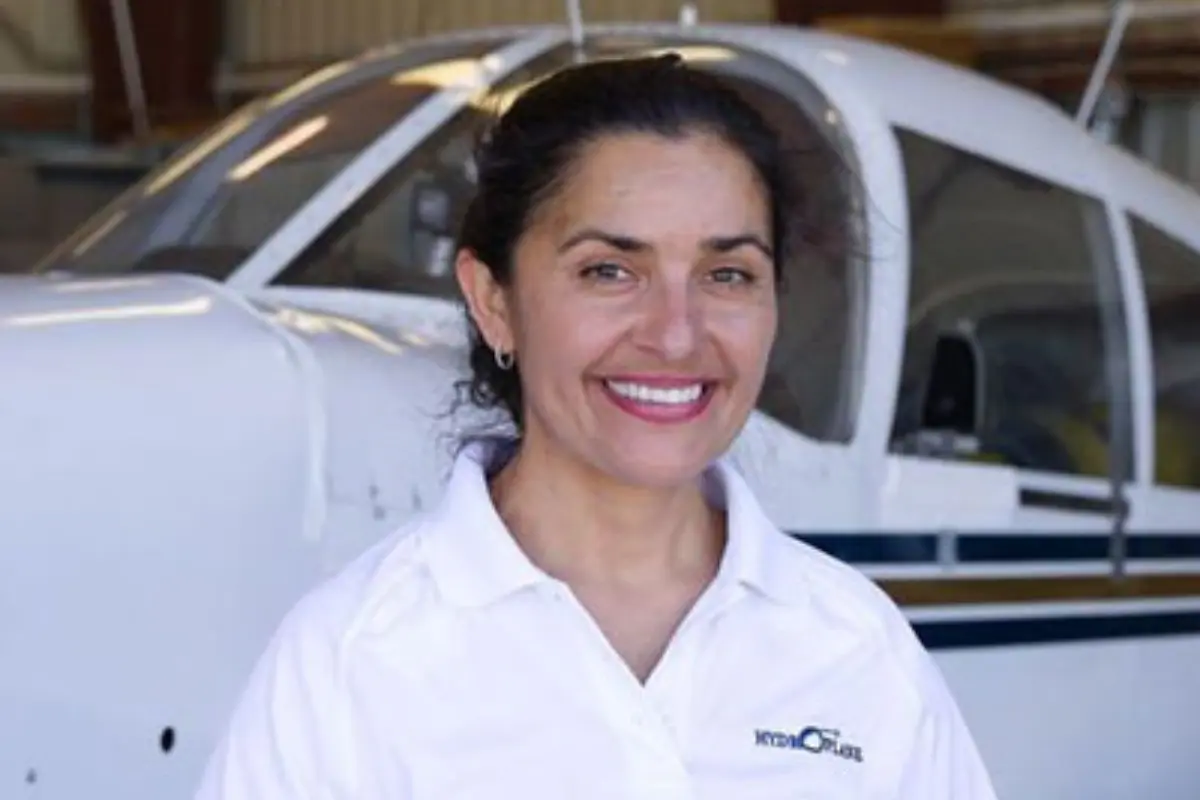
Today, Anita Sengupta is charting another bold course as Chief Product Officer at Airspace Experience Technologies (ASX) and as the founder and CEO of Hydroplane Ltd. Her current mission focuses on hydrogen-fuel-cell-powered aircraft—an ambitious effort to decarbonise aviation within the coming decade.
By applying lessons learned from space propulsion, systems engineering, and safety-critical design, Sengupta is helping reshape aviation for a carbon-constrained world.
Anita Sengupta: Educator, Aviator, and Advocate
Beyond industry leadership, Anita Sengupta remains deeply committed to education and outreach. As a Research Associate Professor at the University of Southern California, she teaches graduate-level courses in Entry, Descent, and Landing—one of the few programs of its kind on the West Coast. Through teaching, she passes on not just technical knowledge, but a mindset of resilience, curiosity, and responsibility.
A licensed commercial pilot, she embodies the fusion of theory and practice. Outside the lab and cockpit, she is an accomplished public speaker, STEM advocate, and global keynote presenter.