
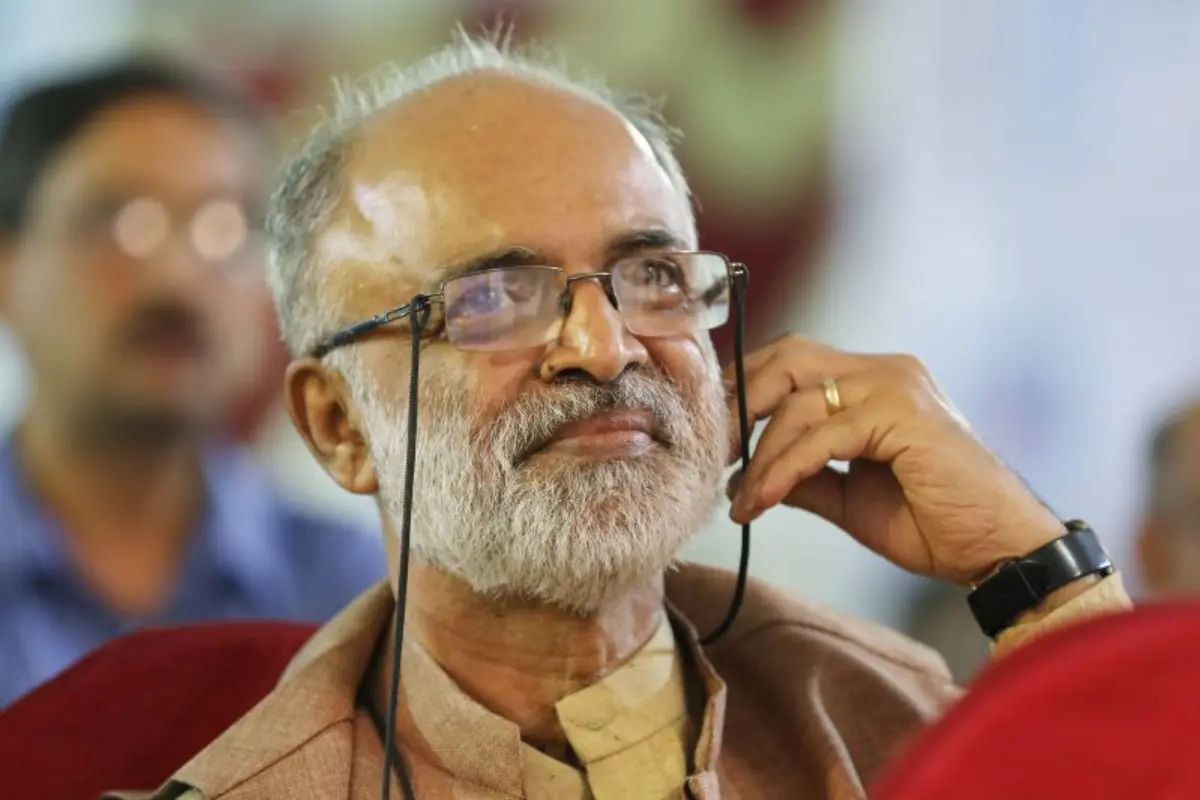
In the world of chemical engineering, only a few individuals manage to transform scientific discovery into real-world change. Aniruddha Bhalchandra Pandit, a stalwart in cavitation science, multiphase reactor design and sustainable technologies, stands as a remarkable example of how deep curiosity, relentless experimentation and human-centric innovation can influence not just laboratories, but communities, industries and nations.
Born on 7 December 1957 in Mumbai, Prof. Pandit’s journey is not merely the story of an engineer—it is the evolution of a thinker who believed that science is most powerful when it improves lives.
Aniruddha Bhalchandra Pandit: A Foundation Built on Discipline, Dedication and Purpose
Growing up in a culturally rich Maharashtrian family, Pandit’s early life shaped his values of sincerity and scientific curiosity. His academic path began at the Institute of Technology, Banaras Hindu University, where he earned his B.Tech in Chemical Engineering in 1980. With a mind wired toward solving complex problems, he moved to the University Department of Chemical Technology (now ICT Mumbai) for his PhD.
During his doctoral years, not only did he delve deep into reactor design and bubble dynamics under the mentorship of Prof. J. B. Joshi, but he also taught as an associate lecturer—an early sign of his passion for nurturing future scientists.
By 1984, armed with a PhD and a mind buzzing with ideas, he sought global exposure and moved to the University of Cambridge, working with the legendary Prof. J. F. Davidson. Here, Pandit perfected his understanding of bubble breakup, hydrodynamics and multiphase reactors, opening a lifelong pathway to innovation.
Returning to India: The Beginning of a Scientific Revolution
In 1990, Aniruddha Bhalchandra Pandit returned to India—bringing with him not just experience, but a mission: to build world-class research ecosystems in his homeland.
Joining UICT as a UGC Research Scientist, he began shaping an entirely new research frontier—Hydrodynamic Cavitation. His conviction was clear: cavitation was not just a scientific curiosity but a transformative tool for chemical, environmental and biological processes.
Under his leadership, cavitation emerged from academic obscurity to become a powerful, scalable and commercially significant technology. With characteristic persistence, he demonstrated that cavitation could:
-
disinfect water without chemicals,
-
accelerate chemical reactions,
-
synthesize nanoparticles efficiently,
-
break down pollutants,
-
process agricultural and industrial waste sustainably,
-
and even improve energy efficiency in cooking systems.
Pandit didn’t just push boundaries—he redrew them.
Aniruddha Bhalchandra Pandit: Research That Solves Problems, Not Just Publishes Papers
With 446+ research articles, 34 patents, and an H-index of 84, Prof. Pandit’s scholarly credentials are exceptional. But what makes his work truly outstanding is the purpose behind it.
Cavitation for Cleaner Water
His research group developed groundbreaking cavitational reactors that clean stagnant lakes and industrial wastewater. Their hydrodynamic cavitation system revived:
-
Rankala Lake (Kolhapur)
-
Bindusagar Lake (Bhubaneswar)
Projects that touched millions of lives and proved that science can heal ecosystems.
Sustainable Rural Technologies
Pandit’s innovations include:
-
high-efficiency solid-fuel stoves for rural households,
-
low-pollution combustion systems,
-
solar-linked thermal applications,
-
and mathematical models improving chulha efficiency beyond 55%.
These technologies were not merely engineered—they were crafted for people, especially rural and underserved communities.
Transforming Waste into Wealth
Another standout achievement is his eco-friendly process to convert keratin waste—human hair, wool, poultry feathers—into valuable fertilizers and animal feed, giving industries sustainable alternatives while reducing landfill burden.
A Global Authority in Cavitation and Process Intensification
Over the years, Pandit’s reputation expanded far beyond India. His method of microbial cell disruption gained recognition from the International Maritime Organization (IMO) as a promising ballast water treatment technique—placing Indian engineering innovation at the forefront of an international challenge.
His expertise made him a sought-after collaborator at the University of Cape Town, UCSB, BITS Pilani, and beyond.
And in 2023, one of the highest honors in engineering crowned his illustrious career—his election as a Member of the United States National Academy of Engineering (NAE).
Leadership at ICT Mumbai: Guiding a Legacy into the Future
Since 2019, as the Vice Chancellor of the Institute of Chemical Technology, Mumbai, Aniruddha Bhalchandra Pandit has been steering one of India’s premier scientific institutions toward global excellence.
His vision is rooted in:
-
interdisciplinary innovation,
-
frontier research,
-
student empowerment,
-
and societal transformation through engineering.