
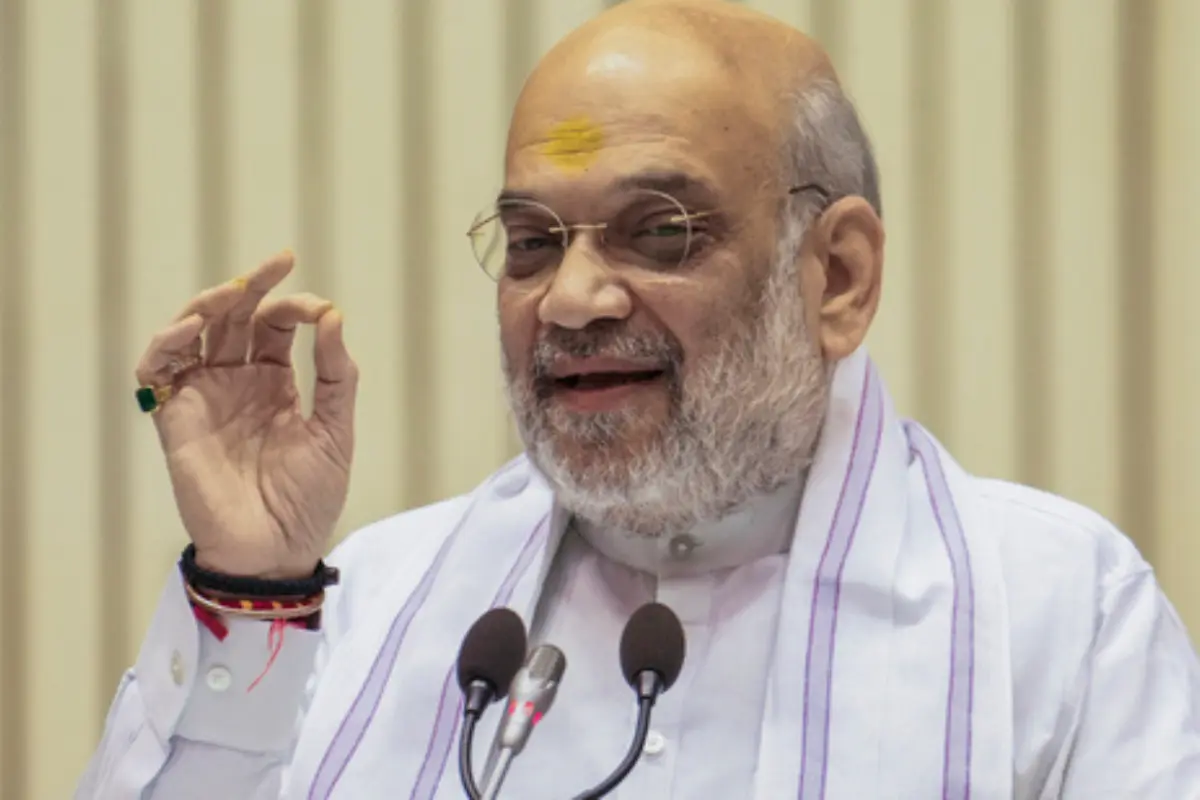
Amit Shah: Indus Waters Will Flow to Rajasthan, Not Pakistan
Amit Shah Declares Indus Waters Treaty Suspension Permanent, Plans Water Diversion to Rajasthan
In a bold declaration that signals a new phase in Indo-Pakistan relations, Union Home Minister Amit Shah has unequivocally ruled out any possibility of reviving the Indus Waters Treaty, stating that the agreement with Pakistan is now permanently suspended. The minister announced during an exclusive interview with The Times of India, reinforcing the Indian government’s stance following the recent Pahalgam terror attack.
When asked if the six-decade-old treaty might be restored, Amit Shah was firm: “No, it will never be restored.” Instead, he unveiled a sweeping plan to reroute the water that traditionally flowed to Pakistan under the treaty, redirecting it for India’s internal needs. “We will take water that was flowing to Pakistan to Rajasthan by constructing a canal. Pakistan will be starved of water that it has been getting unjustifiably,” he said.
Amit Shah About Indus Water: A Treaty in Turmoil
Signed in 1960 with the mediation of the World Bank, the Indus Waters Treaty was considered a cornerstone of bilateral cooperation between two nuclear-armed neighbours. It outlined the equitable sharing of water from the Indus River and its tributaries. However, recent events have cast a shadow over the agreement’s future.
India formally placed the treaty into “abeyance” on April 24, two days after the brutal terrorist attack in Pahalgam, Jammu and Kashmir, that claimed the lives of 26 civilians. The Indian government linked the suspension directly to what it described as “sustained cross-border terrorism,” pointing fingers at Pakistan for harbouring and supporting extremist elements operating in the region.
Amit Shah: Pakistan’s Repeated Appeals
Islamabad, which denies any involvement in the Pahalgam attack, has issued multiple appeals urging India to revisit its decision. Syed Ali Murtaza, Pakistan’s Water Resources Secretary, has reportedly written four official letters to India’s Jal Shakti Ministry, with three of them sent after the conclusion of Operation Sindoor, India’s military response to the deadly attack.
In its appeals, Pakistan claims that India’s move breaches the treaty’s core principles, arguing that “no unilateral suspension” is permissible. However, India has remained unyielding in its position.
“The obligation to honour a treaty in good faith is fundamental to a treaty,” wrote Debashree Mukherjee, India’s Water Resources Secretary, in a formal notification to Pakistan. “However, what we have seen instead is sustained cross-border terrorism by Pakistan targeting the Indian Union territory of Jammu and Kashmir.”
Security First: No Talks Without Action
The Indian government has repeatedly asserted that “talks and terror cannot go together.” The stance underscores a broader policy approach under the Modi-led administration, which seeks to prioritise national security over diplomatic gestures, especially when terrorism is involved.
Amit Shah’s remarks reflect this hardened policy position. With the permanent Indus Waters Treaty Suspension, India is sending a clear message: cooperation on shared resources cannot continue in the shadow of violence.
Canal to Rajasthan: A Strategic Redirection
The plan to divert the river waters to Rajasthan is seen as both a strategic and humanitarian move. Rajasthan, one of the most arid states in India, stands to benefit immensely from increased water availability. The proposed canal project could address long-standing issues related to drought, irrigation, and drinking water shortages in the region.
Moreover, the move symbolises India’s resolve to convert its geopolitical challenges into domestic development opportunities. “Why should Indian farmers suffer while Pakistan benefits, especially when Pakistan continues to export terrorism?” said a senior official close to the matter.
Also Read : Social Media Goes Public: US Visa Privacy Rules for Students Take Effect