
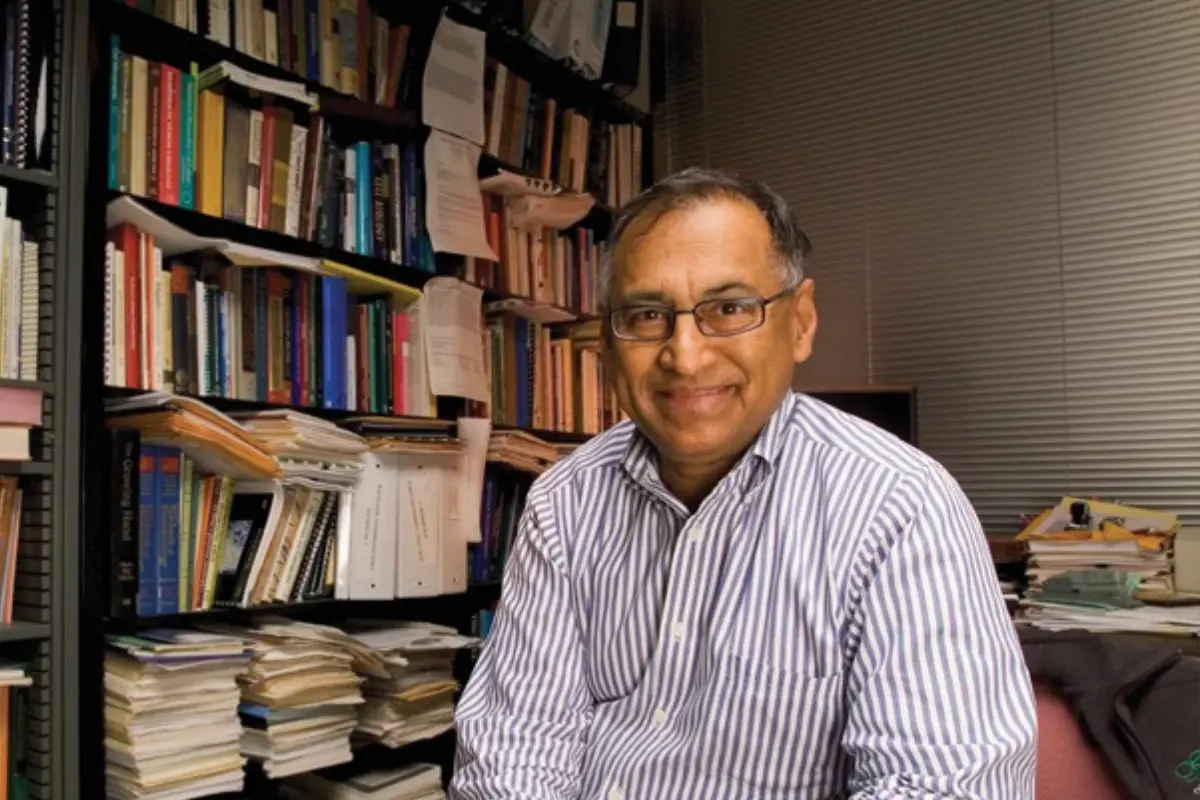
In the complex world of biomedical science, there are few names that shine as brightly and enduringly as A. Hari Reddi. A trailblazer in musculoskeletal molecular biology and regenerative medicine, Dr. Hari Reddi’s contributions have not only pushed the boundaries of scientific discovery but also brought real hope to millions suffering from bone injuries and degenerative conditions.
As the University of California Distinguished Professor and the inaugural holder of the Lawrence J. Ellison Endowed Chair at UC Davis, Dr. Reddi’s legacy is as profound as it is enduring.
Hari Reddi: Breaking Ground in Bone Science
The field of orthopaedics owes a great deal to Dr. Hari Reddi’s groundbreaking discovery and characterisation of bone morphogenetic proteins (BMPs) — the molecular architects responsible for bone formation and repair. His pioneering work, spanning decades, unravelled the mysteries of how the body repairs itself, one molecule at a time.
Dr. A. Hari Reddi’s research demonstrated that bone induction is not a simple event, but a symphony of cellular activities—including chemotaxis, mitosis, and differentiation. He conceptualised this orchestrated process as a sequential multistep cascade, an idea that has now become foundational in tissue engineering and regenerative medicine.
His laboratory’s early work—spanning from the University of Chicago to the National Institutes of Health—led to the isolation and purification of BMPs, forever altering the course of orthopaedic surgery, dentistry, and cartilage repair.
BMPs and the Birth of Regenerative Medicine
Through a meticulous series of in vivo and in vitro assays, Dr. Hari Reddi revealed the pleiotropic nature of BMPs—how they act in a concentration-dependent manner and exhibit functions far beyond bone formation. His research highlighted how BMPs are chemotactic for human monocytes, present in developmental biology at the apical ectodermal ridge, and even possess neurotropic properties.
But the true turning point came with his conceptual leap in tissue engineering: the realisation that morphogens, such as BMPs, when presented within an extracellular matrix scaffold, could direct stem cells to regenerate functional bone and cartilage. This landmark idea introduced the world to the therapeutic potential of combining biological signals with biomaterials, shaping the way scientists think about regenerative technologies today.
An Architect of the Scientific Renaissance
Dr. A. Hari Reddi’s influence spans far beyond his laboratory. He has authored over 300 peer-reviewed publications and boasts an h-index of 109, a testament to the global impact of his work. His expertise has not only advanced the science of bone but has forged a new path in treating nonunions, osteoarthritis, and degenerative bone diseases.
Throughout his career, he held prestigious roles including the Virginia M. and William A. Percy Chair at Johns Hopkins University and served as a professor in Orthopaedic Surgery, Biological Chemistry, and Oncology. His time at the National Institutes of Health solidified his position as a leader in biomedical research, and his early academic journey was enriched by mentorship under Nobel Laureate Charles Brenton Huggins and reproductive endocrinology pioneer M.R.N. Prasad.
Global Leadership and Collaborative Vision
Understanding that scientific progress is accelerated by collaboration, Dr. Reddi founded the International Conference on Bone Morphogenetic Proteins in 1994, bringing together researchers from across the globe. This biennial event has become a cornerstone in the field, facilitating groundbreaking exchanges of knowledge that continue to push the envelope of regenerative medicine.
Honours that Reflect a Life of Impact
Dr. A. Hari Reddi’s accolades speak volumes about his visionary contributions:
-
1991 Elizabeth Winston Lanier Award by the American Academy of Orthopaedic Surgeons
-
1997 Inaugural Marshall Urist Award by the Orthopaedic Research Society
-
1999 Nicolas Andry Lifetime Achievement Award by the Association of Bone and Joint Surgeons
-
2015 Election to the National Academy of Inventors
These honors are more than decorations; they are a reflection of a lifetime devoted to healing, discovery, and human advancement.
Also Read : V. Parmeswaran Nair: The Distinguished Physicist Revolutionizing High-Energy Physics